Breaking the 10-year history of naming Android releases after desserts, Google on Thursday announced it had officially named the next version as just Android 10.
“First, we’re changing the way we name our releases. Our engineering team has always used internal code names for each version, based of tasty treats, or desserts, in alphabetical order,” said Sameer Samat, VP of Product Management, Android, in a statement. The naming tradition has become a fun part of the release each year externally too, like Android Lollipop or Marshmallows. New Android 10
“As a global operating system, it’s important that these names are clear and relatable for everyone in the world. So, this next release of Android will simply use the version number and be called Android 10,” Samat explained.
“While there were many tempting ‘Q’ desserts out there, we think that at version 10 and 2.5 billion active devices, it was time to make this change,” he added.
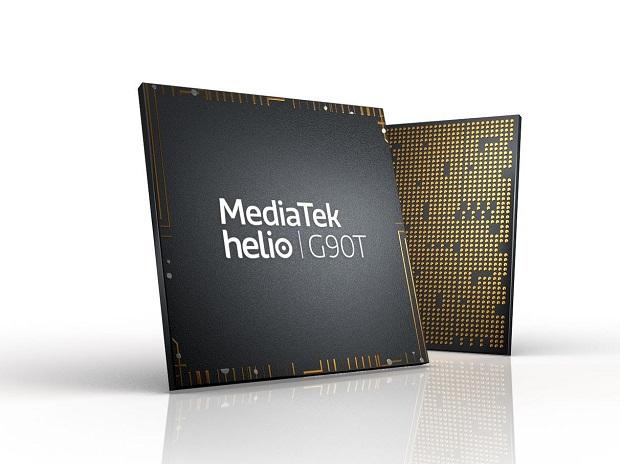
Taiwanese fabless semiconductor company MediaTek on Tuesday launched Helio G90 and G90T — its first dedicated gaming chipsets.
Both system-on-chips (SoCs) are paired with MediaTek’s HyperEngine game technology that is touted to deliver an enhanced gaming experience on smartphones.
The new platforms utilize an octa-core combination of two Arm Cortex-A76 cores and six Cortex-A55s alongside the Mali-G76 GPU. Both the G90 and G90T are built on TSMC’s 12 nm FinFET process and can be clocked up to 2.05GHz. In addition, the new SoCs support up to 10GB LPDDR4X RAM.
The chipsets are designed through involvement of the MediaTek India team, though both will be available for smartphones globally.
The Helio G90 series also have octa-core CPU, paired with ARM Mali-G76 3EEMC4 GPU. The Taiwanese company claimed that the combination delivers up to 1TMACs (TeraMAC) performance.
Considering that most of us use at least one Google service in our daily routine, we end up creating some data that get saved on Google’s servers. This data could be related to your Android device configuration, search history, videos watched on YouTube, bookmarks, calendar entries, files and folders saved on GDrive, etc. Thankfully, Google has a provision that allows you to review your settings for Google products and also gives you the option to download all the data related to a Google account as one single file.
Here are the steps to do so:
Step 1: Connect your notebook or desktop to internet
Step 2: Go to any modern browser, preferably Google Chrome
On a recent afternoon at the Lao Thai Kitchen restaurant, the telephone rang and the caller ID read “Google Assistant.” Jimmy Tran, a waiter, answered the phone. The caller was a man with an Irish accent hoping to book a dinner reservation for two on the weekend. This was no ordinary booking. It came through Google Duplex, a free service that uses artificial intelligence to call restaurants and — mimicking a human voice — speak on our behalf to book a table. The feature, which had a limited release about a year ago, recently became available to a larger number of Android devices and iPhones.
The voice of the Irish man sounded eerily human. When asked whether he was a robot, the caller immediately replied, “No, I’m not a robot,” and laughed.
“It sounded very real,” Tran said in an interview after hanging up the call with Google. “It was perfectly human.”
Google later confirmed, to our disappointment, that the caller had been telling the truth: He was a person working in a call center. The company said that about 25 per cent of calls placed through Duplex started with a human, and that about 15 percent of those that began with an automated system had a human intervene at some point.
We tested Duplex for several days, calling more than a dozen restaurants, and our tests showed a heavy reliance on humans. Among our four successful bookings with Duplex, three were done by people. But when calls were actually placed by Google’s artificially intelligent assistant, the bot sounded very much like a real person and was even able to respond to nuanced questions.
In other words, Duplex, which Google first showed off last year as a technological marvel using AI, is still largely operated by humans. While AI services like Google’s are meant to help us, their part-machine, part-human approach could contribute to a mounting problem: the struggle to decipher the real from the fake, from bogus reviews and online disinformation to bots posing as people.

 News Time