Spotify plans to take on TikTok with vertical feed of music videos

Swedish music streaming giant Spotify is testing a new feature in its mobile app that basically adds a vertical feed of music videos like TikTok that users can scroll through to find something they like.

Several apps like Instagram and YouTube are replicating the TikTok style with a vertical short video feed.

The feature was spotted in the beta version of Spotify for iOS, which is available on TestFlight. A new icon in the tab bar of the app takes users to a new vertical video experience where they can swipe up or down to watch short video clips, reports 9To5Google.

As per the report, Spotify declined to provide further details about the vertical feed of music videos.However, the company confirmed in a statement that it has been exploring the idea of a vertical video feed.

The feature may be taking advantage of Spotify’s existing Canvas format.

Introduced broadly in 2019, Canvas allows artists to create videos that accompany their music on the Spotify app.

Spotify recently announced that it is collaborating with Netflix to launch a dedicated hub within the OTT platform.

The hub will serve as a one-stop shop for all Netflix-related media, some of which is exclusive to Spotify.

This hub can be accessed from the mobile as well as the web version of the service.
Read Complete Article

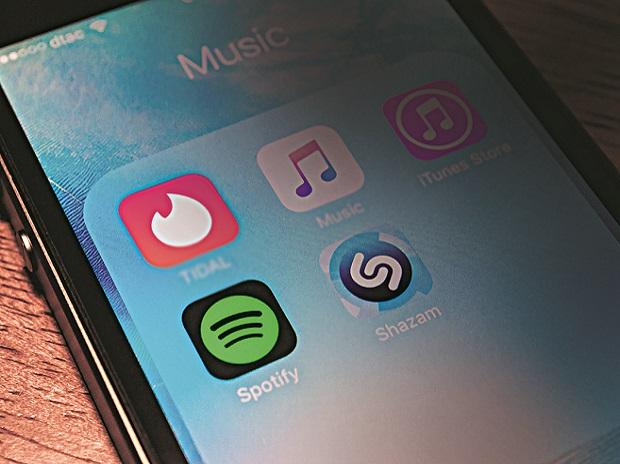
Apple’s Shazam to recognise even more songs than before after update

Shazam, the music recognition platform acquired by Apple for reportedly $400 million in 2018, has been updated to version 15.0, with the app now able to spend more time listening to tougher-to-determine songs.

Available as an update via the App Store, Shazam version 15.0’s update notes explain that the milestone update adds in a change to the way the feature functions. Now, the app can spend more time listening to a particular song, reports AppleInsider.

“Shazam now finds more songs by trying harder, for longer,” advise the notes.

“Tap to Shazam to give it a go!” it added.

Typically, Shazam will recognise a track within a few seconds, but will listen for longer periods if it cannot quite hear or make out the song that’s being played.

After a preset period of time, the app will give up on trying to listen to the song, an act that typically makes users re-attempt recognition, along with moving their iPhone closer to the speaker.

It is highly likely that by increasing the amount of time Shazam can potentially listen to a track, there will be more audio for Shazam’s service to access, giving more chance of turning up a result, the report said.

The app is free to download from the App Store, is compatible with all iPhones and iPads running iOS 13.0 and iPadOS 13.0 or later and weighs in at 34.2MB in size.

In June, the platform surpassed 1 billion Shazams per month worldwide and 50 billion tags since its inception.

Read Complete Article

Apple reportedly switching to its own 5G modems for iPhones in 2023

Apple is reportedly planning to partner with Taiwan Semiconductor Manufacturing Co. for the production of its own 5G modems for future iPhones.

According to The Verge, Apple is said to be planning to use TSMC’s 4nm process node, which hasn’t yet been deployed for any commercial product; the modem is apparently being designed and tested at 5nm before moving to mass production in 2023 at 4nm.

Apple’s switch to modems of its own design is widely expected to happen in 2023, and TSMC is the natural manufacturing partner.

Qualcomm, which is the dominant player in the industry and produces modem components for the entire iPhone 13 lineup, recently said that it expects to account for just 20 per cent of iPhone modem orders in two years’ time.

Apple bought Intel’s 5G modem division in 2019, foreshadowing the eventual switch. Earlier that year Qualcomm and Apple agreed to end a costly modem technology patent dispute, with Qualcomm receiving more than USD 4 billion as part of the settlement.

TSMC is the manufacturer of all iPhone A-series processors and M1 systems-on-chip for Mac computers.

As per The Verge, there are hundreds of TSMC engineers based in Cupertino to work with Apple’s chip development team.

Read Complete Article

WhatsApp launches new tool for web, desktop users to make custom stickers

Meta owned instant messaging platform WhatsApp has introduced a new tool for web and desktop users to make their own custom stickers.

One can access the sticker maker from any chat > Attach (paperclip icon) > Sticker and upload a photo to create custom sticker.

A user can outline and crop a photo into a sticker and add emojis or words to it.

“To use Sticker Maker, download the latest version of WhatsApp for Web or Desktop, from a chat window select the attachments icon, then the Sticker icon, and from there, you can upload a photo and make your own magic,” the firm said in a statement.

WhatsApp recently introduced two new safety features ‘Flash Calls’ and ‘Message Level Reporting’ for users in India.

The Flash Calls and Message Level Reporting features will allow people better security and control over their usage of the messaging app.

With Flash Calls new Android users or the ones who change their devices frequently, one can choose to verify their phone numbers via an automated call instead of an SMS.

The Message Level Reporting feature allows users to report a particular message received on WhatsApp. This can be done by simply long pressing a particular message to either report or block a user.

Read Complete Article

After update, Twitter iOS app now stops tweets from disappearing mid-read

Twitter on Wednesday introduced updates to its iOS app to prevent tweets from disappearing as the users try to read them.

The iOS users faced this problem where tweets were disappearing when replies are being added to an ongoing conversation.

“We’ve made some updates on iOS to prevent Tweets from disappearing mid-read. Now when you pause your timeline scrolling to look at a Tweet, it should stay put!” Twitter said in an update.

The micro-blogging platform earlier this month issued an update to the disappearing Tweet experience for web.

The company first discussed Tweets disappearing from view mid-read in September.

“We know it’s a frustrating experience, so we’re working on changing it. Over the next two months, we’ll be rolling out updates to the way we show you Tweets so they don’t disappear,” it had said.

A Tweet would move up the timeline as replies were added to the ongoing conversation.

“Since some conversations can evolve quickly, this made it so you didn’t see the same Tweet repeated in the TL. Our changes will keep your TL fresh and keep Tweets from disappearing mid-read,” Twitter said.

Read Complete Article

New plant in US will help ease global chip shortage, says Samsung

Samsung Electronics said on Wednesday it has selected the city of Taylor in Texas, the US, as the site of its new $17 billion chip fabrication plant, a move to boost production amid a global chip shortage.

The decision came five months after the tech giant announced a plan to build a second, next-generation chip plant in the United States, and as the chip supply crunch caused global automobile and consumer electronics companies to slash their production.

Samsung said it had considered multiple factors, including “the local semiconductor ecosystem, infrastructure stability, local government support and community development opportunities.”

Also the proximity to its current manufacturing site in Austin, about 25 kilometers southwest of Taylor, will enable “the two locations to share the necessary infrastructure and resources,” it said, reports Yonhap news agency.

The move will help Samsung lay “the groundwork for another important chapter in our future,” said Kim Ki-nam, vice chairman and CEO of Samsung’s device solutions division.

“With greater manufacturing capacity, we will be able to better serve the needs of our customers and contribute to the stability of the global semiconductor supply chain,” he said.

The new investment will also bring “more jobs” and support “the training and talent development of local communities,” Kim said, as “Samsung celebrates 25 years of semiconductor manufacturing in the U.S”

Read Complete Article

Apple files lawsuit against NSO Group, saying US citizens were targets

Apple Inc said on Tuesday it has filed a lawsuit against Israeli cyber firm NSO Group and its parent company OSY Technologies for alleged surveillance and targeting of U.S. Apple users with its Pegasus spyware.

The iPhone maker said it is also seeking to ban NSO Group from using any Apple software, services or devices to prevent further abuse.

Apple is the latest in a string of companies and governments to come after NSO, the maker of the Pegasus hacking tool that watchdog groups say targeted human rights workers and journalists. Earlier this month, U.S. officials placed the company on a trade blacklist. NSO has also faced either legal action or criticism from Microsoft Corp, Meta Platforms Inc, Alphabet Inc and Cisco Systems Inc.

NSO is allegedly involved in circumventing security for products made by these companies and selling that circumvention in the form of hacking tools to foreign governments.

In a statement, NSO, which says it sells its tools only to governments and law enforcement agencies and has safeguards in place to prevent misuse, said that “thousands of lives” have been saved through the use of its tools.

“Pedophiles and terrorists can freely operate in technological safe-havens, and we provide governments the lawful tools to fight it. NSO Group will continue to advocate for the truth,” a spokesperson said in a statement.

In its complaint filed in U.S. District Court for the Northern District of California, Apple said NSO’s tools were used in “concerted efforts in 2021 to target and attack Apple customers” and that “U.S. citizens have been surveilled by NSO’s spyware on mobile devices that can and do cross international borders.”

Apple alleged that NSO Group created more than 100 fake Apple ID user credentials to carry out its attacks. Apple said that its servers were not hacked, but that NSO misused and manipulated the servers to deliver the attacks on Apple users.

Read Complete Article

Amazon Fire TV Stick 4K Max review: Adding some zing to mediocre screens

I own a smart TV which I bought in 2019. It was rich in specifications and features back then, but it now seems to have aged prematurely. Not that it has bad picture or audio quality, but it lags behind newer smart televisions in performance, connectivity, and user experience. Thankfully, there are streaming devices like the Amazon Fire TV Stick 4K Max which bring to speed these otherwise mediocre televisions with their faster internet connectivity, sleek performance, and support for tons of new and updated apps. How? Let’s find out:

What is Amazon Fire TV Stick 4K Max?

The Amazon Fire TV Stick 4K Max is a streaming device with HDMI interface that turns any screen with HDMI input into a smart screen connected to the internet for online streaming of content available on supported apps like YouTube, Prime Video, Apple TV, Netflix, Disney+ Hotstar, etc. It boots Android operating system-based Amazon’s Fire OS with Amazon services like Prime Video and Amazon Music built-in, and an app store for users to download and install other supported apps, including games.

The flagship model in Amazon’s streaming devices portfolio, the Amazon Fire TV Stick 4K Max boasts sleek performance, top-notch connectivity, support for most high dynamic range (HDR) formats, Dolby Atmos audio, and Alexa voice assistant for hands-free operations and smart home set-up.

What’s inside the box?

  • Amazon Fire TV Stick 4K Max
  • Remote control with dedicated Alexa button, and hotkeys for Prime Video, Netflix, and Amazon Music
  • HDMI Extender cable
  • USB-A to microUSB cable
  • Power adaptor
  • 2 x AAA batteries

How to set up the Amazon Fire TV Stick 4K Max

You need Wi-Fi and an Amazon account to set up the Fire TV Stick 4K Max. Plug in the stick into the HDMI port (ARC, if available) of the compatible screen – TV, monitor, projector, etc; power it up using the supplied adaptor and cable; change the screen input to HDMI; and follow the on-screen instructions – connect the stick with the wireless internet network and input your Amazon account details. The Fire TV Stick 4K Max supports HDMI CEC. Therefore, you can use the Fire TV remote to control the TV and other supported peripherals without needing separate remote for each connected device. However, the controls are limited to basic functions, and you may still need the remote for screen and other peripherals to manage and control things like screen native display and audio settings.

Read Complete Article

Google Pixel 6a renders leak, reveal Pixel 6-like design

Google Pixel 6a is reportedly in the works. The renders of the rumoured mid-range Pixel 6a have been revealed in leaks online.

As per GSM Arena, the design is in line with the current Pixel 6 and 6 Pro sporting a punch-hole display up front and a visor on the back for its dual-cam setup. The OLED display on the Pixel 6a is said to measure 6.2-inches.

At 152.2 x 71.8 x 8.7mm Pixel 6a would be noticeably more compact than the regular Pixel 6 which measures at 158.6 x 74.8 x 8.9mm. The rest of the spec sheet should include a 50MP Samsung ISOCELL GN1 sensor for the main cam, 6/8GB RAM and 128GB of internal storage.

The chipset is speculated to be either the Google Tensor SoC like on the Pixel 6 duo or the Snapdragon 778G.

One thing that seems to be missing is a headphone jack, which would make Pixel 6a the first A-series phone from Google without a headphone jack.

Android 12 will cover the software side and the phone will most likely come with at least three years of software support from Google.

Read Complete Article

Redmi India joins hands with Jio on 5G trials for upcoming smartphone

Redmi India, a sub-brand of Xiaomi, on Monday announced that it has joined hands with Reliance Jio to conduct 5G trials for its upcoming Redmi Note 11T 5G smartphone.

To verify the capability and performance of their upcoming device, the two companies conducted a 5G standalone lab trial, and tested the device through various scenarios, thereby ensuring enhanced 5G end-user experiences.

“We are delighted to partner with Reliance Jio for the Redmi Note 11T 5G in our endeavor of democratising technology by making it easier for customers to get access to 5G smartphones that are future ready. Our latest trial with Reliance Jio is an indication of the development of the 5G ecosystem in India and the encouraging outcome highlights the true potential of the device and brings a high-quality 5G experience closer to reality,” Muralikrishnan B, COO, Xiaomi India, said in a statement.

Redmi Note 11T 5G is fully equipped to elevate the customer’s smartphone experience and will launch in India on November 30, the company claims.

The Redmi Note 11T 5G is said to come with a 6.6-inch full HD+ (1080 A- 2400p) LCD display.

Under-the-hood, it is said to feature 6nm class MediaTek Dimensity 810 6nm processor with Mali-G57 MC2 GPU, Android 11-based MIUI 12.5 OS, 4GB/6GB LPDDR4X RAM, 64GB/128GB (UFS 2.2) storage (expandable up to 1TB), andA 5,000mAh battery with a 33W fast charger.

In terms of optics, it is expected to feature a dual-camera– 50MP (f/1.8)A with 8MP (f/2.2) with LED flash on the back. On the front, it is said to house a 16MP (f/2.45) snapper.

Read Complete Article