Nokia posts surprising Q4 2020 result despite facing challenges in US

The Finnish telecommunications networks provider Nokia on Thursday reported a smaller than expected drop in profit in the fourth-quarter while it acknowledged it was facing some challenges in the race for 5G networks, particularly in the North American market.

The company based in Espoo, Finland, saw net profit for the October-December period drop 1 per cent to 811 million euros (USD 973 million). Sales were down 5 per cent to 6.6 billion euros.

CEO Pekka Lundmark, who took over the role in August, described the fourth quarter result as solid but warned that the current year wouldn’t be easy for Nokia.

We expect 2021 to be challenging, a year of transition, with meaningful headwinds due to market share loss and price erosion in North America, Lundmark said.

Under Lundmark’s lead Nokia has revamped its business strategy. He has said that Nokia aims to become the leader in 5G – the new generation of broadband technology – in a tight global race with main competitors China’s Huawei and Sweden’s Ericsson.

Read Complete Article

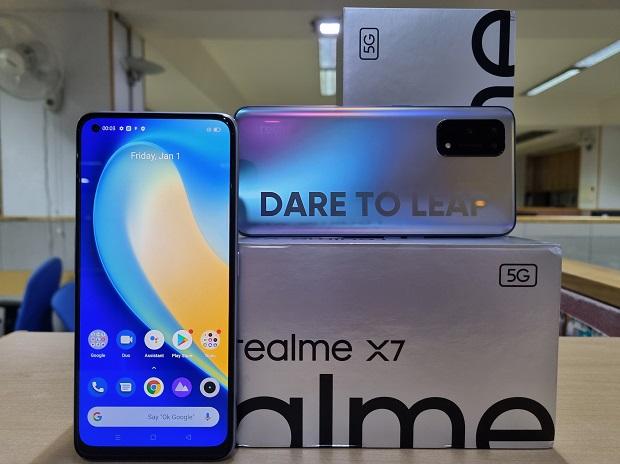
Realme X7 Pro, Realme X7 with MediaTek 5G processors launched: Price, Specs

Realme on Thursday launched in India the Realme X7 Pro and Realme X7 smartphones with 5G network support. Powered by MediaTek processors, the smartphones comes with up to 8GB RAM and 128GB on-board storage. The Realme X7 Pro comes with 8GB RAM and 128GB on-board storage, priced at Rs 29,999. It will be available on Flipkart, Realme online store and select offline stores from February 10. The Realme X7 is priced at Rs 19,999 and Rs 21,999 for 6GB/128GB and 8GB/128GB variants, respectively. It will be available from February 12, online on Flipkart and Realme online store, and select offline stores. The Realme X7 Pro comes in fantasy and mystic black colours, whereas, the Realme X7 comes in space silver and nebula colour options.Realme X7 Pro: Specifications

The top-end model in the Realme X7 series, the Realme X7 Pro sports a 6.55-inch super AMOLED fullHD+ resolution screen of 120Hz refresh rate and 240Hz touch sampling rate. The screen is touted to have 1200 nits peak brightness level, 100 per cent DCI-P3 and 103 per cent NTSC colour gamut. Protecting the screen is a Corning Gorilla Glass 5. The smartphone weighs 184g and boasts 8.5mm thick profile.

Powering the Realme X7 Pro is a 5G network ready MediaTek Dimensity 1000+ system-on-chip, paired with up to 8GB LPDDR4x (four-channel) RAM and 128GB UFS 2.1 (Turbo write) on-board storage. The phone ships with Android 10 operating system based Realme UI. It will receive Android 11 OS based Realme UI 2.0 in near future.

Imaging is covered by a quad-camera array on the back, featuring a 64-megapixel primary sensor (Sony IMX 686) of an f/1.8 aperture, an 8MP ultra-wide-angle sensor of an f/2.25 aperture and 119-degree field of view, a 2MP monochrome sensor and a 2MP macro sensor.

Read Complete Article

Realme X7 series India launch at 12:30 pm: Livestream, expected specs

Realme is set to launch in India the Realme X7 Pro and Realme X7 smartphones in its X series lineup. The virtual launch event will start at 12:30 pm on Thursday at 12:30 pm, and the event will livestream on Chinese smartphone maker’s official YouTube channel and social media accounts. Launched in China last year in September, the smartphones will be powered by MediaTek mobile platforms with 5G network support.Realme X7 series launch event livestream

Part of the Realme X7 series, the Realme X7 Pro and Realme X7 will be launched on February 4 at 12:30 pm. The launch will livestream on company’s India YouTube channel. Live updates from the launch will also be available on the Realme India’s social media accounts on Twitter, Facebook, etc. You can also watch the Realme X7 series launch event livestream through the video embedded below.Realme X7 Pro: Expected specifications

The Realme X7 Pro will sport a super AMOLED screen of 120Hz refresh rate. It will be powered by MediaTek Dimensity 1000+ system-on-chip, which is the same chip that powers OPPO’s recently launched 5G smartphone the Reno 5 Pro.

The Realme X7 Pro will sport a quad-camera array on the back, featuring a 64-megapixel primary sensor, an 8MP ultra-wide-angle sensor, a 2MP macro sensor and a 2MP portrait sensor. The phone is touted to be a thin-and-light smartphone. According to the phone’s details on e-commerce platform Flipkart, the phone will be 8.5mm thick and weighs 184g. Powering the smartphone will be a dual-cell battery, supported by 65W fast charger.

Read Complete Article

FAU-G review: PUBG’s indigenous alternative game lacks thrill, exhilaration

Bengaluru-based game studio nCore Games on January 26 launched the much anticipated FAU-G (Fearless and United – Guards) for Google Android devices on January 26. The indigenous mobile game has been downloaded by millions in the country and emerged as one of the top gaming apps on the Google Play Store. Touted by many as home-grown alternative to PUBG, which was among the Chinese apps blocked by government over security concerns, is it as good or the praises are hyperbole? Let’s find out:

FAU-G is currently available only for Android devices. It is not available for Apple iPhones and iPads. The game is available to download but its full version is still under development. For now, there is only a single-player mode, and the Battle Royale and Team Deathmatch modes might be added later by the developer.

The gameplay is simple and based on real-life events at Galwan Valley, where the clash took place between Indian and Chinese soldiers on June 15, 2020. While the PUBG is all about guns, Chicken Dinner, Loot, Team management, etc. the FAU-G is more about sticks, rods, besides punches and kicks. To get a weapon in FAU-G, you will have to kill the enemies and pick whatever they drops. You can only pick two weapons at a time that stay with you only for a few seconds (and limited strikes) and you get resorted to kicks and punches before you pick another weapon.

Read Complete Article

Instagram tests disabling option for users to share feed posts to Stories

Facebook-owned photo-sharing platform Instagram is conducting a test which stops some users from sharing feed posts within their Stories.

The new experiment is to see how it changes engagement with the popular feature.

The company announced the change in a notification banner sent to users in “select countries” where the test is being conducted, The Verge reported on late Tuesday.

“We hear from our community that they want to see fewer posts in Stories. During this test, you won’t be able to add a feed post to your Story,” the notification reads.

Resharing posts to stories is a fairly common practice, though it does create situations where you’ll see a post in your feed and then immediately see that post duplicated in your friend’s stories, the report said.

Taking away the ability to reshare is responding to a behaviour Facebook and Instagram encouraged in the first place by placing stories so prominently in the app and offering the ability to share them, it added.

For now, disabling reshares remains a test, much like the changes to likes the company considered and the variety of new app layouts it has prototyped.

Twitter is also currently testing the ability to share tweets to Instagram stories as stickers.

Read Complete Article

Wikipedia introduces new code of conduct to address harassment, fake news

Wikipedia has introduced a first-of-its-kind Universal Code of Conduct that expands on the project’s existing policies to create a global set of community standards for addressing negative behaviour and harassment on the site.

Launched by the Wikimedia Foundation, the nonprofit that administers Wikipedia, the code’s standards include clearly defining acceptable behaviour; delinating harassment on and off the projects for all Wikipedia participants; preventing the abuse of power and influence to intimidate others; and combating deliberate introduction of false or inaccurate content.

“Our work is built around a radical premise that everyone should be able to participate in knowledge,” said Katherine Maher, CEO of the Wikimedia Foundation.

“Our new universal code of conduct creates binding standards to elevate conduct on the Wikimedia projects, and empower our communities to address harassment and negative behaviour across the Wikimedia movement,” she said in a statement on Tuesday.

More than 50 per cent of the global population has access to the internet, an increase that has been linked to polarisation, and rising violence from online speech against marginalised groups and ethnic communities according to a report from the Council on Foreign Relations.

“Given these trends, it is more important than ever for the Foundation and the volunteer community to strengthen accountability for content on Wikimedia projects including Wikipedia, the world’s largest online encyclopedia, as well as the policies that govern user behaviour”.

Read Complete Article

Google shuts down its in-house Stadia game development division

Google has announced to shut down its in-house Stadia game development division, as it sees a great adoption of its technology by third-party developers and publishers to create world-class games.

Google said that it will not be investing further in bringing exclusive content from its internal development team SG&E, beyond any near-term planned games.

“With the increased focus on using our technology platform for industry partners, Jade Raymond has decided to leave Google to pursue other opportunities. We greatly appreciate Jade’s contribution to Stadia and wish her the best of luck in her future endeavours,” said Phil Harrison, Vice President and GM, Google Stadia.

Over the coming months, most of the SG&E team will be moving on to new roles.

“We’re committed to working with this talented team to find new roles and support them,” Harrison said in a statement on Monday.

If you’re a current or future Stadia gamer, you can continue playing all your games on Stadia and Stadia Pro.

Google said that with the recent successful launch of ‘Cyberpunk 2077’ game on Stadia, gameplay on all types of devices, including iOS, growing its slate of YouTube integrations and global expansions, it’s clear that Stadia’s technology has been proven and works at scale.

Read Complete Article

POCO M3 with 6.53-inch fullHD+ screen, 48MP triple camera launched in India

Chinese smartphone brand Poco on Tuesday launched its latest smartphone — Poco M3 — in India, which will be available on Flipkart from February 9.

The smartphone comes in two storage variants — 6GB+64GB and 6GB+128GB — and priced at Rs 10,999 and Rs 11,999, respectively. It will be available in three colours — power black, cool blue, and Poco yellow.

“In its first year, Poco has created many milestones and connected with the more connected, smarter audience. Within 10 months of becoming independent, we became the 3rd largest online smartphone player in India,” Anuj Sharma, Country Director, Poco India, said in a statement.

“The launch of Poco M3 is our effort to elevate the brand further, offering enthusiasts cutting-edge technology coupled with best-in-class looks,” Sharma added.

Poco M3 features 6.53 FullHD+ display with 19.5:9 aspect ratio. It comes with Corning Gorilla Glass 3 on the front.

The smartphone is equipped with 48MP triple camera setup, supported by a 2MP macro camera and a depth sensor. It comes with multiple creative modes such as movie frame, time-lapse, night mode, among other features. On the front, it has an 8MP selfie camera embedded with AI face unlock and AI beauty mode.

Read Complete Article

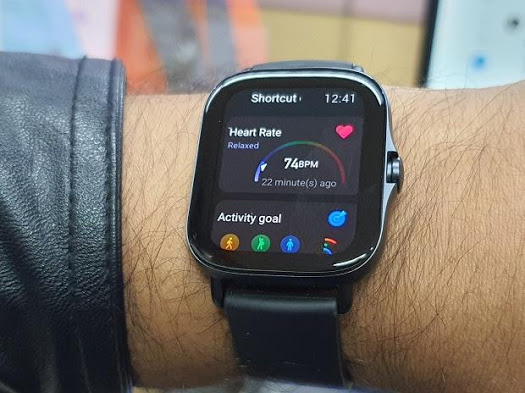
Amazfit GTS 2e review: Praise worthy health and fitness tracker on budget

I reviewed the Amazfit GTS (read review here) in November 2019 and the Apple Watch lookalike was indeed promising health and fitness smart wearable of its time, despite it being subjected to a few software glitches that marred the user experience. Then came the Amazfit GTS 2, which brought wholesome upgrades, including the blood-oxygen saturation (SpO2) monitor and BioTracker 2 PPG optical sensor for heart rate, stress levels, and PAI score. The successor to the GTS, the second-gen health and fitness tracker had everything in place, except accuracy.

Cut to 2021, Amazfit has added two new models – the Amazfit GTR 2e and GTS 2e – to expand its portfolio. Part of the GTS series, the GTS 2e is not a successor to the GTS 2 but a cheaper variant of the model priced at Rs 9,999. The GTS 2e borrows several features from the GTS 2 but does it manage to fix the accuracy issue that marred its predecessors? Let’s find out:

Design and display

Like the GTS and GTS 2, the GTS 2e takes design cue from Apple Watch yet it looks novel and intriguing. The GTS 2e has a 1.65-inch HD AMOLED display of 341 pixel-per-inch pixel density. This is amongst the finest displays you get in a health and fitness wearable and the touch response is fairly good too. The AMOLED panel makes the colours pop. Thanks to good brightness levels, the display is easy to read under direct sunlight. The GTS 2e supports custom display wallpapers and there are several built-in display faces too to complement a new look every day.

Read Complete Article

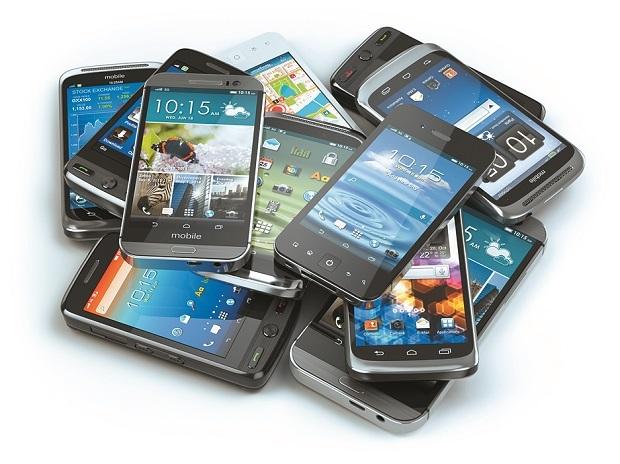
Budget 2021: Phones may get costlier as govt raises custom duty on parts

In another bid to boost domestic manufacturing, the government on Monday announced an increase in custom duty for up to 10 per cent on mobile chargers and some sub-parts of phones, a move that can make handsets costlier by 3-4 per cent from February 2.

Finance Minister Nirmala Sitharaman, during her Union Budget 2021-22 speech, said that withdrawing exemptions on parts of chargers and mobile phones will boost local manufacturing of smartphones.

“Domestic electronic manufacturing has grown rapidly. We are now exporting items like mobiles and chargers,” Sitharaman said.

“For greater domestic value addition, we are withdrawing a few exemptions on parts of chargers and sub-parts of mobiles. Further, some parts of mobiles will move from ‘nil’ rate to a moderate 2.5 per cent,” she informed.

However, inputs or raw material for manufacture of specified parts like back cover, side keys etc. of cellular mobile phone has been increased from ‘nil’ to 10 per cent.

Inputs or parts of Printed Circuit Board Assembly (PCBA) of charger or adapter of cellular mobile phones are up from ‘nil’ to 10 per cent while the custom duty on inputs or parts of moulded plastic of charger or adapter of cellular mobile phones has also been increased from ‘nil’ to 10 per cent.

Read Complete Article

Budget