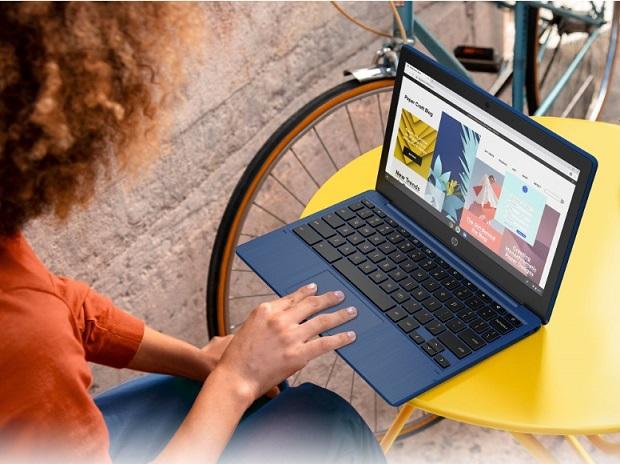
Chromebooks, tablets lead global PC revival in first quarter of 2021

Chromebooks with 12 million units and tablets with 39.7 million units led the PC revival in Q1 2021, posting 274.6 per cent and 51.8 per cent growth, respectively.

HP Inc topped the market yet again, with growth of 633.7 per cent propelling it past the four-million unit mark.

Lenovo took second place with 3.1 million units shipped, having ramped up production to help ease order backlogs from 2020. Acer, Samsung and Dell made up the rest of the top five, all shipping over 1 million units, according to latest data from market research firm Canalys.

The total worldwide PC market (including tablets) grew strongly for a fourth successive quarter in Q1 2021, with shipments up 53.1 per cent (year on year) at 122.1 million units.

“Chromebooks are well and truly a mainstream computing product now. While the education sector still accounts for the majority of shipments, their popularity with consumers and traditional commercial customers has reached new heights over the course of the last year,” said Brian Lynch, Canalys Research Analyst.

Google is now in a strong position to work with its OEM partners and the channel to cement a rosy future for Chromebooks, Lynch added.

In the tablet segment, almost all the top vendors enjoyed continued shipment growth in Q1 2021.

Apple extended its lead, growing 50.3 per cent and shipping 15.2 million units as the latest iteration of the iPad Air gained traction with consumers.

Read Complete Article

Facebook rules are internally inconsistent, says oversight board leader

Facebook Inc.’s internal rules for banning content are a “shambles,” and the company needs to fix the process to have credibility in enforcing them, a member of the social media giant’s independent content oversight board said.

The comments by Michael McConnell, the panel’s co-chairman, follow its decision last week to leave in place a ban on former President Donald Trump for his posts surrounding the storming of the U.S. Capitol by his supporters on Jan. 6.

“Their rules are a shambles,” McConnell said on “Fox News Sunday.” “They are not transparent. They are unclear. They are internally inconsistent.”

“We gave them a series of recommendations about how to make their rules clearer and more consistent,” McConnell said. “The hope is that they will use the next few months to do that and then, when they come back and look at this, they will be able to apply those rules in a straightforward way.”

Facebook upheld its ban on Trump for six months. The company suspended his account after Trump encouraged his supporters to storm the Capitol in what became a deadly attempt to stop the counting of Electoral College votes for President Joe Biden. The ban was originally temporary, but was changed to an indefinite suspension the following day.

Egging On’

McConnell also said Trump’s posts were a “plain violation of Facebook’s rules” against praising dangerous individuals and organizations during a time of violence.

Read Complete Article

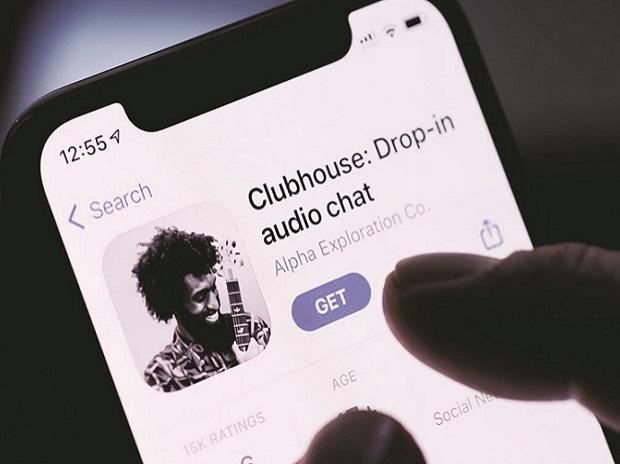
Clubhouse arrives on Android a year after launch on Apple’s iOS platform

The popular invite-only audio chat app Clubhouse has finally arrived on Android after spending a year on the Apple iOS platform.

Clubhouse for Android has started rolling out in beta from Monday, beginning with the US, followed by other English-speaking countries and then the rest of the world.

“Our plan over the next few weeks is to collect feedback from the community, fix any issues we see and work to add a few final features like payments and club creation before rolling it out more broadly,” the company said in a statement.

Clubhouse for Android will remain an invite-only platform, ensuring that each new community member can bring along a few close friends.

“As we head into the summer and continue to scale out the backend, we plan to begin opening up even further, welcoming millions more people in from the iOS waitlist, expanding language support, and adding more accessibility features, so that people worldwide can experience Clubhouse in a way that feels native to them,” the company explained.

As tech giants like Twitter, Spotify, Facebook, Telegram, Discord and LinkedIn go after it, Clubhouse last month raised fresh funding in the Series C round, taking its valuation to $4 billion.

Clubhouse has gained immense popularity and has a reported 10 million weekly active users.

Read Complete Article

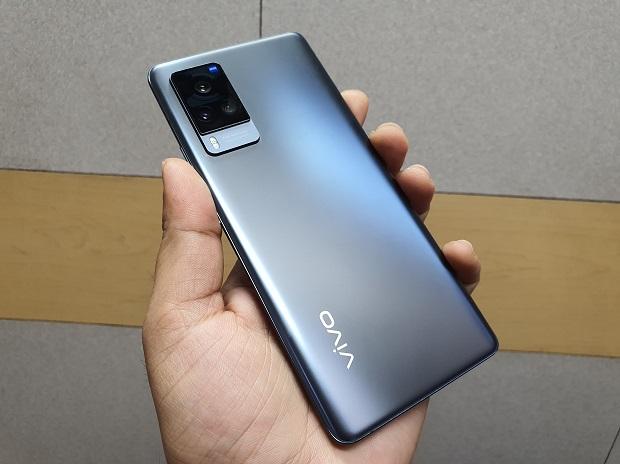
Vivo X60 Pro review: Not just a camera phone, it is an all-round smartphone

India’s premium smartphone market has bolstered with offerings from brands that were not there in the competition until last year. Among many other things, imaging yet again taking the centre stage and each of the new offering in the segment has something novel to offer. Of the many new entrants in the segment, Vivo seems to a promising one, thanks to its recent partnership with German lens maker Zeiss. One of the first products to come from this partnership is the Vivo X60 Pro, a camera-first premium smartphone with Zeiss optics.

Vivo calls the X60 Pro “camera in a phone”. Is the phone all about its cameras, or does it utility goes beyond imaging? Let us find out:

Design and display

The Vivo X60 Pro looks premium, and its visual appeal is second to none, considering the bulky and heavy smartphones of the present time. It takes design cue from its predecessor, the Vivo X50 Pro, but sheds some weight and dimensions to look even better and feel right in hands. With its clean and sleek profile, it tempted me to use it without back cover and eventually I fell for the temptations. It is tough to recall if I have seen any smartphone designed so beautifully in recent time.

As for its display, the phone sports a 6.56-inch fullHD+ resolution AMOLED screen of 120Hz refresh rate. It is a two-side curved screen with fine contrast, ample brightness and smooth touch response. The display and the rear panel are protected by Gorilla Glass 6. The rear has AG glass with a frosted glass finish and anti-fingerprint coating prevents it from picking fingerprint and smudges.Read Complete Article

Delhi HC seeks CCI stand on FB, WhatsApp appeals against privacy policy

The Delhi High Court on Thursday sought response of the Competition Commission of India (CCI) on the appeals of Facebook and WhatsApp against a single judge order dismissing their pleas against a probe ordered into the messaging app’s new privacy policy.

A bench of Chief Justice D N Patel and Justice Jasmeet Singh issued notice to the CCI that had ordered the probe and sought its response by May 21, the next date of hearing.

The single judge on April 22 had said though it would have been “prudent” for the CCI to await the outcome of petitions in the Supreme Court and the Delhi HC against WhatsApp’s new privacy policy, but not doing so would not make the regulator’s order “perverse” or “wanting of jurisdiction”.

Read Complete Article

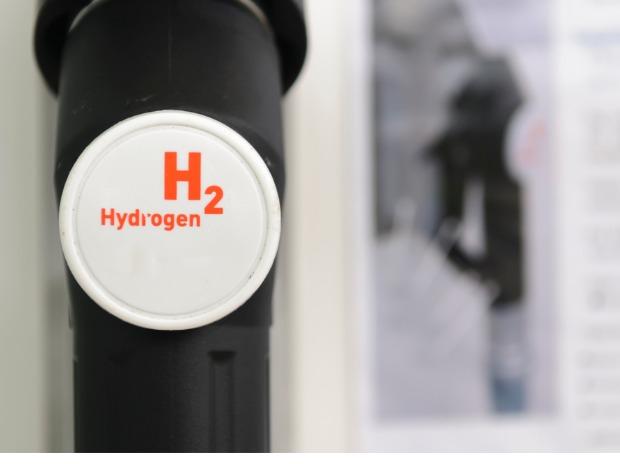
SK Corp to invest tens of billions of shares in US hydrogen firm Monolith

SK Corp., the holding company of SK Group, has decided to invest tens of billions of won worth of shares in Monolith, an American hydrogen company, and plans to sign a contract within this month.

SK is expanding its steps in the field of hydrogen energy, which is attracting attention as a key area for investment in the environment, society and governance (ESG) field.

According to related industries on Tuesday, SK Co., Ltd. is planning to participate as a major strategic investor (SI) in the Monolith funding program being developed by the US local energy company NeXtra. It is known that the specific share ratio and investment amount are being adjusted.

Established in 2012, Monolith is a company with its own technology to extract hydrogen through carbon processing with carbon dioxide generated in this process processed into solid carbon black, which is a material for rubber or ink. It is a technology classified as “green hydrogen”, made through 100 per cent water decomposition, and carbon processing that reduces greenhouse gas emissions with “hydrogen cyanide” as an intermediate step of the “blue hydrogen”.

Monolith is known as a highly profitable company, not only producing carbon black by applying cyanohydrogen technology, but also producing agricultural fertilizers by mixing nitrogen gas with extracted hydrogen. Currently, it is constructing a pilot plant in Hallum, Nebraska, with a cost of about 100 billion won, and has recently announced an investment plan for the second plant worth an additional one trillion won. SK is expected to continue technical alliances and production investments with Monolith by participating in this funding as an SI.

Read Complete Article

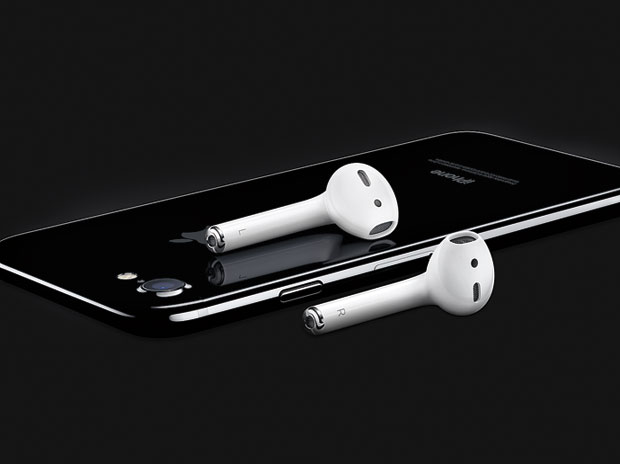
The global TWS (True Wireless Stereo Headset) market is expected to grow 33 per cent (year-over-year) in 2021, reaching 310 million units, according to a new report.

Apple will remain a leader selling around 84 million units but still lose share by 4 per cent.

Apple was expected to defend its top position despite its market share decline from 31 percent to 27 percent. China’s Xiaomi was projected to see its presence remain the same as last year at 9 percent.

At third spot, Samsung’s market share in 2021 was estimated to stay unchanged at 7 percent, according to market tracker Counterpoint Research.

Major top brands such as Apple are likely to launch next-generation products, which will boost the TWS market further.

“The most anticipated is a new release from Apple, its first in two years. We expect it to be one of the biggest drivers of TWS market growth from Q4 2021 to the next year. Apple will maintain strong market leadership based on its loyal customer base, although its share will inevitably fall with the intensifying competition,” said Senior Research Analyst Liz Lee in a statement on Wednesday.

As Covid-19 will unlikely ease in a short time despite the spread of vaccination, the pent-up demand for high-end TWS is not expected to explode until late Q3 2021.

“At that point, the market focus will gradually shift to the mid- to high-price segment as vaccinations help consumer sentiment improve. Then, most premium brands will add advanced features and various functions to their new models and create high value addition in the long term,” Lee noted.

Meanwhile, low- to mid-priced brands will further enhance price competitiveness to compete for market share.

In terms of brand performance, there was no big surprise in 2020. Apple continued to dominate but its share declined steadily through the year and fell below one-third of the TWS market.

The market slightly exceeded the initial annual estimate for 2020 to reach 233 million units, mainly driven by the strong performance of low- and mid-price segments, the report mentioned.

Read Complete Article

Covid-19: Google says 20% of workers will be remote, many more hybrid

Google says it expects about 20% of ifs workforce to still work remotely after its offices reopen this fall, while some 60% will work a hybrid schedule that includes about three days in the office and two days wherever they work best.

The remaining 20% can change their location to a different Google office.

The policy announced Wednesday relaxes the company’s stricter earlier stance.

The future of work is flexibility, CEO Sundar Pichai wrote in an email to employees that was also posted on Google’s website.

The changes above are a starting point to help us do our very best work and have fun doing it.

Most of Google’s 135,000 employees can continue to work from home through September of this year.

For up to 20 days per year, Google employees will also be able to work from any location other than their main office. That’s up from a previous allotment of 10 days.

The company based in Mountain View, California, will also continue offering extra reset days days off to help cope with the pandemic.

Google was among the first major technology companies last year to tell its employees to work from home at the onset of the pandemic. Other tech giants, such as Facebook and Twitter, have announced that people can work from home permanently after the pandemic if their jobs allow for it.

Read Complete Article

Shipping players benefit from new biz apart from 10-year high Baltic Dry

With Baltic Dry Index having hit 10-year high recently, Indian shipping companies are not just benefitting from high freight but also from increased trade with Bangladesh and Vietnam, industry experts said today.

“Construction activity has picked up significantly in Bangladesh as the country is focusing on infrastructure growth. Due to this, Indian shipping companies are witnessing increased cargo volumes with a lot of bulk raw material getting shipped. This is going to be a long term trend as infrastructure push is expected to continue,” Captain Rahul Bhargava, chief operating officer at Essar Shipping told Business Standard.

Shipping Corporation of India, Great Eastern Shipping, Tolani Shipping and Essar Shipping are into bulk carriers along with other segment fleet in the domestic market.

“All vessels on spot charter will earn more and most companies keep a combination of spot and contracted vessels, so the benefit would vary depending upon the portfolio,” informed Anil Devli, chief executive officer at Indian National Shipowner’s Association.

Another trade route, which has strengthened for India though a seasonal one is export of rice to both Bangladesh and Vietnam.

“Export of rice has emerged as a new business for domestic shipping companies in the last few weeks. We have already shipped close to 200,000 tonne rice to Vietnam and Bangladesh and another 150,000 tonne would be shipped soon. This trend, however, is expected to be short-lived and would last for another 2 months. But its new commodity for domestic shipping companies,” informed Bhargava.

Meanwhile, with China switching its trading partners due to geo-political issues, increased trade between the dragon country and South Africa for bauxite and with the US for coal is also auguring well with tonne miles going up.

Read Complete Article

DoT permits telcos to go ahead with 5G trials; Chinese companies kept out

The Department of Telecommunications (DoT) on Tuesday allowed mobile operators to conduct 5G trials in the country with equipment manufacturers they have tied up with, barring Chinese companies.

The Central government has allowed telecom companies including Bharti Airtel, Reliance Jio Infocomm, Vodafone Idea, and MTNL to conduct trials for uses and applications of 5G technology, an official statement said.

These service providers have tied up with original equipment manufacturers and technology providers such as Ericsson, Nokia, Samsung, and the C-DoT.

In addition, Reliance Jio Infocomm will be conducting trials using its own technology. The permissions are in accordance with the priorities and the names of technology partners identified by the companies themselves.

“Nokia India welcomes the government’s decision to conduct trials including in rural and semi-urban areas, aligned with the long-term vision of a Digital India. We are confident of our readiness to support our customers in implementing 5G strategy with the advantage of our technology leadership, our experience in serving customers globally, and our initiatives in India including 5G manufacturing in Chennai,” the Nokia India spokesperson said.

Experimental spectrum is being given in various bands, which include the mid-band (3.2 GHz to 3.67 GHz), millimetre wave band (24.25 GHz to 28.5 GHz) and sub-gigahertz band (700 GHz).

Read Complete Article