Microsoft brings Surface Laptop 4 to India starting at Rs 102,999

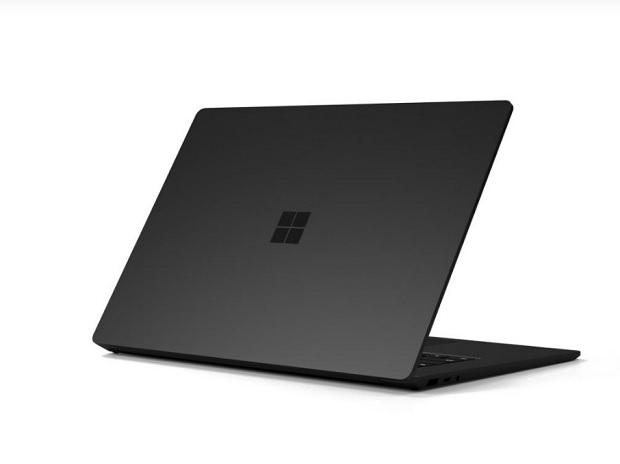
Aimed at the evolving needs of users in hybrid work environments, Microsoft India on Tuesday announced the general availability of Surface Laptop 4 for commercial and education customers.

Surface Laptop 4 for consumers will start from Rs 102,999 (AMD Ryzen 5 4680U, 8GB RAM, 256GB SSD, 13.5-inch size) and going up to Rs 151,999 (Intel Core i5-1135G7, 16GB RAM, 512GB SSD, 13.5-inch).

The device for commercial users will start from Rs 105,499 (AMD Ryzen 5 4680U, 8GB RAM, 256GB SSD, 13.5-inch size) and go up to Rs 177,499 (Intel Core i7-1185G7, 16GB RAM, 512GB SSD, 15-inch), the company said in a statement.

“Our latest line-up provides increased mobility, enhanced performance, and enterprise-grade security features to support the modern-day user throughout their transition into the hybrid era,” said Rajiv Sodhi, Chief Operating Officer, Microsoft India.

The devices are offered in either the 11th Gen Intel Core processors, or AMD Ryzen Mobile Processors with Radeon Graphics Microsoft Surface Edition (8 cores).

The laptop will be available in India for commercial and education customers via authorised retailers and for consumers via amazon.in. Consumer devices will be available with no-cost EMI up to nine months, starting at Rs 11,444 per month.

Surface Laptop 4 will feature the signature 3:2 ‘PixelSense’ high-contrast touchscreen display in both 13.5-inch and 15-inch models, and Dolby Atmos Omnisonic speakers.

Read Complete Article

Twitter, Facebook may not be able to operate in India from May 26

The deadline to comply with the new legal rules meant for big social media platforms, which were issued by the government three months ago, is ending on Tuesday, threatening the operations of the likes of Twitter in India.

According to top official sources, social media platforms such as Twitter, Facebook and others, which were required to abide by the rules notified in the gazette of India on February 25 under Intermediary Guidelines and Digital Media Ethics Code Rules, 2021, have failed to comply on many accounts till date.

The government’s rules will come into effect from May 26.

“If social media companies do not obey the rules, they may lose their status and protections as intermediaries and may become liable for criminal action as per the existing laws of India,” top official sources said.

Except one Indian social media company, Koo, sources said that none of the top social media intermediaries have appointed a resident grievance officer, a chief compliance officer and a nodal contact person yet.

Sources said the failure of social media companies to make these appointments in three months has not gone down well with the government.

With arbitrary suspensions of accounts and inaction over abuses and bigotry on social media platforms, users in India have been persistently complaining against tech giants like Twitter, Facebook and others.

Read Complete Article

Apple HomePod, Mini to support lossless audio via software update

Apple is bringing its lossless audio technology to HomePod and HomePod Mini in a future software update.

Apple has developed its own lossless audio compression technology called Apple Lossless Audio Codec (ALAC).

In a new support document, the tech giant also revealed that Apple TV 4K will only support standard lossless audio at its launch.

Apple Music will offer more than 20 million songs in lossless quality for free at the launch of ALAC technology in June that will reach over 75 million by the end of this year.

Most audio compression techniques lose some amount of data contained in the original source file.

Lossless compression is a form of compression that preserves all of the original data.

In addition to Lossless Audio Codec (ALAC), the entire Apple Music catalog is now also encoded using ALAC in resolutions ranging from “16-bit/44.1 kHz (CD Quality) up to 24-bit/192 kHz,” the company informed.

Apple will deliver music using lossless audio compression to iPhone, iPad, Mac, and Apple TV.

“Lossless will play back normally on Bluetooth speakers and headphones. However, Bluetooth connections don’t support lossless audio,” said the company.

Broadcast radio, live radio and on-demand content from Apple Music 1, Apple Music Hits, Apple Music Country and music videos will not be available in lossless audio.

“We’re offering Apple Music subscribers the additional option to access our entire catalog encoded using lossless audio compression at no extra cost,” said the company.

Read Complete Article

Clubhouse now available on Play Store, early users claim it’s broken

The audio social media platform Clubhouse, which was launched as an iOS-exclusive audio-chat platform back in September 2020, is now available for Android users in India and other parts of the world.

That being said, according to Mashable, those who want to sign up, still need an invite, either from an iOS user or a fellow user of the Android version. Once invited, the sign-up process thereon will be smooth sailing.

However, Android users who’ve tried to sign up have reported that the verification process hasn’t been working as advertised and people aren’t happy about it.

A lot of disappointed users have made their unhappiness known on the Play Store review section. A number of them reported in the reviews section claiming that they haven’t been receiving verification codes and when they try re-entering their phone numbers, they’re either told that the number entered is incorrect or not supported.

To be fair to Clubhouse, this is a public beta and not quite the stable release of the app on Android, but the company should get working to fixing these elements within the app quickly before they lose more users.

As a platform, Clubhouse has been a super popular social media space in 2021, as more people are gradually let into what has traditionally been a fairly exclusive marketplace of ideas.

Though, it seems Clubhouse’s popularity has diminished over the past few months. As per Mashable, Clubhouse had 2 million downloads in January, and while it went up to more than 9.5 million in February.

Read Complete Article

Music streaming giant Spotify adds offline downloads on Apple Watch

Swedish music streaming giant Spotify has announced that it isArolling out the ability to download favourite playlists, albums and podcasts on Apple Watch.

All users are already able to play tracks, albums, playlists and podcasts and now Premium users will also be able to download everything they’re listening to for a true offline and phone-free experience, the company said in a statement.

With the new feature, users can control playback — seamlessly playing, pausing and skipping tracks or podcast episodes — directly from their wrist.

They can also use your Apple Watch to control playback from everything, whether it’s wireless speakers, TVs or gaming consoles, using Spotify Connect.

With Siri support on Apple Watch, users can just say “Hey, Siria followed by your command to play favourite songs, artists, albums, playlists, and podcasts.

Users can also “like” music, ask what’s currently playing, and control your media settings, like volume, skip track, play, and pause.

The new overall experience for Spotify on Apple Watch is rolling out to all users globally over the coming weeks.

Users can either update their watches to the latest version or download the app on the App Store.

Read Complete Article

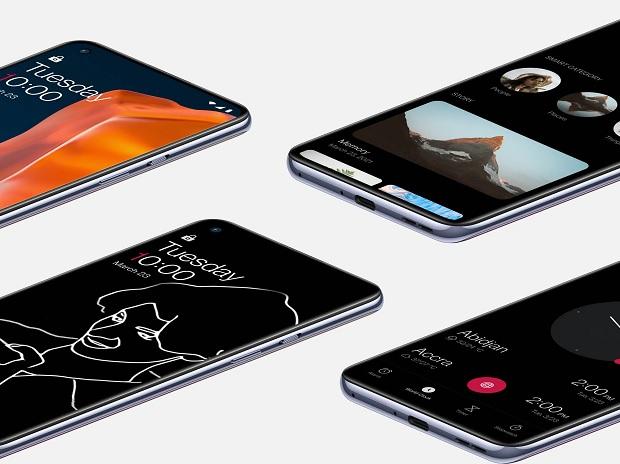
OnePlus 9 review: Competent but lacks fancy bells and whistles of Pro model

The OnePlus 9 Pro (review) is a solid smartphone packed with all sorts of fancy bells and whistles that you expect from a premium smartphone. Though competitively priced, some might find it expensive. For those who do, there is no harm in checking out the Pro model’s younger sibling, the OnePlus 9. Though it cuts some corners on premium features, it brings a motley mix of specifications and features for uncompromised everyday smartphone experience.

Starting with the design, the OnePlus 9 looks almost identical to the Pro model but is more compact. It has a glass cover on the front and back, but the metallic chassis of the Pro model is replaced here by a plastic one. However, the thin and lightweight design and compact form factor compensate for the slightly inferior build. Another apparent change is in the rear camera module, which looks less busy than the one present in the Pro model.

On the front, the OnePlus 9 has a familiar punch-hole display with thin bezels on sides. It is a slightly smaller 6.55-inch AMOLED panel but of a flagship grade with a refresh rate of 120Hz. While the display in the Pro model supports a dynamic refresh rate which variably adjusts the all the way down to 1Hz for extending the on-battery time, the display in the vanilla model operates at either the standard 60Hz or the enhanced 120Hz. Surprisingly, the lack of a dynamic refresh rate here does not compromise on battery efficiency and the OnePlus 9 delivers an on-battery time that is on a par with what you get in the Pro model. However, even if the absence of a dynamic refresh rate does not hinder the user experience, the fullHD+ resolution and lack of value-added display features like motion smoothing do.

Speaking of user experience, the OnePlus 9 ships with the same Android 11-based OxygenOS 11 operating system that powers the Pro model. OnePlus deserves praise for keeping the user interface close to stock Android while integrating value-added features to elevate user experience (customised colour tones, dark mode, night mode, hidden space area, etc). Complementing the user experience is a swift performance, thanks to the Qualcomm Snapdragon 888 system-on-chip, paired with up to 12GB RAM (LPDDR5) and 256GB internal storage (UFS 3.1).

From graphic-intensive games to multimedia editing, there is nothing that the phone could not handle. Moreover, there is a game space with built-in Pro Gaming mode (earlier known as Fnatic mode) for enhanced gaming performance. The OnePlus 9 supports 5G networks, both standalone and non-standalone, and WiFi 6. Though both could not be tested at present, these make for a future-ready smartphone which you might not have to upgrade for connectivity benefits in times to come. The phone also has stereo speakers with Dolby Atmos support.

Read Complete Article

Hyderabad based startup Skyroot Aerospace raises $11 mn Series A funding

Skyroot Aerospace, whichis

into building privatespace launch vehicles,on Thursday said it raised USD 11 million Series A funding from investors led by Greenko Group founders Anil Chalamalasetty and Mahesh Kolli.

According to a press release issued by the city-based startup, the funding also saw participation from public listed entity Solar Group, a major Space and Defence supplier, Former-Whatsapp CBO Neeraj Arora, existing investor Mukesh Bansal (founder of Myntra and CureFit), Worldquant Ventures, Graph Ventures, Sutton Capital, Vedanshu Investments, and few angels.

Naga Bharath Daka, Co-Founder and COO of Skyroot, said the firm started bookings for launches starting from mid next year and is actively engaging global customers.

“We intend to raise USD 40 million more to fund our aggressive growth plans over the next few years,” Daka said.

This is so far the largest investment in the Indian Space Startup Scene after the Indian cabinet approved private sector participation in Space activities, the release said.

Pawan Kumar Chandana, Co-Founder and CEO of Skyroot, said, “We are proud to be backed by visionary Entrepreneurs who built industry leading businesses and share our passion for democratising access to Space. We are excited to work with them in building Skyroot into a leading Space player globally.”

Read Complete Article

China delays supply mission to new space station for technical reasons

China postponed a supply mission to its new space station Thursday for unspecified technical reasons.

The Tianzhou-2 cargo spacecraft was expected to have been launched early Thursday morning. China Manned Space announced the delay on its website but didn’t say when the rescheduled launch may occur.

It would be the first mission to head to the main Tianhe module of the space station that was launched on April 29. Another 10 launches are planned to deliver the station’s other two modules, various components and supplies, and a three-person crew.

The launch of Tianhe, or Heavenly Harmony, was considered a success although China was criticized for allowing the uncontrolled reentry of part of the rocket that carried it into space.

Usually, discarded rocket stages reenter the atmosphere soon after liftoff, normally over water, and don’t go into orbit.

NASA Administrator Sen. Bill Nelson said at the time that China had failed to meet responsible standards regarding space debris.

China’s space program has suffered relatively few setbacks since it first put an astronaut into orbit in 2003, although the space station launch was delayed by the failure of an earlier version of the massive Long March 5B rocket.

Earlier this month, China also landed a probe and its accompanying rover on Mars and has begun sending back pictures from the surface of the red planet.

Only the United States has successfully landed and operated a spacecraft on Mars nine times, beginning with the twin Vikings in 1976 and, most recently, with the Perseverance rover in February.

Read Complete Article

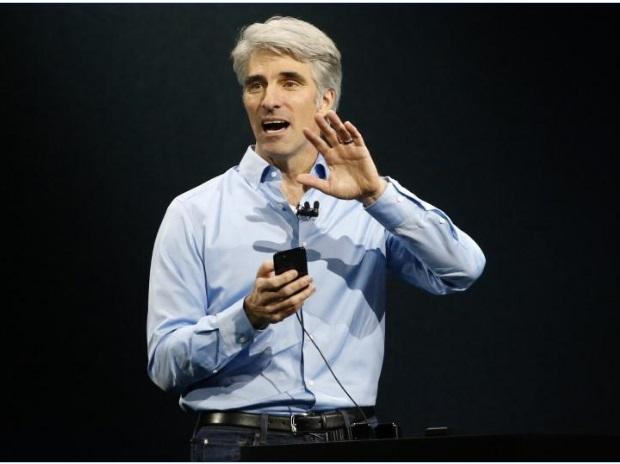
Apple’s software chief faults Mac security to keep grip on iPhone app store

Apple Inc.’s top software engineer criticized the security of his own Mac operating system in a bid to explain why the company shouldn’t be forced by a judge to loosen its hold over iPhone and iPad app distribution, as Epic Games Inc. is demanding.

Craig Federighi, Apple’s senior vice president of software engineering, testified Wednesday at a trial in federal court in Oakland, California, that his experience with imported malware on the macOS system shows how security would be eroded if the company allowed iPhone and iPad users to install software from the web or other stores, as it does on the Mac.

“Today we have a level of malware on the Mac that we don’t find acceptable,” primarily because the system allows users to install software that isn’t vetted by Apple, Federighi said. That makes it less secure than iOS and iPadOS, the operating systems that power the iPhone and iPad, he said.

Allowing apps from other stores or places on the iPhone would create a “very, very bad situation for our customers,” including “a huge decrease in their safety,” Federighi said.

He also said iPhones and iPads have security protections, including the App Store review process, to keep the products free from malware.

Later in his testimony, Federighi said that despite its malware problems, the Mac is the safest choice among personal computers and is more secure than those running Microsoft Corp.’s Windows operating system.

Read Complete Article

PFRDA subscriber base jumps over 23% to 42.7 million by April 2021

The Pension Fund Regulatory and Development Authority (PFRDA) has registered over 23 per cent jump in the subscriber base under its two flagship pension schemes at 4.27 crore by the end of April this year, data showed on Wednesday.

The overall subscriber base under the two schemes –NPS and APY– stood at 3.46 crore by April 2020.

The number of subscribers in various schemes rose to 426.75 lakh by end-April 2021 from 346.01 lakh in April 2020 showing a year-on-year increase of 23.33 per cent, the Pension Fund Regulatory and Development Authority (PFRDA) said in a release.

The number of subscribers under the Atal Pension Yojana (APY) increased by 33.23 per cent to 2.82 crore as of April 2021.

The assets under management (AUM) of these two schemes jumped by more than 36 per cent to Rs 5.90 lakh crore by the end of first month of the current fiscal year 2021-22. Of this, the AUM of APY scheme moved up by 47.4 per cent to Rs 16,136 crore.

The National Pension System (NPS) mainly caters to the employees in the organised sector, including all government staff in the centre and states, while the APY is mainly targeted to fulfil the pension needs of those employed in the unorganised sector in the country.

Read Complete Article