Active internet users in India likely to reach 900 mn by 2025: IAMAI

The number of active internet users in the country is likely to grow nearly 45 per cent to 900 million by 2025 compared to 622 million as of last year, an IAMAI-Kantar Cube report released on Thursday said.

According to the report, rural India may have a higher number of internet users compared to urban centres by 2025 which indicates the need to strengthen the digital ecosystem in the country.

By 2025, there would be a greater number of internet users in rural India than in urban India. Given this, the digital ecosystem will need to evolve to address the specific needs of this emerging demography.

“Vernacular, Voice and Video will emerge as the game changers for the digital ecosystem over the next few years,” Biswapriya Bhattacharjee, Executive Vice President, Insights Division, Kantar said in a statement on the report.

The report suggests that even though the internet penetration in urban India is over two times than rural areas, the usership in rural areas has been growing at a faster rate on a year-on-year basis.

“While internet users grew by 4 per cent in urban India — reaching 323 million users (67 per cent of urban population) in 2020, digital adoption continues to be propelled by rural India clocking a 13 per cent growth to 299 million internet users (31 per cent of rural population) over the past year,” the report said.

The study by internet companies body IAMAI with consulting company Kantar found that small towns account for almost two out of five active internet users (AIU) while the top 9 metros account for 33 per cent of the AIU in urban India.

According to the report, of the 1433 million (143.3 crore) population in India, 622 million individuals are AIU and this translates to about 43 per cent of the total population across urban and rural India.
Read Complete Article

Huawei launches new operating system for phones, eyes IoT market

China’s Huawei Technologies announced the launch of its proprietary Harmony operating system (HarmonyOS) for smartphones on Wednesday, as the embattled company looks to recover from U.S. sanctions that have hobbled its handset business.

Huawei will start rolling out HarmonyOS on certain models of its smartphones from Wednesday evening, offering users the chance to switch from the current operating system that is based on Google’s Android platform.

The use of HarmonyOS means the company will no longer be wholly reliant on Android. U.S. sanctions banned Alphabet Inc’s Google from providing technical support to new Huawei phone models and access to Google Mobile Services, the bundle of developer services upon which most Android apps are based.

Rather than being a like-for-like replacement, Huawei is billing HarmonyOS as an ‘Internet-of-Things’ platform, aimed at operating on and connecting other devices such as laptops, smartwatches, cars and appliances.

Huawei is aiming to have HarmonyOS rolled out on 200 million smartphones and 100 million third-party smart devices by the year-end, said Wang Chenglu, president of Huawei Consumer Business Group’s software department, who has led Huawei’s efforts to develop HarmonyOS since 2016.

Wang spoke at a media roundtable a day earlier and his comments were embargoed until Wednesday.

China’s leading telecommunications equipment maker found itself on a U.S. trade blacklist in May 2019 due to national security concerns. Huawei has repeatedly denied it is a risk.

Read Complete Article

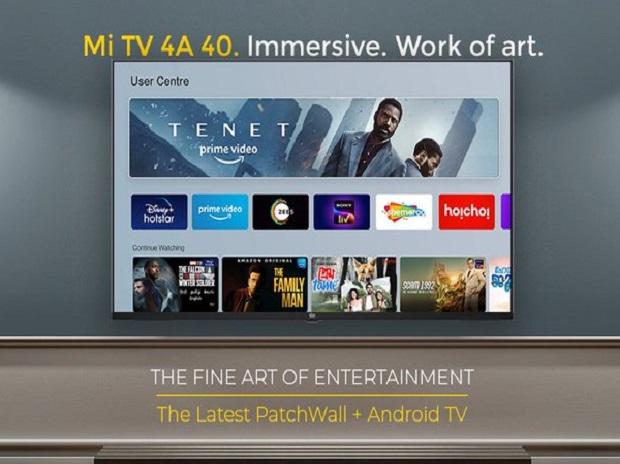
Mi India unveils Mi TV 4A 40 Horizon Edition priced at Rs 23,999

Mi India on Tuesday expanded its new Horizon Edition TV series with the launch of Mi TV 4A 40 Horizon Edition.

Priced at Rs 23,999, the Mi TV 4A 40 Horizon Edition will be available on mi.com, Mi Home, Flipkart, Mi Studio and Retail partner stores.

“At Mi India, smart TVs are one of the biggest categories for us. We are always working towards bringing in specifications and features based on our customers’ feedback to best suit the market needs,” Eshwar Nilakantan, Category lead – TVs, Mi India, said in a statement.

Mi TV 4A 40 Horizon Edition features a 93.7 per cent screen to body ratio and 178-degree viewing angle, easily creating more room for entertainment.

It also features Vivid Picture Engine (VPE) technology ensuring stunning visuals and true-to-life colours.

The VPE technology is tuned to perfection over the years to provide an accurate screen calibration, deeper contrasts, and pinpoint precision in colour reproduction.

The new entrant in the Mi TV Horizon series is powered by an enhanced version of PatchWall.

It allows users to navigate through the universe of varied content from more than 25 content partners such as Disney+ Hotstar, Prime Video and many others.

It offers a truly cinematic experience with an immersive audio visual experience. It supports 20W stereo speakers with DTS-HD and an array of ports available at the back including a 3.5mm audio out, SPDIF and three HDMI ports.

Read Complete Article

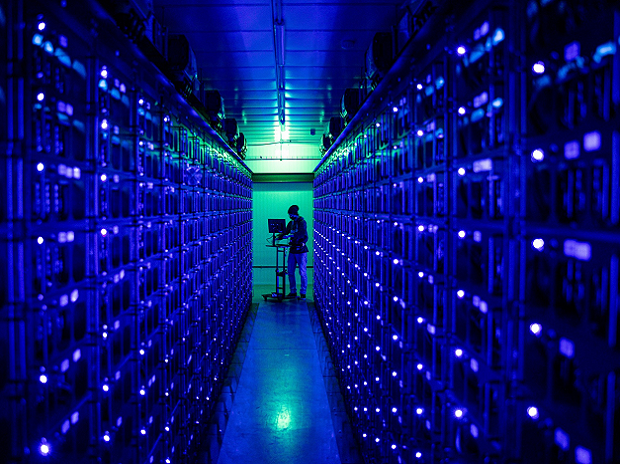
Mumbai’s data centre capacity to grow more than 2-fold by 2023: JLL report

Mumbai’s data centre capacity is likely to grow by more than two times its current capacity by 2023, according to a JLL report.

Mumbai with 199 MW IT load is the leading data centre hub of the country with nine internet cable landing and assured power supply, said the report titled ‘2020 India Data Center Market Update’.

According to JLL, the capacity is likely to reach 529 MW by 2023.

Mumbai is the most preferred destination for cloud players with a 60 per cent share of the occupied space due to its excellent infrastructure support. The state has provided various incentives for setting integrated data centre parks,” said Karan Singh Sodi, Regional Managing Director – Mumbai, JLL India.

“The new supply additions in the city are backed by pre-commitment from cloud players. The city’s strong demand is driven by BFSI, media and IT/ITes companies, leading to high occupancy levels of 95 per cent,” he said.

According to Rachit Mohan, Head, Data Center Advisory (India), JLL, India’s colocation data centre industry witnessed unprecedented absorption of 102 MW during 2020, notching higher absorption than most key markets of Europe and America.

“Fuelled by longer-term trends of rising cloud adoption, increasing digitalisation and progressive legislation, we anticipate increased demand for colocation space nationwide,” Mohan said.

As the data centre landscape continues to evolve, the industry is expected to grow exponentially to reach 1,007 MW by 2023 from its existing capacity of 447 MW.

Read Complete Article

Indian-origin girl among winners of Apple ‘WWDC21 Swift Student Challenge’

Abinaya Dinesh, a 15-year-old Indian-origin girl, is among three winners of the annual WWDC21 Swift Student Challenge, a platform for the young brains willing to demonstrate their coding and problem-solving skills, tech giant Apple said on Tuesday.

Passionate about the intersection of medicine and technology, something that became personal for her last year, Dinesh created an app called Gastro at Home, which she plans to launch on the App Store this summer.

The app offers people with gastrointestinal disorders a way to access information and resources, especially because those types of conditions can sometimes be sensitive to talk about, the statement by the company said.

The idea of creating such an app came in the mind of Dinesh after she herself suffered from gastrointestinal problems.

I went to a gastroenterologist and he diagnosed me with a pelvic floor disorder. But then told me nothing about how I was supposed to get better, Dinesh, who lives in North Brunswick, New Jersey, said.

Over the last year, Dinesh has also started her own nonprofit, Impact AI, to foster learning and ethical practices in artificial intelligence among young people, the statement said.

As part of it, she launched an eight-week high school programme, called Girls in AI, to teach young women the basics of programming and machine learning.

Read Complete Article

‘Tesla’ burgers arriving as Elon Musk’s EV firm plans restaurant chain

Elon Musk is gearing up to launch his own drive-in food chain at Supercharger locations as his electric car company Tesla has applied for a new trademark for its brand under restaurant services.

According to a report in Electrek, the company has applied for three new trademarks with the United States Patent and Trademark Office that will cover the categories of “Restaurant services, pop-up restaurant services, self-service restaurant services, take-out restaurant services”.

“The application is awaiting examination and will be reviewed by an attorney around August 27,” the report said on Tuesday.

Tesla’s iconic ‘T’ logo is featured on the application, to be trademarked for use by its branded restaurants.

Way back in 2017, then Tesla CTO JB Straubel had said that the company might move into the restaurant business.

In 2018, Musk said in a tweet: “Gonna put an old school drive-in, roller skates & rock restaurant at one of the new Tesla Supercharger locations in LA”.

A few months later, Tesla applied for building permits for “a restaurant and Supercharger station” at a location in Santa Monica in the US.

The project went into cold storage for about three years and now, a new building application has been submitted earlier this year.

The new development probably means that the company plans for a ‘Tesla’ branded restaurant chain.

Read Complete Article

LG converting smartphone production lines to manufacture home appliances

LG Electronics is fast converting its overseas smartphone manufacturing lines into facilities that produce home appliances, industry insiders said on Tuesday, following its decision to withdraw from the mobile business.

LG said the Brazilian government last month approved its plan to expand its Manaus plant in Amazonas, northwestern Brazil, in a move to shift its production lines from the Taubate site on the east coast.

When the $62 million project is completed, LG Electronics will have new production lines for laptops and monitors at the Manaus plant.

The South Korean tech giant said all of its Brazilian manufacturing will be consolidated in Manaus down the road, reports Yonhap news agency.

Started in 1995, the Manaus plant was originally established to manufacture TVs, microwave ovens and DVD players, with air conditioners added in 2001. The Taubate plant has been in operation since 2005, producing mobile phones, monitors and laptops.

The latest relocation follows LG’s move in April to convert its smartphone line at the Haiphong plant to make home appliances in northern Vietnam.

LG earlier announced it will exit from the mobile business by July 31 after years of money-losing performances. Since then, it has been working to relocate its mobile workforce and resources to its core home appliance business.

Demand for LG’s premium appliances has been soaring on the back of the pandemic-induced stay-at-home trend.

Read Complete Article

India and the world want social media firms to do more for ‘safe harbour’

As India tightens the noose of regulatory compliance around social media platforms, there have been concerns about dilution of the safe harbour provision in the country’s Information Technology Rules.

Safe harbour means immunity for social media companies, in case any content transmitted over their platforms violates the local laws. Facebook, Twitter, Instagram, YouTube and a host of other social media platforms enjoy such immunity, as several jurisdictions, including India, recognise these platforms are like bookstore owners, mere conduits that shouldn’t be held accountable for the content of the books in their store.

But in the digital economy, various countries, looking to check the spread of misinformation and hate speech, require social media platforms to fulfil certain conditions to enjoy their safe harbour. A common condition across countries is that these platforms should remove ‘unlawful’ content, after receiving actual knowledge about the same in a notice from the courts or law enforcement agencies (LEAs). India’s new IT rules broaden these conditions substantially. They require significant social media intermediaries — social media platforms with over 5 million users — to identify the first originator of any piece of information, which the government feels jeopardises the sovereignty and integrity of India. Law experts have pointed out that the wording of these rules is too broad-based and could mean many things. There is also the concern about what the government treats as fake news or unlawful content, as recent events such as the clampdown on young ‘toolkit’ activists would attest.

WhatsApp said that to identify the first originator, it would need to break the end-to-end encryption (E2E) on its platform. Tech experts agree. E2E forms the fulcrum of WhatsApp’s, Signal’s and Telegram’s claims of safeguarding user privacy. It means that no one, even WhatsApp, can read your messages. But to comply with the new norms, it would have to store ‘hashed’ data about the originator of each message. So the new rules require platforms to store more user data, undermining the principle of data minimisation.

Read Complete Article

Realme X7 Max 5G, Smart TV 4K launched in India: Know price, specs and more

Realme on Monday launched in India the Realme X7 Max smartphone along with a two 4K LED smart televisions. The Realme X7 Max is the first smartphone in the country powered by MediaTek Dimensity 1200 system-on-chip. It is a flagship grade smartphone with super AMOLED screen of 120Hz refresh rate, stereo speakers with Hi-Res audio and Dolby Atmos support, 64-megapixel based triple camera array on the back, and 50W fast-charging capability. The Realme Smart TV 4K, on the other hand, boasts UHD screen with support for Dolby Vision and HDR10 content, DTS surround sound and Dolby Audio, and hands-free voice assistant through built-in far-field microphones.

The Realme X7 Max will be available in mercury silver, asteroid black and milky way colours from June 4 on Realme online portal, Flipkart and other mainline channels. The phone will be available in 8GB/128GB and 12GB/256GB configuration, priced at Rs 26,999 and Rs 29,999, respectively.

The Realme Smart TV 4K comes in 43-inch and 50-inch screen sizes priced at Rs 27,999 and Rs 39,999, respectively. The TVs will go on a sale from June 4 on Realme online portal, Flipkart and other mainline stores.

Realme X7 Max 5G: Specifications

Third smartphone in the performance-centric Realme X7 series, the Max edition is powered by MediaTek Dimensity 1200 system-on-chip. It is a flagship octa-core chip with a prime Cortex-A78 core clocked at up to 3.0GHz; three additional A78 cores clocked at up to 2.6GHz; and four energy-efficient Cortex-A55 cores that could go up to 2.0GHz. Besides, the phone sports a 6.43-inch fullHD+ super AMOLED screen of 120Hz refresh rate and 360Hz touch sampling rate. It boasts a triple-camera set-up on the rear, featuring a 64-megapixel primary sensor, an 8MP ultra-wide sensor, and a 2MP macro sensor. On the front, the phone has a 16MP punch-hole camera. It is a 5G smartphone with dual-SIM dual-standby and standalone carrier support on both SIMs. The phone boots Android 11 operating system based Realme UI 2. Powered by 4,500 mAh battery, the phone supports 50W fast-charging through supplies 65W fast charger.

Read Complete Article

Global chip supply shortages may take couple of years to address: Intel CEO

Global chip maker Intel on Monday said it could take a couple of years to address the supply shortage in the semiconductor ecosystem that is witnessing huge demand for tech products, accelerated by the COVID pandemic.

Intel CEO Pat Gelsinger noted that the work and study-from-home trends during the COVID-19 pandemic have led to a “cycle of explosive growth in semiconductors” that has placed huge strain on global supply chains around the world.

“We have been working diligently with our partners… to address constraints and increase output to meet demand, and we are acting to help ensure capacity to meet the world’s needs for this new era… But, while the industry has taken steps to address near-term constraints, it could still take a couple of years for the ecosystem to address shortages of foundry capacity, substrates and components,” he said at a virtual session at the Computex event.

He stated that the company has doubled its internal wafer capacity in the past four years, and that it is driving a collaborative approach to help the supply chain.

Semiconductors play a crucial role in everything, right from computers to appliances, communication devices, transportation systems to critical infrastructure.

“We’ve already announced more than USD 20 billion of new investment in our foundry capability. This includes large scale capacity expansion in Arizona, in support for advanced semiconductor manufacturing technologies in New Mexico. We plan to expand to other locations in the US and Europe, ensuring a sustainable and secure semiconductor supply chain for the world,” Gelsinger said.

Intel Corporate Vice President and General Manager CCG Sales Steve Long announced the launch of two new 11th generation Intel core SKUs that will help the company deliver performance and extend its leadership in the thin and light notebook category.

The company is also launching the Intel 5G solution 5000, its first 5G product for the next-generation of PC experiences.

“This is Intel’s first 5G product coming out from our previously announced collaboration with MediaTek with global certification. Acer, Asus and HP are expected to bring these 5G-enabled PCs to market this year and the momentum continues in 2022, with over 29 designs expected,” Long said.

Read Complete Article