Top headlines today: RBI policy, ATM network, NSE’s IPO, and more

What the India’s central bank may announce this week after its monetary policy meeting and why ATM networks must change: Our top headlines explain.


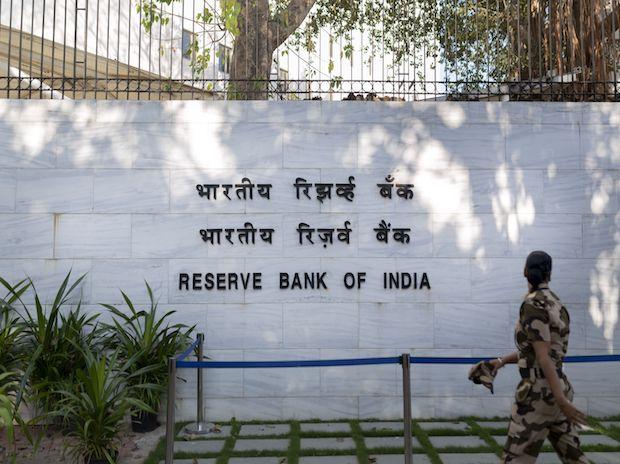
Experts see status quo, will read between lines: BS monetary policy poll

The RBI would not want to change its rates or stance in the August 6 monetary policy announcement, according to economists and bond market participants. Read More

No agenda listed for FSDC’s next meet, FinMin expresses surprise


The ministry of finance has expressed surprise that no financial sector regulator has offered any agenda for the forthcoming meeting of the FSDC. Read More

ATM networks will have to be reinvented to face the onslaught of technology


There are fresh stirrings in ATM networks. Though deployments have crossed 250,000 units, after stagnating at 225,000-235,500 for almost five years, the bulk of the orders are for replacing aging machines. Read More

Competition Commission open to probe Flipkart, Amazon separately


The Competition Commission of India is open to considering the allegations against Flipkart and Amazon as separate cases, based on its investigations, a senior official told Business Standard.
Read Complete Article

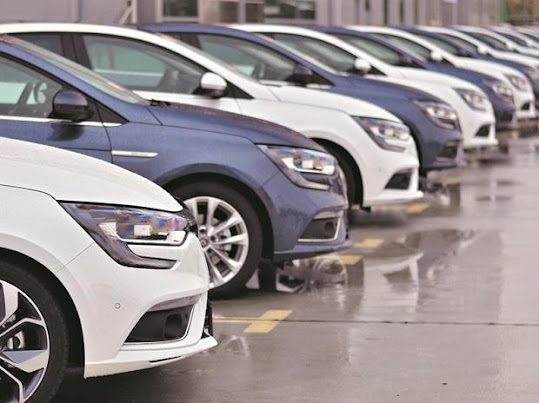
Demand revival puts auto sales in top gear, Maruti posts 50% growth

Auto sales, a key indicator of the macro economy, showed significant growth in July, with passenger vehicle volumes improving on the back of a healthy order book and an uptick in enquiries and bookings in urban and rural areas. The wage revisions for government employees have also likely aided demand.

India’s largest carmaker, Maruti Suzuki, posted total sales of 162,462 units in July 2021 as against 108,064 units during the same period last year, registering a 50 per cent growth. The company’s total sales in the month include domestic sales of 136,500 units, sales of 4,738 units to other Original Equipment Manufacturers (OEMS), and 21,224 units for exports.

Maruti said that domestic sales in July remained lower than the previous high recorded during the same month in 2018-2019 owing to the pocket lockdowns in different parts of the country. The company said that it is witnessing an encouraging revival in demand after a slowdown due to the impact of the second wave.

“With fast unlocking happening across the country, we are witnessing a good recovery, and in July we have seen a pickup in enquiry that is roughly 85 per cent of Q1 of the last financial year,” said Shashank Srivastava, senior executive director, marketing and sales at Maruti Suzuki.

Hyundai, the country’s second largest carmaker, too, has reported a 45.9 per cent year-on-year growth in sales. “A positive growth momentum is clearly visible in the passenger vehicle industry, with the stabilisation of macro-economic factors, good monsoons and increase in consumer shift towards personal mobility,” said Tarun Garg, director for sales, marketing and service, Hyundai Motor India.

Mumbai-based Tata Motors, which has models such as Nexon, Harrier and Safari in the domestic market, sold 54,119 vehicles in July — a 19 per cent growth compared to the same period last year.

Read Complete Article

Auto industry postpones Auto Expo Motor Show 2022 owing to coronavirus fear

In a first, India’s auto industry is postponing the Auto Expo – The Motor Show 2022 in view of the pandemic and the uncertainty ahead, auto industry body Society of Indian Automobile Manufacturers (Siam) said in a statement. Scheduled to be held from 2nd – 9th February 2022 at India Expo Mart in Greater Noida, the show is being postponed keeping in mind the safety of exhibitors, visitors, and all stakeholders involved.

This is the first time that the industry body is postponing the bi-annual annual auto show since it started organizing it in 1986. India’s auto industry is not the only one to do so. Several marquee international auto shows have been postponed in view of the global pandemic.

“The Indian automobile Industry and Siam recognises the inherent risks in organizing the Auto Expo due to the on-going Covid-19 Pandemic and the apprehensions of a possible 3rd Wave. There is uncertainty around how COVID-19 would develop in the coming months and at the same time organizing Auto Expo would need a lead time of preferably a year,” said Siam.

“Auto Expo, it added, is like a festival of celebration, for the industry and the hosts look forward to receiving maximum people with no fear of spreading of infection. The magnitude of the risk of spread of infection is extremely high in a business-to-consumer show like an Auto Expo which is visited by large crowds and maintaining social distancing would be difficult. It has therefore been decided to postpone the Auto Expo – The Motor Show for now, it said.

The exact date for the next edition of Auto Expo would be finalised later this year keeping in view the Covid situation and in alignment with the OICA Calendar of global Auto shows, said Siam.

Read Complete Article

China’s Realme to export ‘make in India’ smartphones to Nepal from Q3 2021

Smartphone brand realme on Monday said it will export ‘make in India’ smartphones to Nepal from the ongoing third quarter, as the fastest-growing company aims to be among the top 2 smartphone brands in the neighbouring country by 2022.

realme will consider exporting TVs and its wide range of AIoT (artificial intelligence of things) products to Nepal at a later stage.

“We have received great success in India and will look forward to receiving a similar achievement in Nepal where we are providing our latest and innovative products at democratised prices,” said Madhav Sheth, Vice President, realme and CEO, realme India and Europe.

“Our aim is to be among the top 2 smartphone brands in Nepal by 2022,” he added.

With localisation and innovation at its core, realme sees Nepal as a critical market and will expand its presence in the smartphone market in order to meet consumer needs, making its products available across price segments for consumers.

realme is currently the fourth top smartphone brand in India, Czech Republic and Greece.

It has become the leading 5G smartphone brand in India with a 23 per cent share in Q2 2021, and is the fastest brand to reach 50 million cumulative smartphone shipments in India, according to Counterpoint Research.

realme is all set to launch its first laptop in India in this quarter that will offers industry-disrupting specifications at a reasonable price.

Read Complete Article

Samsung maintains second spot in tablet market in Q2, says report

Samsung Electronics stayed on as the world’s second-largest tablet computer vendor in the second quarter of the year, a report showed on Friday, as it strives to catch up with industry leader Apple.

The South Korean giant logged a market share of 18 percent in the April-June period, after shipping 8.2 million Galaxy Tab tablets, up 19 percent from a year ago, according to market researcher Strategy Analytics.

“The Android tablet market is undergoing big changes as vendors retool their portfolios for more productivity solutions for the hybrid work and digital learning era,” Chirag Upadhyay, an analyst at Strategy Analytics, said.

Samsung leads the segment with its Galaxy Tab S7, including premium features like 5G connectivity.”

Apple defended its top position with a 35 percent share as its iPad shipments jumped 11 percent on-year to 15.8 million units in the second quarter, reports Yonhap news agency.

Lenovo Group came in third with a 10 percent share as its tablet shipments grew 67 percent on-year to 4.7 million units.

Amazon took the fourth spot with a 9 percent share, followed by Huawei Technologies Co. with a 5 percent share.

Worldwide tablet shipments reached 45.2 million units in the second quarter, but their growth stayed nearly flat compared with the previous quarter due to supply constraints.

“Hybrid working and virtual learning options continue to fuel high demand for mobile computing devices, but vendors are expected to face increasing supply shortages for the rest of 2021,” Eric Smith, a director at Strategy Analytics, said.

“If higher component and transportation costs make their way into tablet price tags as expected, the competitive environment for mobile computing devices will be intense.”

Read Complete Article

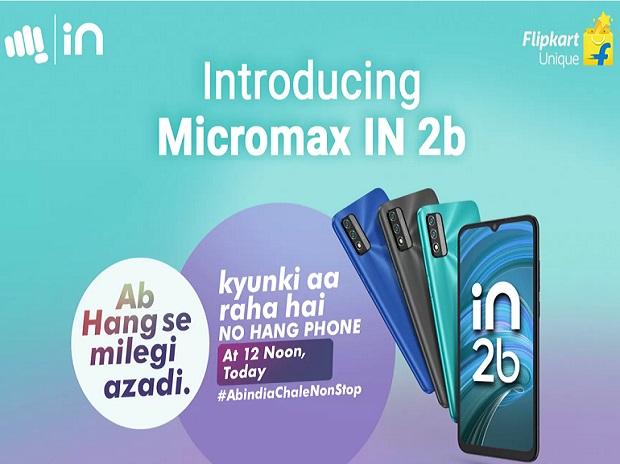
Micromax In 2b all set to launch on Friday; check expected price, features

Home-grown electronics manufacturer Micromax is all set to launch the Micromax In 2b on Friday at 12 pm IST. The upcoming device is going to be the fourth IN-series handset after the IN Note 1, IN 1b and In 1 smartphones.

The company made a comeback to India’s price-conscious smartphone market with the launch of IN Mobile series in November last year. The firm is also reportedly working on its In 2C smartphone with its launch scheduled for the next month.

Micromax In 2b will be available on the e-commerce site Flipkart and Micromaxinfo.com.

Ahead of the launch of the new In 2b smartphone, Micromax released a teaser revealing its colour variants and design. According to the promotional video, Micromax In 2b will be available in three different colours; blue, black and green.

Going by some media reports, the device is likely to be more suitable for entry-level smartphone users. It is also said to deliver at least 30 per cent improved graphic performance as compared to its predecessor Micromax In 1b.

Micromax In 2b launch details

The Micromax In 2b launch event will begin at 12 noon tomorrow. It will be live streamed on Micromax’s handle on social media platforms, including Twitter, Facebook and Instagram. Besides, the event live stream will be available on the official YouTube account of the company.

Read Complete Article

Nothing ear (1) wireless earbuds review: Music to the ear, jewel to the eye

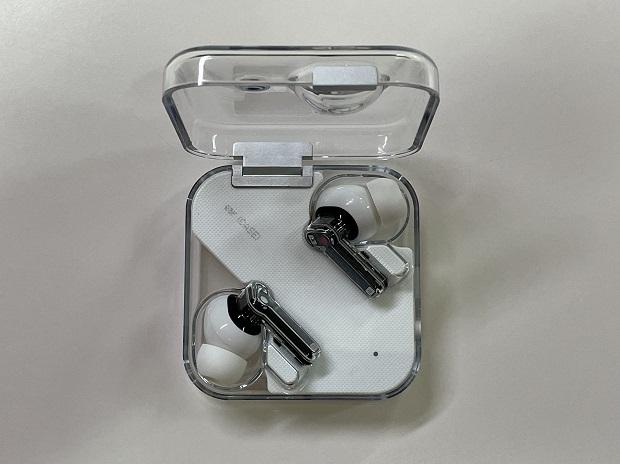
After a slight delay in launch, London-based tech start-up Nothing’s first audio product is finally here. Called the Nothing ear (1), this pair of wireless earbuds boasts a novel and distinct transparent design. Priced at Rs 5,999, the ear (1) is full of features, including some that you find only in expensive wireless earbuds, such as active noise cancellation and wireless charging.

On paper, the Nothing ear (1) seems to beat the competition hands down. But is it equally good in real-life experience? Let’s find out:

Design

The Nothing ear (1) looks different, in a good way. Unlike other wireless earbuds, the ear (1) has a semi-transparent design, for both earbuds and charging-cum-storage case. One must give it to Nothing’s co-founder Carl Pei for taking the bold decision of going ahead with a semi-transparent design for the ear (1) simply because it is always easy to cover things up using pretty props; adding finesse on a naked design takes some effort. That said, the ear (1) looks clean and goes in line with the brand philosophy that tech should not be intrusive but something that fades into the background.

Though the ear (1)’s semi-transparent design looks refreshing, its white colour theme is underwhelming. I, for one, would have easily gone for black, but ear (1) does not have colour options. The colour choice is a subjective matter and people with a liking for whites would appreciate the overall design of the Nothing ear (1).

As for the build, the ear (1)’s earbuds are durable and sturdy, but I have my apprehensions about the earbuds’ charging-cum-storage case. Made of polycarbonate, the case is bigger than those of peers. Though it has a light weight, has a metallic hinge and a strong magnetic stopper to keep the lid closed until you want to open it, the overall body seems fragile, and it might break if dropped accidentally, especially if dropped with the lid open.

Read Complete Article

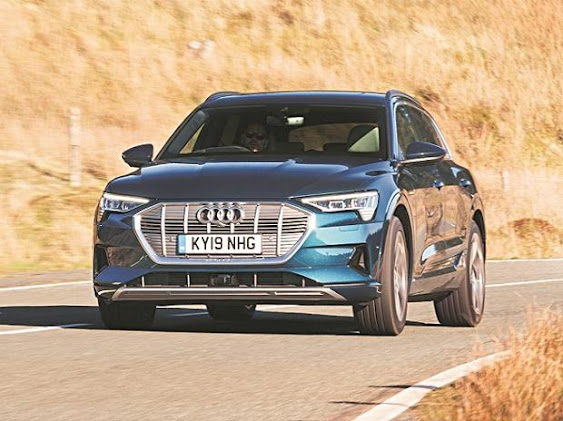
Silence! Audi’s electric SUV is now in town: Check details here

When vehicles that were concept cars or showstoppers at motor shows become market-ready and roll out at dealerships in your town, you know that the brands have reached a tipping point and it’s a matter of time before the models become commonplace.

That’s the case with electric cars the world over. They are increasingly becoming more prevalent with new model launches, as brands such as Lamborghini, Lotus and more launch cars that they say will be their very last “fossil fuel” version.

To be sure, this Audi’s latest launch is not the first electric SUV in the market. There have been others that range from the mass market Hyundai Kona to the Mercedes-Benz EQC in recent years. But what makes the e-tron SUV (Q5 equivalent) special is that from inside and out it looks and feels the same as a regular Audi SUV. Except that there’s no gear, no sound and no engine.

However, it has an auditory feature that throws up a soft but audible whirring sound like a spaceship while driving as well as a different tone on the outside to let bystanders know a car is on its way. And, of course, there are tonnes of features that will make any premium car lover sit up and take notice. Think permanent all-wheel drive, adaptive air suspension and panoramic sunroof as standard features, as well as a 16-speaker Bang & Olufsen 3D Surround Sound System and an air quality package with air ioniser.

Audi opened up sales for the e-tron with bookings available on its website for a down payment, something that is growing slowly but surely as a D2C sales channel for most industry players now in the auto world as demonstrated by an announcement made by Mercedes-Benz a few weeks ago confirming that it would allow customers to buy cars directly.

Read Complete Article

Apple and Google are winning big, but one company is about to pull ahead

Apple Inc. and Google-parent Alphabet Inc. have each managed to make copious sets of obscene amounts of money in any environment — pandemic or not. But the paths for the two technology behemoths may start to diverge later this year.

Both companies reported blowout numbers late Tuesday that far exceeded Wall Street expectations. Apple posted adjusted earnings per share of $1.30, compared with an average analyst estimate of $1.01, resulting in a quarterly profit of $21.7 billion for the three months ended in June. Likewise, Alphabet generated earnings per share of $27.26, ahead of the $19.35 consensus, while generating net income of $18.5 billion for its second quarter. Shares of Apple fell in after-hours trading, while Alphabet’s stock climbed.

There’s a logic behind the reactions. No two tech giants are the same, and it comes down to their business models.

Take Apple. For all the talk about its software-and-services businesses, the company’s foundation still relies on the iPhone. Despite the strong sales results for this quarter, investors are already looking toward how its next smartphone lineup will do. The problem is, there may be little reason to upgrade. Earlier this month, Bloomberg News reported that Apple plans to launch four models in September with minor feature improvements and similar designs to last year’s. If true, it will be a big letdown compared with the current iPhone 12 lineup, which was the first from Apple with faster fifth-generation wireless capabilities.

And then there are the supply-chain complications. For the second quarter in a row, Apple executives said component shortages will hurt its results. The uncertainty around next year may already be contributing to the shares’ underperformance this year.

Read Complete Article

Record quarter by Apple, Alphabet, Microsoft gives way to growth scepticism

Three of the world’s largest companies — Apple Inc., Microsoft Corp. and Alphabet Inc. — reported about $57 billion in combined profit in a record-busting quarter, riding a resurgence in consumer and business spending.

Yet markets responded coolly. In part, investors were skeptical that these companies can continue to post double-digit growth for quarters to come.

The world’s largest tech companies have gotten larger at a torrid rate. Their market valuations have skyrocketed this year as world economies rebounded from pandemic lows — with both Apple and Microsoft topping $2 trillion in market value — adding pressure to keep up the pace. All the companies were bullish about their prospects, but investor optimism was tempered by signs that the momentum of the past year may be ebbing.

“All three of these companies — Apple, Microsoft, Google — are just performing phenomenally,” Jeremy Bryan, a portfolio manager at Gradient Investments, said in an interview with Bloomberg TV. “They just look really good. They’re executing perfectly, their customers are coming back in droves.”

Even though all the companies were bullish about their prospects, investor optimism was tempered by signs the momentum of the past year may be ebbing.

Microsoft was first out the gate Tuesday, reporting sales that topped analyst expectations for the 10th straight quarter.

Read Complete Article