Samsung ranks fourth in global Android 5G smartphone market in Q2: Report

Samsung Electronics was the world’s fourth-largest vendor of Android 5G smartphones in the second quarter of the year, a report showed on Tuesday, as Chinese makers aggressively expanded their presence.

Samsung had a market share of 16.5 percent in the April-June period after shipping 15.6 million units of 5G smartphones powered by the Android operating system, according to market researcher Strategy Analytics.

China’s Xiaomi led the market with a share of 25.7 percent after its shipments soared 452 percent on-year to 24.3 million units. Vivo was the runner-up with an 18.5 percent share followed by Oppo with a 17.9 percent share.

The global Android 5G smartphone market grew 104 percent on-year to 94.6 million units in the second quarter, Strategy Analytics data showed.

When tallying cumulative Android 5G smartphone shipments since the first quarter of 2019, Samsung came in second behind Huawei.

Samsung, the world’s first supplier of 5G smartphones, has shipped 76.5 million Android 5G smartphones since the first quarter of 2019, while Huawei’s shipments reached 95.2 million units over the period.

Xiaomi came in third in terms of cumulative shipments with 70.4 million units, the data showed.

Read Complete Article

LG Electronics to expand streaming service LG Channels on smart televisions

LG Electronics on Tuesday said it will expand its streaming service on smart TVs as the tech giant tries to increase its presence amid the pandemic-driven stay-at-home trend.

The South Korean company said LG Channels will be launched in an additional 11 European countries, including Switzerland and the Netherlands, within this year.

LG Channels, LG’s free content streaming service set up in 2015, is currently available in 14 countries providing some 1,600 channels, but that will be expanded to 25 countries with 1,900 channels, it added. In South Korea, users can watch 144 channels for free.

To show more content from the Korean Wave, referring to the global popularity of Korean culture, the company said YG TV, which offers exclusive content from YG Entertainment, and New K. Movies, a channel dedicated to Korean movies, have recently become available on LG Channels in the United States, Canada, Brazil and Mexico, in addition to four other European countries.

In Europe and Latin America, LG will bring popular content providers, including Pluto TV and Rakuten TV, to LG Channels, reports Yonhap news agency.

LG said it also plans to have a software update so that its streaming service can be available on any smart TV that uses its webOS platform. Earlier, LG said some 20 TV manufacturers, including RCA, Konka and Ayonz, will release TVs installed with its webOS platform.

The world’s largest OLED TV vendor said it will also apply a new user interface to LG Channels that enhances content recommendation features. The UI update for its old smart TVs released after 2016 will start next month, the company added.

LG said the number of users and their viewing time on LG Channels doubled from a year earlier, saying its efforts to expand its free content service is gaining popularity amid the stay-at-home trend.

Read Complete Article

Samsung to expedite chip plant investments after chief’s parole

Samsung Group, the country’s largest conglomerate, is likely to ramp up its investment in chip plants amid the global shortage and merger and acquisition (M&A) with the parole of its leader despite controversy over the legitimacy, industry insiders said on Monday.

The parole board under the justice ministry approved Lee Jae-yong’s release from jail after hours of review, making him free from Friday.

The Samsung Electronics Vice Chairman has been behind bars since January after he was sentenced to 2 1/2 years in prison by the Seoul High Court in a retrial of a bribery case involving former President Park Geun-hye.

Lee’s parole comes at a time when Samsung is reviewing its investment and M&A plans. With the tech giant’s top decision maker soon to be released, industry observers expect that Samsung will speed up its major business plans in the near future, reports Yonhap news agency.

Samsung Electronics, the world’s largest memory chip and smartphone vendor, is currently looking to build a $17 billion foundry fab in the US, but has yet to decide its location.

Sites in Texas, Arizona and New York have been mentioned as candidates, but the company is reportedly still negotiating with municipal authorities over incentives for a new chip facility.

The decision on the US chip plant is critical as Samsung’s rival companies are moving ahead to expand their production capacities amid global chip shortages.

Read Complete Article

Enter: The brand called Neeraj Chopra, India’s new sporting superstar

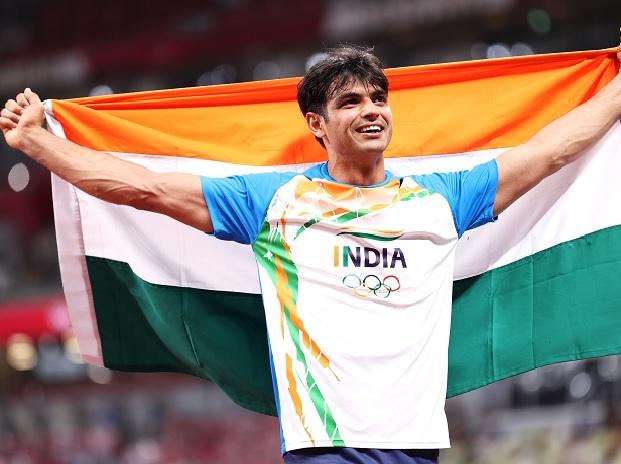
Neeraj Chopra unleashes a spear that soars into the Tokyo sky, stops himself before the foul line by gripping the turf for a split second, and springs back in one swift motion. Next, he nonchalantly turns his back on the javelin — still in its flight path — and holds his arms aloft.

In a matter of seconds on August 7, the 23-year-old not only sealed an astonishing win to end a country’s century-old drought in track and field at the Olympics but he also announced — with power, poise, panache and a photogenic face — the arrival of India’s brand new sporting superstar.

The floodgates are now open. Within a day of his Olympics feat, Mahindra Group Chairman Anand Mahindra promised to gift an SUV to the javelin thrower; edtech major Byju’s declared a cash reward of Rs 2 crore; and IndiGo offered him free air travel for a year.

According to brand experts, Chopra has vaulted himself into the elite club of Indian athletes whose brand values can rake in endorsements by the dozens. They add that the man with the golden arm could even surpass some, if not all, top cricketers — the demigods who stand well above athletes from other disciplines in India.

Chopra has been brand ambassador for British electronics firm Amstrad, among others. But, post-Tokyo, his brand value will shoot through the roof, says image guru Dilip Cherian. “People with track and field gold are rare. So the choice set of the number of people available for this branding market is very small,” he adds.

In Chopra’s case, the fact that he serves in the Indian Army (as a junior commissioned officer) adds to his being an exception and works to his advantage in the prevailing atmosphere of hypernationalism.

Read Complete Article

Blaupunkt Cybersound 55 TV review: A mismatch of great audio, weak display

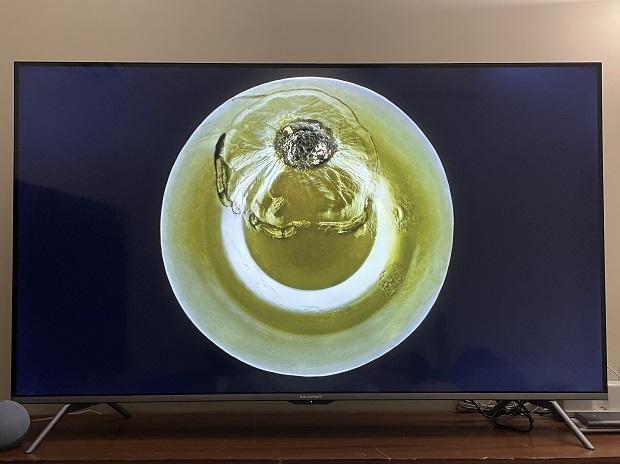
India’s contract electronics manufacturer Super Plastronics Pvt Ltd (SPPL) recently announced brand licensing partnership with Blaupunkt to manufacture, market, sell and service the German audio tech company’s smart television in India. Among the first products to be launched under the partnership is the Blaupunkt Cybersound 55 TV. Priced at Rs 40,999, this Android 10 TV platform-based smart television boasts a bezel-less design, a quad-speaker set-up of 60W combined output, supported by Dolby Digital Plus, DTS TruSurround, and Dolby MS12 sound technology. On paper, the Blaupunkt Cybersound 55 TV seems to be a good value proposition in the smart LED TV segment. But is it? Let’s find out:

Design

The Blaupunkt Cybersound 55 TV is a regular-looking unit with simple design without any fancy bells and whistles. It is neither thin nor bulky and looks similar to most budget LED smart TVs you get at this price. However, the TV’s thin display bezels accentuate the front profile, and the tall silver-painted legs for a table top installation add some zing to the otherwise boring design. The TV also supports wall-mount installation, but that makes accessing ports difficult.

Speaking of ports, the TV has three HDMI ports and two USB ports, both available at the back. It also has Ethernet port for wired internet connectivity and an optical port for wired audio system connectivity. Connectivity is covered by Bluetooth v5 for wireless internet connectivity, Chromecast for screen casting (mobile and laptop), and dual-band Wi-Fi (2.4GHz and 5GHz).

Read Complete Article

Dyson Omniglide vacuum cleaner review: Makes everyday cleaning easy and fun

Cleaning your home is not easy, especially with conventional tools like brooms and dry mops, as they are not efficient in picking the dust and dirt from the surface, and accidentally push the visible and invisible clutter into hard-to-reach corners. There has been some modification to the design of brooms lately, such as swivel cleaning heads, long arms, etc, but none of these innovations makes them any better. Then there are vacuum cleaners, but their wired operations and hefty design limit their utility. A product with the efficiency of a vacuum cleaner and flexibility of conventional cleaning tools, therefore, was long in waiting. And that is exactly what the Dyson Omniglide vacuum cleaner offers.

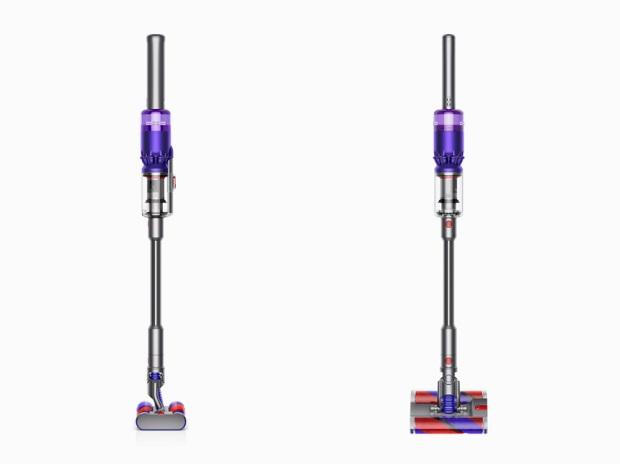
The Omniglide is an in-line format cordless vacuum cleaner, which takes its strength from Dyson’s newly designed omnidirectional Fluffy cleaner head. Starting with the cleaner head, it has two counter-rotating rollers, which allows the vacuum cleaner to move and pick up dust both when moving forward and backward. Besides, there are four stabilising castor wheels on the cleaner head for 360-degree movements. The omnidirectional cleaning head gives the Dyson Omniglide maneuverability around obstacles and tight spaces.

Complementing the cleaner head, capable of moving in all directions, is the Omniglide’s in-line design. From the suction hose to bin, motor, handle, and battery, every component of the Omniglide is arranged in a line. Therefore, you can use it just like the conventional cleaning tools to vacuum-clean the surface. While the in-line design makes the vacuum cleaner reach the otherwise difficult to reach areas, the omnidirectional Fluffy cleaner head makes the cleaning job effortless as it moves in all directions.

Read Complete Article

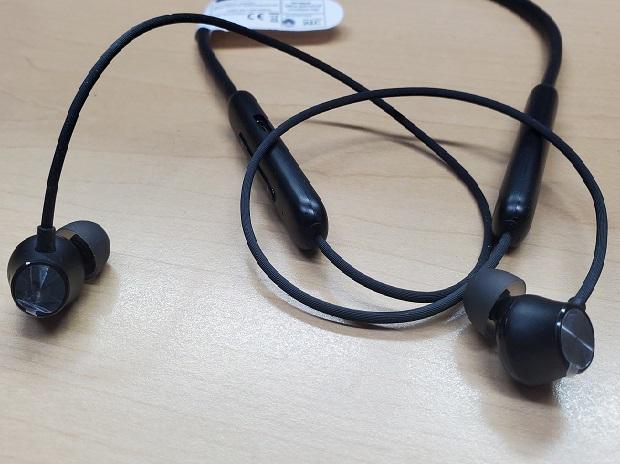
Dizo wireless earphones review: Much the same, but still a bit different

Realme may have hived off a new brand to attract ultra-low-cost customers, but the design elements of the new product haven’t changed much. While Realme has two offerings in the wireless earphone range, some of the design aspects and functionality have been carried on from one to the other. Besides, with a host of new entrants, there is enough competition for Dizo to distinguish itself.

Design

If you have looked at Realme earphones, Dizo won’t look much different. With the same plasticky neckband, a bit oversized earphones, and control over one side, Dizo might seem like a replica, but there is some difference. The new buds carry thicker band support and a more matte finish. The neckband is comfortable until you start sweating, from which point it starts getting a bit problematic and sticky. The magnetic clasp on the earphones works perfectly and has an excellent clack sound to it. But like the Realme earphones, the neckband is too thick and very conspicuous. It can be noticeable from afar and poses a bit of an issue compared to others in the same price range. But the buds are made for long-term wear. Although the buttons on the band are easy to operate, I would have preferred a distinguishing mark. Also, changing the ear tips is a problem like the other product categories.

Sound quality and battery life

Realme is known for its loud pitch and extra bass, and that gets carried forward here. Much like the Dizo wireless buds, there is not much to desire in terms of depth. At high levels, even the bass gets too garbled. The best sound range to run the earphones is at 60-70 per cent volume. The Realme app offers very little in this regard. Again, the company will have to upgrade its app to make a serious foray into the space. The lack of EQ control is disappointing. Although the earphones fit properly, sound leakage is an issue, and if you put the speakers on blast, expect others to hear the song. The lower tone signature is disappointing with most of these phones, but at that price point, most require them to be loud and clear. That these earphones are, up to a certain level at least.

Read Complete Article

How AI can help choose your next career and stay ahead of automation

PRI ESPL INT .SYDNEY FES20 ARTIFICIAL-INTELLIGENCE-CAREER How AI can help choose your next career and stay ahead of automation By Nik Dawson, University of Technology Sydney, Marian-Andrei Rizoiu, University of Technology Sydney and Mary-Anne Williams, The University of New South Wales Sydney, Aug 6 (The Conversation) The typical Australian will change careers five to seven times during their professional lifetime, by some estimates. And this is likely to increase as new technologies automate labour, production is moved abroad, and economic crises unfold. Jobs disappearing is not a new phenomenon have you seen an elevator operator recently? but the pace of change is picking up, threatening to leave large numbers of workers unemployed and unemployable. New technologies also create new jobs, but the skills they require do not always match the old jobs. Successfully moving between jobs requires making the most of your current skills and acquiring new ones, but these transitions can falter if the gap between old and new skills is too large. We have built a system to recommend career transitions, using machine learning to analyse more than 8 million online job ads to see what moves are likely to be successful. The details are published in PLOS ONE. Our system starts by measuring similarities between the skills required by each occupation. For example, an accountant could become a financial analyst because the required skills are similar, but a speech therapist might find it harder to become a financial analyst as the skill sets are quite different. Next, we looked at a large set of real-world career transitions to see which way around these transitions usually go: accountants are more likely to become financial analysts than vice versa. Finally, our system can recommend a career change that’s likely to succeed and tell you what skills you may need to make it work. Measure the similarity of occupations Our system uses a measure economists call revealed comparative advantage (RCA) to identify how important an individual skill is to a job, using online job ads from 2018. The map below visualises the similarity of the top 500 skills. Each marker represents an individual skill, coloured according to one of 13 clusters of highly similar skills. Once we know how similar different skills are, we can estimate how similar different professions are based on the skills required. The figure below visualises the similarity between Australian occupations in 2018. Each marker shows an individual occupation, and the colours depict the risk each occupation faces from automation over the next two decades (blue shows low risk and red shows high risk). Visibly similar occupations are grouped closely together, with medical and highly skilled occupations facing the lowest automation risk. Mapping transitions We then took our measure of similarity between occupations and combined it with a range of other labour market variables, such as employment levels and education requirements, to build our job transition recommender system. Our system uses machine learning techniques to learn from real job transitions in the past and predict job movements in the future.

Read Complete Article

Best of BS Opinion: Avoid arbitrary regulation, China’s border games & more

After spending nine years trying to defend an indefensible taxation law, the government has introduced a Bill in the Lok Sabha to reduce the chances of retrospective tax demands by the authorities.

This is a welcome act and should have been done much earlier, avoiding the humiliations that India has faced in international arbitrations challenging tax demands made under the retrospective clause. The next step, says the top edit, is for the government to be generous in its settlements with the companies that have been affected by an action that it accepts has been counter-productive for India’s development. 

In other views today:

Ajai Shukla takes stock of China’s strategic moves along the borders in Ladakh and Arunachal Pradesh. 

Rathin Roy identifies five ways in which the Covid-19 pandemic has irrevocably changed the world as we know it.

The second edit says the Reserve Bank of India has offered no clear reason for its attempt to control and reduce the number of current accounts in the Indian banking system. 

Read Complete Article

Xiaomi becomes world’s top smartphone brand in June 2021: Counterpoint

Xiaomi for the first time has surpassed Samsung and Apple to become the number one smartphone brand in the world in June, a Counterpoint Research showed on Thursday.

Xiaomi’s sales grew 26 per cent (month-on-month) in June, making it the fastest-growing brand for the month.

Xiaomi was also the number two brand globally for Q2 2021 in terms of sales, and cumulatively, has sold close to 800 million smartphones since its inception in 2011, according to Counterpoint Research’s Monthly Market Pulse Service.

“Ever since the decline of Huawei commenced, Xiaomi has been making consistent and aggressive efforts to fill the gap created by this decline. The OEM has been expanding in Huawei’s and HONOR’s legacy markets like China, Europe, Middle East and Africa,” said Research Director Tarun Pathak.

“In June, Xiaomi was further helped by China, Europe and India’s recovery and Samsung’s decline due to supply constraints,” he added.

China’s market grew 16 per cent (MoM) in June driven by the 618 festival.

“Xiaomi was the fastest growing OEM, riding on its aggressive offline expansion in lower-tier cities and solid performance of its Redmi 9, Redmi Note 9 and the Redmi K series,” said Senior Analyst Varun Mishra, commenting on the China market and Samsung supply constraints.

At the same time, due to a fresh wave of Covid-19 pandemic in Vietnam, Samsung’s production was disrupted in June, which resulted in the brand’s devices facing shortages across channels.

“Xiaomi, with its strong mid-range portfolio and wide market coverage, was the biggest beneficiary from the short-term gap left by Samsung’s A series,” Mishra added.

Read Complete Article