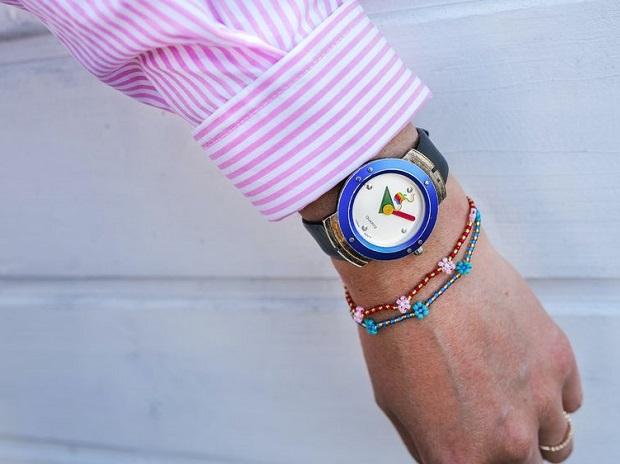
The Apple watch from 1995 is a weird collectible with wacky design

Apple Watch — these two words no doubt bring to mind the sleek, smart device that puts a computer on your wrist. It’s a piece of technology that has permeated our lives. But the one Tim Cook debuted in 2014 (launched in 2015) wasn’t the first Apple Watch. A little-known, largely forgotten relic of the World Wide Web era came two decades earlier.

Steve Jobs, the Apple co-founder and prickly visionary, had been ousted. In the ensuing years, the company endured a level of innovation-stasis, iterating on the same technologies year-in and year-out. As a result, it slowly began losing market share as rival Microsoft began preparing its true arrival onto the scene.

In 1991, it released “Macin­tosh System 7” — a new operating system built on the original Macintosh interface. Unlike previous versions that required inserting a floppy disk into the computer to run, this was the first to utilise CDs. From 1991 to 1995, Apple made small adjustments to the OS, culminating in System 7.5 set for release in May 1995. It offered all manner of new features including “one-stop access to email, faxing, and the Internet”. It set the price for Macintosh System 7.5 at $134.99. If you were to buy a new Mac computer, the OS would come standard — but if you were just upgrading on your computer, you had to pay up. Likely realising the price was high, Apple decided to bundle their new product with some extras.

So here was the incentive. If you bought System 7.5, you would get — at no extra cost — your choice of either a piece of software, Conflict Catcher 3 (meant to help alleviate is­sues with third party applications running on the Mac­intosh), or … an Apple Watch.

Read Complete Article

Samsung Galaxy Tab S7 FE Wi-Fi variant to launch soon in India

South Korean tech giant Samsung introduced the Galaxy Tab S7 FE in India in June, but it only launched the LTE variant of the tablet in the country. Now the company will launch the Wi-Fi version in India soon.

As per GSM Arena, this revelation comes from Amazon India, which set up a promo page for the Galaxy Tab S7 FE’s Wi-Fi model on its website.

The online retailer didn’t reveal the tablet’s price or sale date and only said that it’s “coming soon.”

The Samsung Galaxy Tab S7 FE is powered by the Snapdragon 750G SoC and runs Android 11-based One UI 3.1 out of the box. The LTE model comes with 4GB/64GB and 6GB/128GB memory options in India, and it remains to be seen if the Wi-Fi version will also have the same configuration.

The Snapdragon 750G-powered tablet is built around a 12.4″ 2,560×1,600-pixel resolution screen and packs a 10,090 mAh battery with 45W charging support.

However, the bundled adapter only goes up to 15W, and people will have to buy the 45W charger separately if they want faster speeds.

That said, the Galaxy Tab S7 FE ships with an S-Pen, and for photography, you get an 8MP camera on the back and a 5MP camera on the front.

Read Complete Article

HC grants SpiceJet relief against recovery proceedings by GST authorities

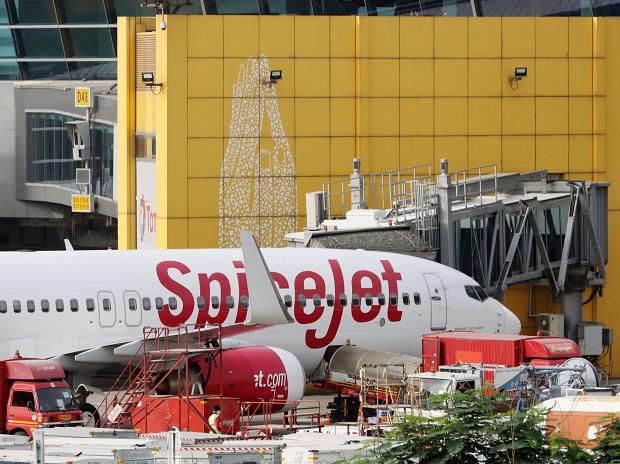
Low-cost airline SpiceJet has been granted relief from the Punjab and Haryana High Court which has asked the GST department to consider and pass an order on the airline’s plea of paying the tax dues in instalments.

GST authorities issued a notice in late July, asking SpiceJet to pay tax liabilities of Rs 80.6 crore and furnish details of movable and immovable properties, warning that they would initiate recovery proceedings if the payment was not made.

SpiceJet did not dispute the tax liability in its petition. The company, however, opposed any recovery proceedings and requested the tax authorities to allow it to pay the dues in 24 instalments, instead of a single payment.

“Having heard the learned counsel appearing for both the parties, we find the prayer of learned senior counsel for the petitioner to be a fair one. Consequently, we dispose of this writ petition with a direction to the Excise and Taxation Commissioner of State Tax, Haryana to decide the representation by passing a speaking order within a period of two weeks from the date of receipt of certified copy of this order,” the court said in its order.

“Since the tax liabilities were never opposed by SpiceJet and it had requested the authorities to pay in instalments due to the unprecedented hit to business because of Covid-19. Since the dues were never opposed by the company and instead more time was sought, to clear the dues, a writ petition was filed opposing recovery proceedings. The court has recognised this and has asked the tax authorities to decide on the company’s request,” said advocate Anuj Dewan, who represented SpiceJet in the case.

The excise and taxation department of Haryana on July 27 sent a show cause notice to SpiceJet saying that the company hadn’t paid tax dues of Rs 80.6 crore which included the period of FY20, FY21 and FY22 (April-June). The department said if the dues were not cleared by 4 August, it would start recovery proceedings against the company.

SpiceJet responded to the show cause notice saying that since the company was facing an acute cash crunch due to the adverse impact of the first and second wave of Covid-19, it be allowed to pay the tax liabilities in 24 equal monthly instalments.

Read Complete Article

Extreme heat growing health issue; killed 356,000 people in 2019: Study

More than 356,000 people died in 2019 as a result of extreme heat and that number is likely to grow, according to a study published in The Lancet this week.

The Global Burden of Disease review, funded by the Bill & Melinda Gates Foundation, found while cold temperatures still cause a greater number of deaths, mortality rates attributable to heat are growing faster, particularly in hotter regions of the world.

“This is very concerning, particularly given the risk of exposure to high temperatures appears to have been increasing steadily for decades,” said co-author Katrin Burkart from the University of Washington.

The findings echo another report, a two-part series called “Heat and Health” that was also published in The Lancet this week. It calls for global warming to be limited to 2.7 degrees F, in line with the Paris Climate Accords, to reduce heat-related mortality in the future. Otherwise, deaths will increase further and extreme heat will also lessen worker productivity and exacerbate other environmental challenges, such as wildfires, researchers said.

“The effects extreme heat exposure can have on the body present a clear and growing global health issue,” said Ollie Jay, a professor from the University of Sydney, and a co-author of the Heat and Health report.

In addition to causing heat stroke, high temperatures have been linked to increased hospitalizations and mental health issues. Older people and other vulnerable groups, such as those with low mobility, are likely to be more at risk. High temperatures can also reduce productivity. Around 1 billion workers, many engaged in manual labor, often report lower output due to heat stress.

Even with strategies to slow climate change and reduce carbon emissions, environmentally sustainable changes need to be made to adapt to an increasingly hotter world. Measures that can be taken to mitigate the heat’s worst effects on health include increasing the amount of green space in cities, putting wall coatings that can reflect heat on buildings, and using more cooling and misting fans. While air-conditioning is becoming more available, not everyone can afford it and it can harm the environment.

Read Complete Article

Garmin Forerunner 55 review: Solid health & fitness smartwatch for runners

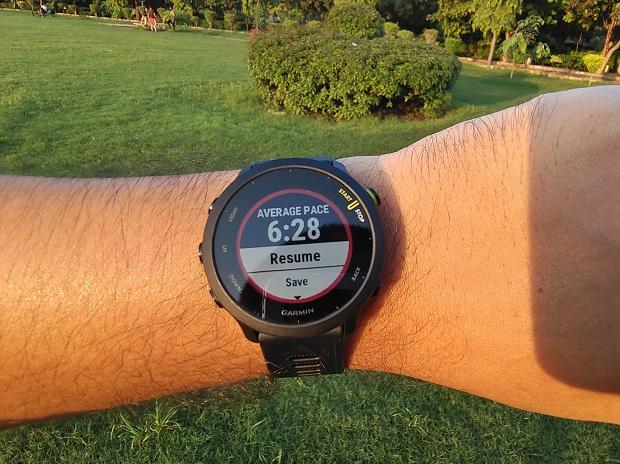
American activity tracker and sports watch maker Garmin recently launched in India its Forerunner 55. Aimed at runners, this smartwatch is a successor to the company’s budget-oriented health and fitness tracker the Forerunner 45. Priced at Rs 20,990, the Forerunner 55 brings meaningful upgrades over the predecessor with regard to design, features and utility. So does it make a good upgrade? Let’s find out:

Design and build

The smartwatches in the Forerunner series look identical, albeit few changes here and there. That said, the Forerunner 55 does not bring any drastic design changes. There are in total of five physical buttons familiarly placed — three on the left side and two on the right. The Forerunner 55 has a 42mm plastic case with a 1.04-inch transflective display (208 × 208 pixels resolution) on the top, surrounded by thick bezels.

The watch’s transflective display lacks the brightness, thus, suffers from sunlight legibility issues. It takes some effort to read the display under direct sunlight. Nevertheless, the display shows phone’s notifications and call alerts (require pairing and supplementary app). You can also control your phone’s music on the Forerunner 55, the reason for mentioning this is not all Garmin watches support this so it’s a welcome feature. As for the sensors, they are all placed on the bottom side. This watch is 5ATM rated for water resistance – can withstand pressures equivalent to a depth of 50 meters.

The Forerunner 55 comes with silicone straps, which are flexible and comfortable to wear. Unlike the predecessor, the Forerunner 55’s straps are removable. Therefore, you can change the straps to suit your everyday attire. Adding to the convenience and comfort is the watch’s lightweight (37g) build. You can wear it all day long to track health and fitness, and at night to track your sleep, yet do not feel like you have tied anything extra to your wrist.

Read Complete Article

Windows 11 makes it tough to switch default browsers, rivals fume

Microsoft has changed the way default apps are assigned in the upcoming Windows 11, make it extremely difficult for users to switch default browsers if they miss the first and only prompt. The move has left rivals like Google, Mozilla Firefox and Opera fuming.

According to a report in The Verge, if you forget to set your default browser at first launch of Windows 11, the experience for switching defaults is now very confusing compared to Windows 10.

“The default app prompt in Windows 11 that you’ll only see once,” the report said on Wednesday.

In Windows 11, there’s a prompt that appears when you install a new browser and open a web link for the first time.

It’s the only opportunity to easily switch browsers in Windows 11 which, once missed, will ask you to set defaults by file or link type instead of a single switch.

“Chrome and many other rival browsers will often prompt users to set them as default and will throw Windows users into the default apps part of settings to enable this,” the report noted.

The Microsoft move has received criticism from other browser players.

“We have been increasingly worried about the trend on Windows. Since Windows 10, users have had to take additional and unnecessary steps to set and retain their default browser settings. These barriers are confusing at best and seem designed to undermine a user’s choice for a non-Microsoft browser,” Selena Deckelmann, senior vice president of Firefox, told The Verge.

Hiroshi Lockheimer, Google’s head of Android, Chrome and Chrome OS added: “This from the company that claims to be the most open, with ‘the most choice’.”

Read Complete Article

Focus this year is to build a premium range across categories: Xiaomi India

Xiaomi is fast assuming a pole position in the Internet of Things (IoT) devices market. It’s competitively priced smart TVs and fitness trackers are top selling in their respective categories. Now, the company is looking to introduce high-end models in major categories, according to a top executive, as Xiaomi looks to become a leading IoT, lifestyle and smart-home player in India.

“The focus this year is to build out a premium range cutting across categories,” said Raghu Reddy, chief business officer at Xiaomi India. “There will be launches in laptops, TVs, and wearables (categories).” He added that all non-smartphones categories put together now account for about 15 percent of Xiaomi’s total revenue from India.

Like with its smartphones, Xiaomi scaled to the top by selling smart devices at highly competitive prices. Mi Bands 3, 4 and 5 – priced Rs 2,500 – have enjoyed top market-share, making it harder for other fitness wearables – like the OnePlus Band which launched last year – to drum up demand.

On the smart TVs side, its 32-inch, 43-inch and 50-inch offerings are priced average Rs 10,000 lower than competition and have consequently sold well. Since entering the category in February 2018, Xiaomi has shipped 60 lakh smart TV units, according to Reddy.

“Xiaomi/Mi has been the number 1 smart TV brand for 13 quarters consequently. While the 32-inch is the bread-and-butter model, the focus area going forward will be 4K,” said Reddy. Xiaomi introduced a 75-inch 4K QLED Smart TV at Rs 1,19,999 in April 2021 – and it continues to be its most premium offering to date.

The portfolio also includes 55-inch and 65-inch 4K TVs priced in the range Rs 55,000 – Rs 60,000. Last week, Xiaomi announced a 77-inch OLED TV as well as Mi TV 6 OLED series in China, which are likely to be introduced in India this month.

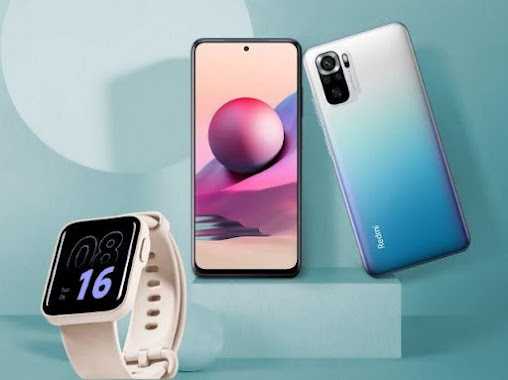
Keeping with the premium strategy, Xiaomi is likely to double down on at least two gadget categories: Laptops and smart watches. The firm entered the laptops category last year with Mi Horizon Notebooks priced at Rs 54,999 (i5 version) and Rs 59,999 (i7 version) — refreshed models will be launched at Xiaomi’s Smarter Living event on 26 August.

Read Complete Article

Samsung Galaxy A03s with 6.5-inch HD+ screen, 5000 mAh battery launched

Samsung on Wednesday launched its affordable Galaxy A03s smartphone for Indian consumers that comes in two storage options starting at Rs 11,499.

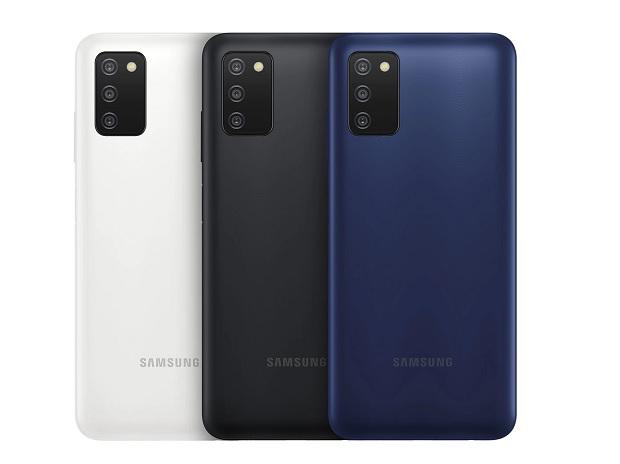
The Galaxy A03s is priced at Rs 11,499 for 3GB+32GB variant and Rs 12,499 for the 4GB+64GB variant. It offers three colours — black, blue and white and will be available across retail stores, Samsung.com and leading online portals.

Galaxy A03s features a 6.5-inch HD+ Infinity-V display with a 20:9 aspect ratio that provides vivid clarity.

The smartphone offers an immersive viewing experience and is a delight for binge-watchers to enjoy their favourite content on the go, the company said in a statement.

Galaxy A03s is equipped with a triple camera setup that lets you take sharp and clear shots, it added.

On the rear, it has a 13MP main camera, 2MP macro and 2MP depth camera. There is a 5MP front camera that comes with live focus, built-in filters and different camera modes so you can take the best possible selfies.

The smartphone is powered by the advanced Octa-Core MediaTek Helio P35 processor and 5000mAh battery.

Galaxy A03s supports Android 11 and One UI 3.1 Core that offers separate viewing and interaction along with the Night Mode for a comfortable viewing experience at night time. It comes with a side fingerprint sensor.

The smartphone also supports premium Samsung services that include Samsung Health, Samsung Members, and Smart Switch for a smooth experience.

Read Complete Article

Realme Book Slim laptops with 11th Gen Intel Core processors launched

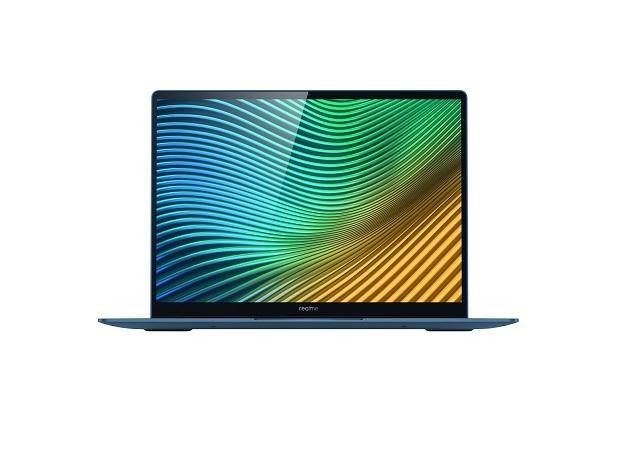
Expanding its product portfolio in India, Realme forayed into the consumer PC segment with the launch of the Realme Book Slim laptops on Wednesday. The laptops boast 14-inch fullHD resolution screen stretched in 3:2 aspect ratio, Harman-tuned stereo speakers with sound by DTS, and 65W fast-charging support. Powered by 11th Gen Intel Core processors, the Realme Book Slim comes in Core i3 and Core i5 models. The laptops will be available in real grey and real blue colours on Realme online store, Flipkart, and select retail stores from August 30.

Realme Book Slim: Price and specifications

The Realme Book (Slim), both Core i3 and Core i5 models, sports a 14-inch 2160 x 1440 resolution screen, stretched in 3:2 aspect ratio. Made of metal, the Realme Book (Slim) is 14.9 mm thick and weighs 1.38 kg.

The laptops boot Windows 10 Home edition, preloaded with Microsoft Office 2019. The Realme Book (Slim) boasts HARMAN-tuned stereo speakers, powered by DTS HD sound. Both the laptops are powered by a 54Wh battery. As for the ports and connectivity, the Realme Book (Slim) features PC Connect for easy connection between Android smartphone and laptops, Thunderbolt 4 Port (in Intel Core i5 model), and Wi-Fi 6 (in Core i5 model) – there is Wi-Fi 5 in the i3 mdoel. The Realme Book (Slim) will be eligible for free upgrade to Windows 11. It supports power delivery charging protocol; can be charged through PD-based smartphone chargers and powerbanks.

Realme Book (Slim) Core i3 (8GB RAM/256GB SSD): Rs 46,999

Realme Book (Slim) Core i5 (8GB RAM/ 512GB SSD): Rs 59,999

Read Complete Article

Google Pixel Buds A-Series makes India debut at Rs 9,999

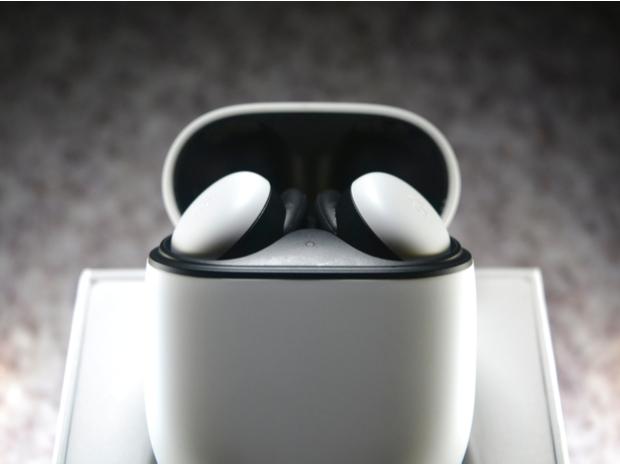
Tech giant Google on Wednesday announced the launch of its Buds A-Series, priced at Rs 9,999, marking its entry into the personal wireless audio segment in the country.

The Pixel Buds A-Series features custom-designed 12 mm dynamic speaker drivers that deliver full, clear and a natural sound, with Bass Boost for amplifying deep frequencies. The device sports an ‘Adaptive Sound’ that increases or decreases the volume based on the surroundings.

It also allows users to quickly switch back to their music after the call is over with a simple ‘Ok Google, play my music’ command.

Pixel Buds A-Series deliver up to five hours of listening time on a single charge or up to 24 hours using the charging case.

“Google Assistant is built right into the Pixel Buds A-Series. Users can get quick hands-free help to check the weather, get an answer, change the volume, or have notifications read to them with a simple ‘Ok Google’.

“It also allows users to get real-time translation in more than 40 languages (including Bengali, Hindi, and Tamil) right in their ear while using Google Pixel or Android 6.0+ phone,” it added.

Pixel Buds A-Series will be available from August 25.

According to Counterpoint Research, India’s TWS market registered a 68 per cent year-on-year growth during the June 2021 quarter, driven by new launches in the affordable price segment along with improved features.

The competition in the TWS (true wireless stereo) segment has been heating up. More than 40 brands have entered this market since 2020.

As per Counterpoint Senior Research Analyst Anshika Jain, the third quarter will see the entry of more brands (like Nothing Ear, Dizo and Micromax) across price-tiers to grab a larger share of this untapped market.

Read Complete Article