Xiaomi to drop ‘Mi’ branding from its premium product series: Details here

Xiaomi on Monday announced a new visual identity for its premium range of products. With an aim to unify its global brand presence, its premium “Mi” series products will now be replaced with the new “Xiaomi” logo.

With the new brand identity introduction, there will be two distinct product series under the parent corporate brand. The corporate brand will continue to be represented by the “Mi” logo.

“Being a leading technology brand with a strong presence across the globe, our aim is to have a unified presence. With this new logo shift, we envision bridging the perception gap between our brand and products.

“The new Xiaomi logo will be used for our premium products that represent the pinnacle of technology and offer a premium experience. Ushering in the festive season, Xiaomi’s premium product series Mi will be renamed to Xiaomi’,” Jaskaran Singh Kapany, Head of Marketing, Xiaomi India, said in a statement.

The first Mi-branded smartphone, the Xiaomi Mi 1, was launched in August 2011, which makes the brand almost 10 years old.

Over the years, the company launched tablets, TVs, smart devices, audio accessories, and more under the Mi brand.

Xiaomi for the first time had surpassed Samsung and Apple to become the number one smartphone brand in the world in June, a Counterpoint Research report showed recently.

Xiaomi’s sales grew 26 per cent (month-on-month) in June, making it the fastest-growing brand for the month.

Xiaomi was also the number two brand globally for Q2 2021 in terms of sales, and cumulatively, has sold close to 800 million smartphones since its inception in 2011, according to Counterpoint Research’s ‘Monthly Market Pulse Service’.
Read Complete Article

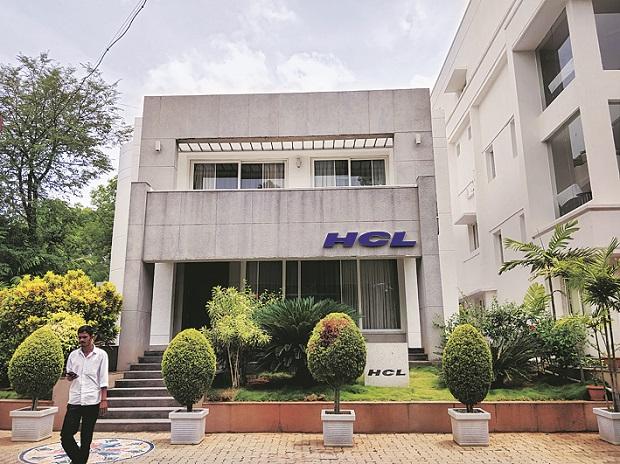
HCL signs up with Korea’s HANCOM for global expansion, tech solutions

Indian IT services firm HCL Technologies has said it has signed a strategic partnership with HANCOM Inc., a South Korean software company, to share technology solutions and work for “overseas expansion”.

HCL will support training for software development at HANCOM’s in India research and development centre, which was established in 2016.

Noida-based HCL will also share its development studio and provide human resource support to meet demand and development capacity at the R&D center. In addition, it will promote technological cooperation to strengthen HANCOM products’ global competitiveness.

The two companies also plan to cooperate on global market expansion. This includes HANCOM’s entry into Southeast Asian countries such as Taiwan, Vietnam and Bangladesh, Middle Eastern countries, and HCL’s business expansion into the South Korean market.

“HCL’s modern applications and architecture principles will allow us to scale our products to make them more suitable for enterprise customers in the global market and ultimately achieve global aspirations with our products,” said Daeki Kim, Chief Operating Officer, HANCOM.

HCL employs more than 175,000 people in 50 countries and generates annual sales of $10.5 billion. It recently named Joonho Moon as its head to lead and expand business in South Korea.

South Korea is a key strategic market for HCL, and this engagement with HANCOM will further help us grow and establish ourselves in the region,” said Sanjay Gupta, Corporate Vice President, HCL Technologies.

Read Complete Article

Addverb to expand robots production in India by 10 times in FY23

Robotics and automation firm Addverb plans to expand its robot manufacturing unit in India to boost its output by around 10 times in the next financial year, a senior company official said.

The company has announced the start of international operations in Singapore, Australia, Europe and is looking to start operations in the US before the end of the ongoing calendar year.

“Addverb is looking to expand its manufacturing capability and is looking to create the world’s largest robot manufacturing facility in India which will expand Addverb’s capabilities by almost 10 times by next financial year,” Addverb Technology CEO Sangeet Kumar told PTI.

The company has a manufacturing unit in Noida which was inaugurated in March with capacity to manufacture more than 50,000 robots of varied types in a year.

Addverb will also set-up micro-factories in geographies where it sees a surge in demand.

“Addverb plans to onboard 30 global employees across different offices at middle and top management positions and will also be looking for existing employees from India with relevant subject matter expertise to support global offices,” Kumar said.

According to the company, the global robotics market was valued at USD 27.73 billion in 2020 and is expected to reach USD 74.1 billion by 2026.

Read Complete Article

iPhone 13 launch: Can Apple capture a larger market share in India?

Apple is all set to unleash its new iPhone models on September 14. With its upcoming iPhone 13 series launch, it is primed to build on its recent growth momentum in India with a potential double-digit growth for the full year.

“I believe the new generation of iPhones will come with enhanced camera upgrades, faster A15 Bionic processor, always-on display, dynamic 120Hz refresh rates, and bigger batteries, amongst others. Increased local assembly, expanded retail initiatives including online store, aggressive marketing initiatives, and positive consumer appetite including, especially iPhone loyalists, will potentially fuel Apple’s growth.

“As we run into the all-important festive quarter, Apple does need to navigate some potential headwinds ahead, including potential supply chain constraints, and associated increase in component prices,” CMR’s Head, Industry Intelligence Group, Prabhu Ram, told IANS.

Apple registered more than 140 per cent growth in India in the second quarter this year, as iPhone 11 continued to perform well with a strong aspirational brand value, according to CMR.

iPhone 11 contributed over 60 per cent of the iPhone shipments during the April-June quarter in the country. The rest of the iPhone line-up, including Apple iPhone 12, XR and SE 2020 also performed well.

“Apple is likely to capture over 2 per cent share in 2021, its highest annual share ever. Apart from this, local manufacturing will help it to further localise its operations and save on the duties that can make help to bring the cost of its products down. Additionally, refurb market is also growing and entry to enter into Apple ecosystem can now happen from sub Rs 20K price points.

“Going forward we expect Apple and are on track to record its best annual performance in India ever since,” market intelligence firm Counterpoint’s Research Director Tarun Pathak said.

Read Complete Article

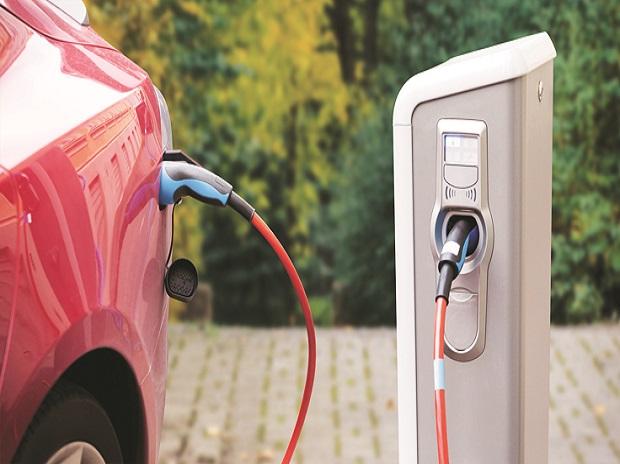
Jio-bp partners with BluSmart to set up EV charging infra in India

In a first step towards its new energy focus, Jio-bp, the fuels and mobility joint venture between Reliance Industries Limited and bp, announced a partnership with BluSmart, India’s first and largest all-electric ride-hailing platform to set up a network of commercial large scale EV charging stations.

As part of the partnership, Jio-bp will set up these stations for passenger electric vehicles and fleets across the country. BluSmart, through its all electric fleet, provides zero-surge and zero-tailpipe emission ride-hailing service in the Delhi NCR. Besides, it has corporate tie-ups for providing electric mobility for fleet requirements. The company now plans to expand its network into other major cities across India.

“Through this partnership, both companies will collaborate in planning, development and operation of EV charging infrastructure, at suitable locations across cities where BluSmart operates. With the first phase-roll out in the National Capital Region, these EV charging stations will be capable of accommodating a minimum of 30 vehicles at each station and will be concentrated in urban areas,” said a joint statement from the companies.

ALSO READ: EV Plugs comes up with aggregator service for EV charging

According to Harish C Mehta, chief executive officer, Jio-bp, said, Jio-bp plans to be at the forefront of EV infrastructure development in the country. “Leveraging bp’s learnings from the UK with bp Pulse, where they have the country’s largest EV charging network, from Germany through their Aral brand, Jio-bp intends to bring in the latest in EV technology to our consumers. In line with the New Energy vision of RIL, our Advanced Mobility teams are working tirelessly to create cleaner and smarter ways for Indians to travel,” he said. The partnership with BluSmart will help in offering new age low-carbon emitting, cleaner and more affordable options, he added.

Read Complete Article

TikTok reportedly overtakes YouTube in US average watch time

Short video-making platform TikTok’s users now spend more time each month watching content than YouTube users, says a new report.

According to app analytics firm App Annie, in the US, TikTok first overtook YouTube in August last year and as of June 2021, its users watched over 24 hours of content per month, compared with 22 hours and 40 minutes on YouTube.

In the UK the difference is even starker as TikTok overtook YouTube in May last year and users there now reportedly watch almost 26 hours of content a month, compared to less than 16 on YouTube, reports The Verge.

The figures only include viewership on Android phones, however, so may not be representative of mobile users as a whole, the report said.

But caveats aside, they show the extent of TikTok’s meteoric rise over just a few short years, and are even more impressive given the three-minute maximum of most of its videos, compared to the 10-minute format preferred by many YouTube’s, it added.

Not to mention the fact that for much of 2020, TikTok faced continued threats that it would be banned in the US amidst chaotic negotiations.

YouTube is still ahead in time spent overall, no doubt because of its two billion users compared to TikTok’s roughly 700 million, BBC News notes.

Again, excluding iOS users and users of the app renamed Douyin in China, YouTube is still number one in terms of time spent on Android phones among “Social and Entertainment Apps” as of the first half of this year, with TikTok in at number five behind three Facebook apps — Facebook, WhatsApp and Instagram.

Read Complete Article

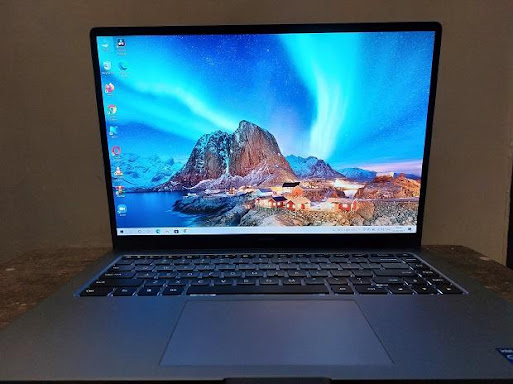
Mi Notebook Ultra review: Xiaomi energises the boring consumer PC segment

I was planning to buy a midrange laptop and was amazed to see that every other legacy brand in the consumer PC market had products with similar features and specifications. Blame the oligopoly, but as a consumer I was almost convinced that the product offerings by the legacy PC makers were the best available in the market. And then was released the Mi Notebook Ultra by Chinese technology company Xiaomi.

A premium laptop, the Mi Notebook Ultra challenged the conventions set by legacy consumer PC makers by democratising features and specifications usually seen in laptops that cost almost twice as much as the top-end model (review unit – Rs 76,999) on offer here. Starting with the design, the Mi Notebook Ultra boasts a unibody made of series 6 aluminium alloy. For a laptop with 15.6-inch screen, the Mi Notebook Ultra is appropriately built but does not meticulously fit in the thin-and-light category. Speaking of build, the Mi Notebook Ultra is spot on. From smooth edges to a sturdy hinge, the laptop’s build quality is nothing short of premium.

Complementing the solid build quality is the 15.6-inch 3.2K resolution screen of a 90Hz refresh rate with support for 100 per cent sRGB colour gamut. The display is stretched in a 16:10 aspect ratio and is covered with anti-glare coating. Compared with conventional 16:9 aspect ratio screens, the Mi Notebook Ultra screen is both wide and tall. Therefore, it is suitable for both productivity and entertainment purposes. As for the quality, the display is not the best out there in terms of brightness, colour rendition and viewing angles. These compromises, however, come to notice only if you work in bright outdoor conditions. When indoors, at home or office, the screen dazzles. While the Mi Notebook Ultra is a visual treat, the laptop’s audio leaves you asking for more. The laptop’s bottom-facing dual stereo speakers (2W each) lack loudness, depth and clarity. They work fine for basics but do not quite match the viewing experience offered by a competent screen.

Read Complete Article

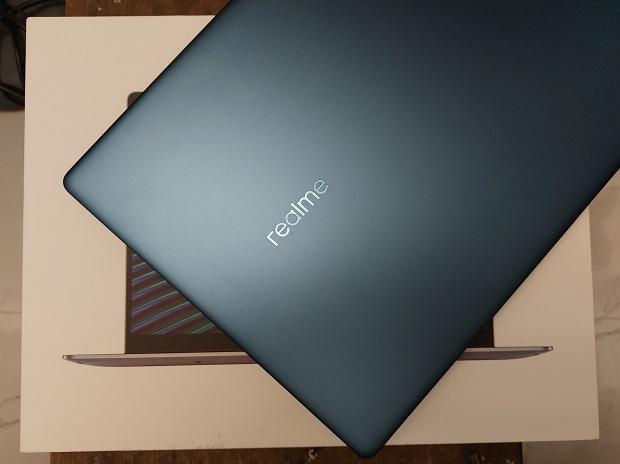
Realme Book Slim review: Tad expensive, but a whole lot better than peers

The laptop I had been using for on-the-go work stopped working soon after I, like many other Indian professionals, began work from home in early 2020. It was a 2016 model powered by Core i3 processor with integrated Intel graphics, 8GB RAM and 1TB hard disk drive storage. I thought it was a decent laptop for basic everyday use, but I was wrong. Since then I have not been recommending any Intel Core i3-powered laptop to anyone for work-from-home purpose.

Recently, when I began testing the Realme Book Slim laptop for this review, I had my reservations, simply because it was powered by the 11th Gen Intel Core i3 processor. But I had to change my mind after a while, partly because Realme seemed to have changed the rules set by legacy consumer PC makers. The Realme Book Slim was unlike any other laptop in the entry-level thin-and-light segment. Everything about the Realme Book Slim appeared novel. No wonder the laptop delivered an unmatched experience.

Take for example the aluminium alloy construction. It is an entry-level laptop but its design and build quality speaks otherwise. Likewise, the laptop’s bright and vivid 2K resolution display is a monumental shift from conventional HD and fullHD screens available on most consumer laptops from legacy brands. Even the features like backlit keyboard and big trackpad are deserve appreciation as they are hard to find in most other entry-level laptops. Rounding off the package is the availability of most commonly used interfaces, including 2 x USB-C 3.2, 1 x USB-A 3.1 and 3.5mm headphone and microphone jack. For connectivity, there is the dual-band Wi-Fi 5 and Bluetooth 5.1.

Read Complete Article

LIC IPO could result in job losses, social spending, trade union warns

The mega initial public offering of India’s biggest state-backed insurer could result in job losses and impact the company’s social infrastructure spending plans, according to one of its largest trade unions.

Life Insurance Corp. “was formed to provide insurance to rural and social and economically backward people,” Rajesh Kumar, general secretary of All India LIC Employees’ Federation, said in an interview with Bloomberg TV on Tuesday. The company, which has been funding capital-intensive infrastructure projects such as roads, railways and power for more than six decades, may instead focus on “profit-maximizing investments” after the IPO, Kumar said.

Prime Minister Narendra Modi’s government is looking to dilute as much as 10% stake in LIC as part of a broader divestment target to help plug a widening budget gap. The sale, which is set to be the country’s biggest, could value the company at as much as $261 billion, surpassing Reliance Industries Ltd., according to analysts at Jefferies India.

The trade union, which represents about 4,000 of LIC’s roughly 114,000 employees, has written to the prime minister and members of Parliament to protest about the listing and is planning campaigns to raise concerns about the share sale, Kumar said.

“We believe that selling national asset is a willfully disruptive policy,” he said. “Recruitment will be minimal, outsourcing will happen and job losses will take place.”

The government last month picked 10 banks for the sale that’s planned for between January and March 2022.

Read Complete Article

Samsung Galaxy Wide5 likely to launch as ‘Galaxy F42 5G’ in India

South Korean tech giant Samsung is expected to unveil a new budget 5G smartphone Galaxy Wide5 and that might launch as Galaxy F42 5G in India.

According to GizmoChina, ahead of its official unveiling, the smartphone has arrived on Geekbench certification, revealing its key specs.

According to the Geekbench portal, the Samsung Galaxy Wide5 a.k.a the Galaxy F42 5G runs on the latest Android 11 out of the box. It scores 558 single-core points and 1513 multi-core points.

The listing reveals that the phone will come powered by the MediaTek Dimensity 700 SoC paired with 6GB RAM.

The smartphone has an Infinity V display with an FHD+ resolution. The screen will have an exact resolution of 1080 x 2009 pixels. It is touted to feature a side-facing fingerprint scanner for added security.

The smartphone might come in a Blue colour variant.

The Samsung Galaxy F42 5G was recently spotted on Google’s Play Console listing.

The identical model numbers suggested that the Wide5 and F42 5G could be the same phone arriving with different names in different markets, the report said.

The Wide5 could be heading to South Korea, and the F42 5G is likely to release in India, it added.

Read Complete Article