Ola Electric sells e-scooters worth Rs 1,100 crore in just two days

Ola Electric, the ride-hailing firm’s electric vehicle arm, on Friday said that it sold e-scooters worth over Rs 1,100 crore in just two days, during its sale of Ola S1 and S1 Pro scooters. The SoftBank-backed company said this was unprecedented not just in the automotive industry, but also represented one of the highest sales in a day (by value) for a single product in Indian e-commerce history.

“Day 2 of the EV era was even better than Day 1. Crossed Rs 1,100 crore in sales in 2 days,” tweeted Bhavesh Aggarwal, co-chairman and group chief executive officer, Ola, on Friday.

Thursday was the second and final day for the purchase of the Ola S1 and S1 Pro, the first in Ola’s range of electric scooters. The company had sold scooters worth over Rs 600 crore in just 24 hours.

“While day 1 of purchase was quite unprecedented for us and the auto industry, day 2 simply continued from where day 1 left off,” said Aggarwal, in a blog post. “The excitement and enthusiasm customers showed for our products remained high throughout.”

While the purchase window is now closed, Ola’s reservations remain open on olaelectric.com.

“I want to let all of you know that we will be reopening the purchase window on November 1, 2021, just in time for Diwali,” said Aggarwal. “Those who have already reserved but did not purchase in the window that ended yesterday will also be able to purchase on November 1.”

Ola Electric, which had to defer e-scooter sales due to a website glitch last week, opened the sale of Ola S1 and S1 Pro on Wednesday. The vehicles are being sold exclusively on the Ola app and the process is completely digital.
Read Complete Article

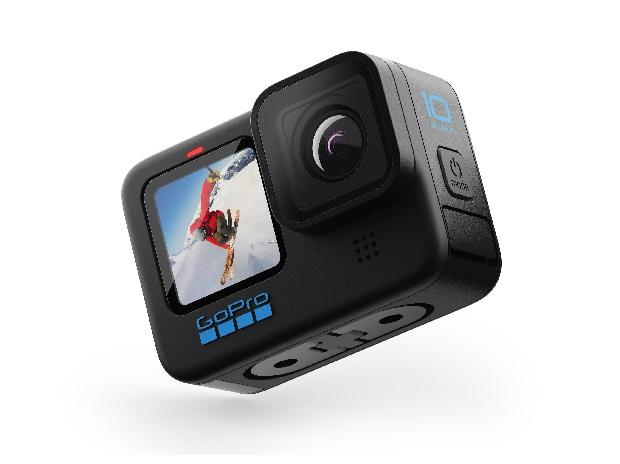
GoPro announces Hero 10 Black action camera, India launch set for early Nov

American technology company GoPro on Thursday announced the Hero 10 Black. The action camera will be available in India from early November for Rs 54,500. Powered by the company’s flagship GP2 processor, the camera brings improvements with respect to image quality and video frame rate. Besides, the action camera gets a new user interface for ease of use.

In terms of features, the Hero 10 Black boasts 5.3K resolution video recording at 60 frames per second (fps), 4K resolution video recording at 120 fps and 2.7K resolution video recording at 240 fps. The new processor also enables HyperSmooth 4.0 video stabilization for shake-free video recording.

According to GoPro, the new GP2 processor enables improved video algorithms featuring local tone mapping (LTM) and 3D noise reduction (3DNR) that capture finer detail, realistic textures and better contrast—even in low light.

In addition to 23 megapixel photos, the Hero 10 Black enables 19.6MP video stills to be pulled from 5K 4:3 video and 15.8MP video stills from 60-frames-per-second 5.3K video.

Explaining the HyperSmooth 4.0 in-camera video stabilization, GoPro said that the Hero 10 Black is capable to smoothen even the most shake-ladened experiences. The camera’s in-camera horizon leveling feature benefits from an increased tilt limit of 45-degree in high-performance settings, up from 27-degree in the Hero 9 Black (review).

With Hero 10 Black, GoPro has also improved content transfer speeds over both wired and wireless methods. According to GoPro, wireless offloading from the Hero 10 Black to the Quik app is now up to 30 per cent faster than the predecessor. Likewise, GoPro has added a new USB wired offload option for content transfers from the camera to the Quik app on the supported smartphones at speeds up to 50 per cent faster than wireless.

Read Complete Article

This obscure Taiwanese firm’s 1,219% rise shows profit, pain of chip crisis

Nan Ya Printed Circuit Board Corp. is hardly a household name in the tech industry. But the obscure Taiwanese company makes an essential component for chipmaking that has become the latest bottleneck for automakers and electronics companies suffering from semiconductor shortages.

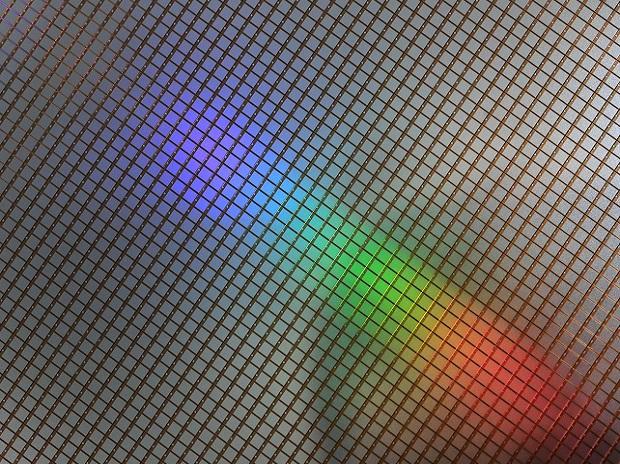
The component goes by the unwieldy name of Ajinomoto build-up film (ABF) substrate and it’s one of the least glamorous niches in the chips industry. It’s part of the packaging that protects the handful of chips needed to power your computer or car and allows communication among them.

Many of the world’s most advanced semiconductors can’t run without the substrates. So while giants like Intel Corp. and Taiwan Semiconductor Manufacturing Co. spend hundreds of billions trying to alleviate chip shortages, the lack of that single component could hinder production for years. Supplies are likely to remain constrained until at least 2025 due to limited capacity, according to people familiar with the matter.

Top executives from Intel, Nvidia Corp. and Advanced Micro Devices Inc. have all warned about shortages in recent months. Broadcom Corp. recently told customers the lead time for its main router chips is going up from 63 weeks to 70 weeks due to a lack of substrates, according to one person, who asked not to be named as the information is not public.

The crunch shows how vulnerable global supply chains remain to disruptions almost two years into the Covid-19 pandemic. Companies and investors have almost no visibility into where the next shock could come from.

“This crisis caught a number players off guard,” said Peter Hanbury, a partner at Bain & Co. “As demand for PCs, gaming cards and cloud services increased with Covid-19 and working from home, this critical component suddenly became a real bottleneck for many players such as AMD and Nvidia.

Read Complete Article

Samsung Display begins mass-production of 90Hz OLED laptop panels

Samsung Display on Thursday said it has begun mass-production of laptop OLED screens boasting 90Hz refresh rate as the South Korean display maker eyes to beef up presence in the OLED panel market.

Samsung Display, an affiliate of Samsung Electronics said its 90Hz refresh rate OLED panels are featured in the latest 14-inch Zenbook and Vivobook Pro laptops from ASUS.

The refresh rate refers to the number of times per second a display shows a new image. A higher refresh rate means smoother, more seamless movements on a display, but it also requires a higher graphics performance and power.

“An OLED panel responds much faster than an LCD panel and can display a more natural-looking image with a lower refresh rate than an LCD panel,” the company said.

Samsung Display said during tests its 90Hz OLED panel showed a blur length of 0.9mm, a 10 per cent improvement when compared to a 120Hz LCD panel’s blur length in video playback, reports Yonhap news agency.

The world’s largest smartphone panel maker has been also a major supplier of OLED panels for global laptop manufacturers, including ASUS, Lenovo, Dell, HP and Samsung Electronics.

Industry insiders expect Samsung Display targeted to ship about 6 million units of OLED panels this year.

Market researcher Display Supply Chain Consultants (DSCC) earlier predicted the global OLED notebook market to grow to 9.4 million units with $1.1 billion revenue in 2023.

“We expect Samsung Display will remain aggressive in OLED notebooks to try and fend off the challenge from miniLEDs,” it said.

Read Complete Article

Xiaomi 11T, 11T Pro with 120W fast charging, Snapdragon 888 launched

Xiaomi has announced two new flagship devices to its T lineup – the Xiaomi 11T and Xiaomi 11T Pro for global markets.

According to GizmoChina, the phones feature a plastic frame and a glass back with an anti-glare finish. They also have tapered edges and quad curves on the rear for a better in-hand experience.

The 11T will b e available at a starting price of Euros 499 (roughly Rs 43,300) for a version with 8GB RAM and 128GB storage. A version with 8GB RAM and 256GB storage will set you back by 549 euros (roughly Rs 47,650).

The 11T Pro with 8GB RAM and 128GB storage starte at Euros 649 (roughly Rs 56,300). A 8GB RAM and 256GB storage model will cost 699 euros (roughly Rs 60,700). The top-end model with 12GB RAM and 256GB storage will be available for 749 euros (roughly Rs 65,000).

In terms of specifications, the Xiaomi 11T series flaunts a 6.67-inch flat AMOLED display with a resolution of 2400 x 1080 pixels (FHD+), over 1 billion colours, 120Hz AdaptiveSync refresh rate.

Under the hood, the Xiaomi 11T is powered by a MediaTek Dimensity 1200-Ultra SoC coupled with up to 8GB LPDDR4x RAM and 256GB UFS 3.1 storage.

While, the Xiaomi 11T Pro is powered by a Qualcomm Snapdragon 888 chipset coupled with up to 12GB LPDDR5 RAM and 256GB UFS 3.1 storage.

Both smartphones have a hole punch cut-out housing a 16MP selfie camera. The 11T and 11T Pro both have a triple rear camera setup with a 108MP main, 8MP ultra-wide-angle and another 5MP telemacro camera.

Read Complete Article

Google Pixel 6 and Pixel 6 Pro specifications revealed ahead of launch

Google is planning to launch its Pixel 6 as well as Pixel 6 Pro smartphones in October this year and now a new report has claimed that the device will offer a battery share (reverse wireless charging) and ultra-wideband support.

The Pixel 6 Pro is tipped to feature a display panel with a resolution of 1,440×3,120 pixels and 120Hz refresh rate. The smartphone is expected to come preinstalled with a digital car key application, reports XDA Developers.

Under the hood, the smartphone will come with a Tensor chipset, paired with Mali-G78 GPU, up to 12GB of LPDDR5 RAM, and up to 512GB of storage.

In terms of optics, the smartphone will come with a triple rear camera setup comprising a 50MP Samsung GN1 primary sensor, a 12MP Sony IMX386 ultra-wide lens, and a 48MP Sony IMX586 telephoto snapper with 4x optical zoom support.

There will be a 12MP Sony IMX663 front-facing camera for selfies and video calling.

It is expected to house a 5,000mAh battery with 33W wired and 23W wireless fast-charging support.

For connectivity, the device will offer support for Wi-Fi 6E, UWB, Bluetooth 5.2, GPS, and a Type-C port.

Read Complete Article

Apple iPhone 13 lineup in India from Sep 24, prices starting at Rs 69,900

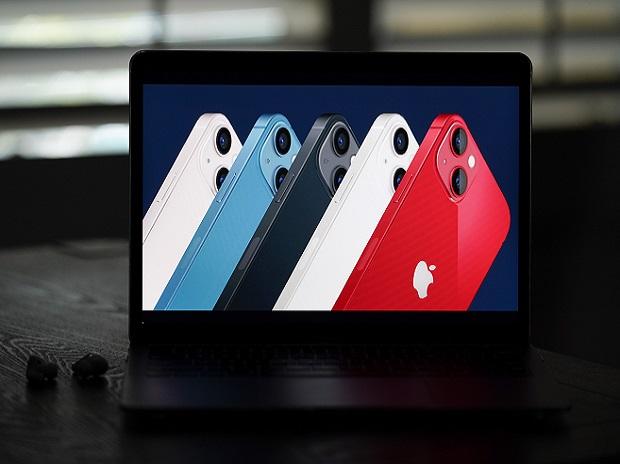
Apple enthusiasts will be able to get their hands on the latest line-up of iPhones — iPhone 13, iPhone 13 mini, iPhone 13 Pro and iPhone 13 Pro Max — with prices starting at Rs 69,900 onwards later this month.

“Customers in Australia, Canada, China, Germany, India, Japan, the UK, the US, and more than 30 other countries and regions will be able to pre-order iPhone 13 Pro and iPhone 13 Pro Max…availability beginning Friday, September 24,” Apple said in a statement.

Customers can get iPhone 13 Pro for Rs 1,19,900 (onwards) and iPhone 13 Pro Max for Rs 1,29,900 (onwards) from Apple’s online store, it added.

The iPhone 13 will be available for Rs 79,900, while iPhone 13 mini will be priced at Rs 69,900.

The phones will also be available through Apple Authorised Resellers and select carriers, the statement said.

“Our Pro lineup pushes the limits with our most advanced technologies for users who want the very best iPhone. Best in class performance, best in class camera experience, great durability, larger displays and incredible design. This year, we build on that in a major way,” Apple CEO Tim Cook said during the launch event on late Tuesday night.

Read Complete Article

Apple expected to unveil new iPhones as part of 5G push

Apple Inc on Tuesday is expected to show new iPhone and Apple Watch models with slight upgrades, and analysts expect that wireless carriers will play an outsized role in the annual show as they try to entice consumers into 5G plans.

Apple last year introduced its iPhone 12, which featured a new look and its first devices with 5G connectivity. This year, analyst expect modest hardware upgrades and a deeper focus on 5G.

In particular, carriers such as AT&T Inc, Verizon Communications and T-Mobile that have

significantly built out their networks since the start of this year are likely to offer new incentives around the devices that can take advantage of the faster speeds those networks can offer, said Ben Bajarin, head of consumer technologies at Creative Strategies.

“There seems to be way more (5G network capacity) than was in place even six months ago,” Bajarin said. “They want people upgrading. They’re going to be really aggressive.” Apple’s biggest product launch of the year comes as some of the shine has come off its stock as business practices such as charging software developers commissions on in-app payments have come under regulatory scrutiny.

Apple shares were up about 15.6% year to date, trailing the Nasdaq Composite Index, which was up nearly 19% over the same period.

The iPhone 13, as analysts expect the new phone to be called, likely will not look much different on the outside from the iPhone 12. But analysts expect it to have a faster wi-fi and processor chips, and Bloomberg has reported that the top model is likely to focus on display and camera enhancements such as a “Portrait Mode” to blur backgrounds when shooting videos.

Analysts also believe Apple will continue the steady updates to its the Apple Watch, which has become a cornerstone of its $30.6 billion accessories segment, which was up 25% in Apple’s most recent fiscal year even as its iPhone revenue declined slightly. Analysts widely believe that Apple users who buy more than one product – such as an Apple Watch and iPhone – are more likely to stick with the brand and spend on the company’s apps and services.

Read Complete Article

Apple unveils Watch Series 7 with redesigned display, new features

In a bid to help users improve overall wellness, tech giant Apple has announced Watch Series 7 that offers new apps, including Mindfulness app and Tai Chi along with other new features.

Apple Watch Series 7 will start at $399, Watch SE starts at $279 and Watch Series 3 starts at $199 in the US. The watches are available to order from apple.com/store and the Apple Store app, with availability in stores beginning September 16.

Apple Watch Series 7 delivers significant improvements — from our largest and most advanced display to enhanced durability and faster charging — making the world’s best smartwatch better than ever before,” Jeff Williams, Apple’s chief operating officer, said in a statement late Tuesday.

The Apple Watch Series 7 features a re-engineered Always-On Retina display with significantly more screen area and thinner borders.

The new Mindfulness app, sleep respiratory rate tracking and Tai Chi and Pilates workout types can help improve overall wellness. It also continues to offer tools for health and wellness, including an electrical heart sensor and ECG app and a blood oxygen sensor app.

Apple Watch Series 7 is the first Apple Watch to have an IP6X certification for resistance to dust, and maintains a WR50 water resistance rating, the company claimed.

It is available in 41mm and 45mm sizes and provides 18-hour battery life on a single charge and 33 per cent faster charging compared with Apple Watch Series 6.

Apple Watch Series 7 offers two additional larger font sizes and a new QWERTY keyboard that can be tapped or swiped with QuickPath.

Read Complete Article

Apple unveils iPhone 13 series, Watch Series 7, iPads: Here’s India pricing

Apple California Streaming event: American technology giant Apple Inc on September 14 announced the iPhones 13 series. Like the iPhone 12 series, the iPhone 13 series brings four models – two regular and two in Pro line. Besides the iPhone 13 series, Apple announced the Watch Series 7, iPad 2021, and iPad mini 2021 at the ‘California Streaming’ event on September 14. Here a the hightlights from the Apple California Streaming event:

Read Complete Article