Over 26.9 mn content pieces ‘actioned’ on Facebook in India during Sep

Social media giant Meta on Monday said over 26.9 million content pieces were “actioned” on Facebook across 10 violation categories proactively in India during the month of September.

Its photo sharing platform Instagram took action against over 3.2 million pieces across nine categories during the same period proactively, as per data shared in a compliance report.

Under the IT rules that came into effect earlier this year, large digital platforms (with over 5 million users) have to publish periodic compliance reports every month, mentioning the details of complaints received and action taken thereon. It also includes details of content removed or disabled via proactive monitoring using automated tools.

Facebook had “actioned” about 31.7 million content pieces proactively in August, while Instagram took action against about 2.2 million pieces across nine categories during the same period proactively.

On Monday, Meta said 708 user reports were received by Facebook through its Indian grievance mechanism between September 1-30.

“Of these incoming reports, we provided tools for users to resolve their issues in 589 cases,” the report said.

These include pre-established channels to report content for specific violations, self-remediation flows where they can download their data, avenues to address account hacked issues, among others, it added.

Between September 1-30, Instagram received 418 reports through the Indian grievance mechanism.

“Over the years, we have consistently invested in technology, people and processes to further our agenda of keeping our users safe and secure online and enable them to express themselves freely on our platform.
Read Complete Article

Govt issues FAQs on IT rules; says norms consistent with freedom of speech

The government on Monday said the new IT rules are consistent with the right to freedom of speech and expression guaranteed by the Constitution, and do not place additional obligations on users.

Releasing a set of Frequently Asked Questions (FAQs) around the intermediary guidelines, IT ministry said the rules have a clear focus on protecting online privacy of individuals, and that even with regard to identification of the first originator of messages, safeguards are in place to ensure that privacy of users is not violated.

Overall, the FAQs seek to address queries that internet and social media users may have about scope of the new rules, major changes it brings over past provisions, how the rules enhance safety of women and children, and due diligence to be done by an intermediary, among others.

In one of the questions, the ministry said the rules do not infringe on right to free speech and expression.

“The new IT rules, 2021 have been framed consistent with these rights. The rules place no additional obligations on users and do not contain any sort of penalties applicable on users,” it said.

Further, the ministry said the rules define ‘social media intermediary’ as an intermediary which primarily or solely enables online interaction between two or more users and allows them to “create, upload, share, disseminate, modify or access information using its services”.

Typically, any intermediary whose primary purpose is enabling commercial or business-oriented transactions, providing access to internet or search-engine services, e-mail service or online storage service, etc. will not qualify as a social media intermediary, the ministry said in the 20-page document.

To qualify as a social media intermediary, enabling of online interactions should be the primary or sole purpose of the intermediary, it explained.

“Therefore, typically, an entity which has some other primary purpose, but only incidentally enables online interactions, may not be considered as a social media intermediary,” it said.

The scope of enabling online interactions would extend to facilitating “socialisation/social networking, including the ability of users to increase their reach and following, within the platform via specific features like follow/subscribe etc.”.

Read Complete Article

Decoded: What is dark web and is it really such a bad place to be in?

From looking things up on search engines to ordering food, reading news and booking cabs, we use web services every day. But do you know the web as we know it is just a fraction of the actual web space. Yes, and that is why it is called the surface web. It is available for access to anyone and everyone with access to the internet. There is a whole lot more to the web which is not accessible to everyone. People call it the dark web. Curious to know what the dark web is, who uses it, and why it is a maligned space? Let’s take a look:

What is the Dark Web?

It is that uncharted part of the web which is not accessible to everyone

The Dark Web is a reality that has existed since the beginning of the internet. While there is a load of information indexed on the web and easily accessible by anyone with internet connectivity, irrespective of geography, there is even more information and data that does not come to your notice because it is hidden and requires special privileges to access. This uncharted part of the web is called the Dark Web.

How is the Dark Web different from the surface web?

Information on the dark web is not defined by regulations and content policies. Moreover, web pages serving information on the dark web do not appear on search engine result pages, or SERPs, like those of Google and Bing because they are hidden and not indexed. Therefore, the dark web includes information that is not easily accessible by everyone. Besides, the web pages serving up information on the dark web are marked unsafe by browsers and do not open on regular internet browsers like Chrome, Firefox, Opera and Safari.

Read Complete Article

Facebook directed to pay $257 per victim over personal data breach

The South Korean state watchdog on personal information protection on Friday recommended the operator of Facebook to pay 300,000 won ($256.70) in compensation to each of 181 users demanding damages for the provision of their personal information to third parties without consent.

The recommendation to Meta Platforms was made by the Personal Information Protection Commission (PIPC)’s dispute mediation panel in charge of settling a dispute between the operator and Korean users of Facebook over the platform’s breach of users’ personal data.

The state watchdog in November concluded that Facebook passed personal data of at least 3.3 million of its total 18 million Korean users to third parties without the users’ consent between May 2012 and June 2018.

The leaked data included the lists of the users’ Facebook friends.

The global platform giant was fined 6.7 billion won for the privacy law violations at that time, reports Yonhap news agency.

In response, a group of local Facebook users collectively filed for a damage relief process with the PIPC in April, seeking financial compensation and the disclosure of information on which personal data were leaked and to whom, from the operator of Facebook.

Proposing an arbitration deal, PIPC recommended Meta pay the 300,000 won in financial compensation to each of the 181 users who joined the collection action and give them access to the information they requested.

The dispute mediation panel said that over 10,000 third-party app developers gained access to personal information of local Facebook users, with the users not being informed or having given consent.

Read Complete Article

Algo Rhythm: Skilled scammers pose new security challenges

Seven in 10 consumers in India were targeted by tech support scammers in the last 12 months, Microsoft’s 2021 Global Tech Support Scam Research report reveals. Organisations now face an industrialised attacker economy with skill specialisation. Many commodities that can be purchased in the dark markets are inexpensive, making attacks cheaper and easier to conduct.

• 48% of consumers surveyed in India were tricked into continuing with the scam — an eight-point increase from 2018, and three times higher than the global average (16%)

• 31% of those surveyed continued engaging and eventually lost money, an increase of 17 points over 2018 (14%)

• Millennials (aged 24-37) were the most susceptible to such scams, with 58% of those that continued with the scam incurring monetary loss

• 73% of males in India who proceeded to interact with a scammer were likely to lose money

Read Complete Article

Apple Watch Series 7 review: Big display, redesigned UI enrich experience

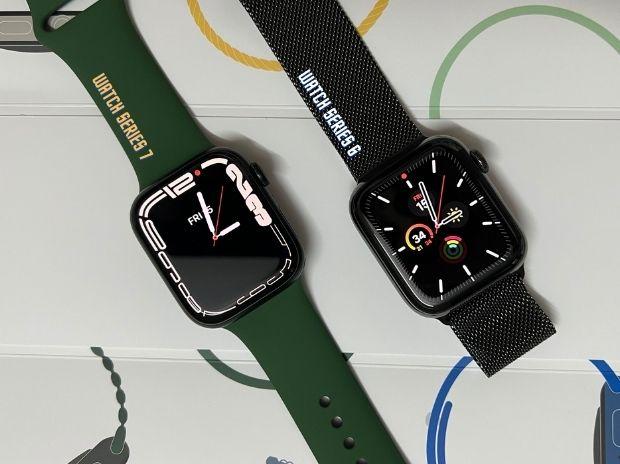
There is no smartwatch that complements the iPhones the way Apple’s own watches do, even if they are not perfect. Therefore, even if the new models do not bring any significant upgrades over the previous-generation models, they still make a compelling buy for iPhone users looking to upgrade to a new model. A case in point is the Apple Watch Series 7. Over the Watch Series 6 (review), the Series 7 brings a bigger display with curved edges and negligible display bezels, redesigned user interface optimised for larger display, and new watch faces to complement the curved display profile.

Starting with the display, the Watch Series 7 boasts 20 per cent more screen area over the Watch Series 6. Interestingly, the bump in screen size does not translate into any significant changes in dimensions of the case. This is because the screen is stretched by narrowing the borders. That said, the Apple Watch Series 7 is just 1mm (45mm, review unit) bigger than its predecessor. The screen on the Watch Series 7 is not just bigger, but also brighter than the last-gen models. Apple said the screen was about 70 per cent brighter indoors than the Apple Watch Series 6. However, the bump in brightness is available only in the Always-On display mode. The Watch Series 7 has an impressive sunlight legibility, and with increased brightness in always-on display mode, it has equally good indoor legibility which makes it easier for you to read on-screen content on the watch face without having to lift the wrist or wake the display.

To make use of the larger display, Apple has redesigned the user interface by optimising the UI elements. Courtesy the watchOS 8, the Watch Series 7 gets larger menu titles and buttons in apps like Calculator, Stopwatch, Activity, and Alarms. Besides, there are two new watch faces exclusive to the Apple Watch Series 7. There is a new Contour face with an animated dial on the edge of the display that animates to emphasise the current hour details. Modular Duo is another face. The new redesigned UI and watch faces take advantage of the increased display size and profile to make the display intuitive to interact with. Besides, there are two additional larger font sizes for easy readability of the on-screen content. Apple has also included a new QWERTY keyboard with swipe-to-type feature. Though a good addition, the screen still is not big enough to make text entry easier and faster, especially if you have fat fingers.

Read Complete Article

What is Internet of Things (IoT) and how does it build connected ecosystem?

Nowadays we hear a lot about the connected ecosystem. We read about everything connected – from connected homes to connected offices, connected cars, and even connected manufacturing facilities. These are enabled by an interconnection through Internet of Things, or IOT. But what is IoT? Let’s understand.

In layman’s terms, the Internet of Things is a network of internet-connected devices linked together to work in tandem. It enables a connected ecosystem and automation.

For example, a smart bulb and a smart speaker linked together are connected to the internet. Here, the smart speaker can take voice commands to switch on or switch off the smart bulb. In silos, the smart bulb and the smart speaker are just other internet-enabled devices with limited benefits of interconnection. But when linked together, they form a network where both the devices form a connected ecosystem.

By combining the data of these connected devices with automated systems, it is possible to gather information to create an action. Therefore, the Internet of Things not just lets you control one device from another, but also enables automation. There are several benefits of deploying the Internet of Things, and the connected ecosystem is just one of them.

Basically, Internet of Things was devised to make the most from internet-enabled devices for human lives to become easier. It integrates data from connected devices. When internet-connected devices are linked together, they form a network. This network integrates the data from various connected devices and applies analytics. Therefore, you can interact with one device through another even when you are miles away. For example, you can turn on or off your room air conditioner from your office through your smartphone, using just the voice command. Moreover, you can automate this task if you have a fixed home and office schedule.

Read Complete Article

G20: PM Modi arrives in Italy, to discuss global economy, Covid recovery

 Prime Minister Narendra Modi on Friday arrived here in Italy to participate in the G20 Summit.

In Rome, Prime Minister Modi will hold discussions on global economic and health recovery from the COVID-19 pandemic.

Landed in Rome to take part in the @g20org Summit, an important forum to deliberate on key global issues. I also look forward to other programmes through this visit to Rome, he said on Twitter.

In his departure statement, Modi said he will be visiting Rome and the Vatican City from October 29-31 at the invitation of Italian Prime Minister Mario Draghi, following which he will travel to Glasgow, the UK, from November 1-2 at the invitation of British Prime Minister Boris Johnson.Read Complete Article

LIVE: Actor Rajinikanth hospitalised in Chennai; heavy rain expected in TN

EVENT HIGHLIGHTS

Rajinikanth in Chennai. (File photo: ANI)

India reported 14,348 Covid-19 new cases in the last 24 hours, informed the Ministry of Health and Family welfare on Friday.

With this India’s active caseload stands at 161,334. Active cases account for less than 1 per cent of total cases, currently at 0.47 per cent, the lowest since March 2020. The country also registered 13,198 new recoveries in the last 24 hours, taking the recovery rate to 98.19 per cent.

A magistrate court in Surat has directed Congress leader Rahul Gandhi to appear before it today to record his statement in connection with a criminal defamation case against him over his remark on the “Modi surname”.

Defence Minister Rajnath Singh will address a valedictory session organised by Rambhau Mhalgi Prabodhini on the completion of Prime Minister Narendra Modi’s two decades in public office.

The address will begin at 12:45 pm today.

An orange alert has been issued for the coastal areas of Tamil Nadu on Friday and Saturday, following the possibility of heavy rains and even very heavy rainfall.

Stay tuned for the latest news of the day.

Read Complete Article

Facebook changes name to Meta as it refocuses on virtual reality

Facebook Inc is now called Meta, the company said on Thursday, in a rebrand that focuses on its ambitions building the “metaverse,” a shared virtual environment that it bets will be the next big computing platform.

The name change comes as the world’s largest social media company battles criticisms from lawmakers and regulators over its market power, algorithmic decisions and the policing of abuses on its platforms.

CEO Mark Zuckerberg, speaking at the company’s live-streamed virtual and augmented reality conference, said the new name reflected its ambitions to build the metaverse, rather than its namesake social media service.

The metaverse, a term first coined in a dystopian novel three decades ago and now attracting buzz in Silicon Valley, refers broadly to the idea of a shared virtual environment which can be accessed by people using different devices.

“Right now, our brand is so tightly linked to one product that it can’t possibly represent everything that we’re doing today, let alone in the future,” said Zuckerberg.

The company, which has invested heavily in augmented and virtual reality, said the change would bring together its different apps and technologies under one new brand. It said it would not change its corporate structure.

The tech giant, which reports about 2.9 billion monthly users, has faced increasing scrutiny in recent years from global lawmakers and regulators.

Read Complete Article