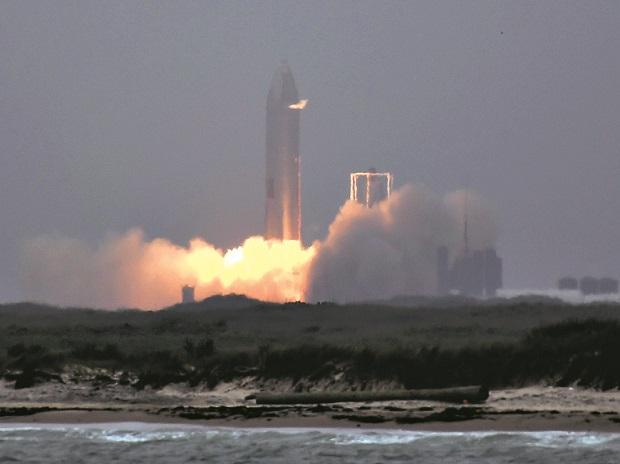
4 astronauts in orbit since spring hop ride on SpaceX rocket to return home

Four astronauts in orbit since spring are headed back to Earth, aiming for a splashdown off the Florida coast.

The undocking of their SpaceX capsule from the International Space Station also paved the way for a launch of their four replacements as early as Wednesday night.

The newcomers were scheduled to launch first, but NASA switched the order because of bad weather and an astronaut’s undisclosed medical condition. The welcoming duties will now fall to the lone American and two Russians left behind at the space station.

NASA astronauts Shane Kimbrough and Megan McArthur, Japan’s Akihiko Hoshide and France’s Thomas Pesquet should have been back Monday morning, but high wind in the recovery zone delayed their homecoming. Their late night splashdown was planned for the Gulf of Mexico off Pensacola.

“One more night with this magical view. Who could complain? I’ll miss our spaceship!” Pesquet tweeted alongside a brief video showing the space station illuminated against the blackness of space and the twinkling city lights on the nighttime side of Earth.

From the space station, NASA astronaut Mark Vande Hei — midway through a one-year flight — bid farewell to each of his departing friends, telling McArthur “I’ll miss hearing your laughter in adjacent modules.”

Before leaving the neighbourhood, the four took a spin around the space station to take pictures. This was the first time SpaceX attempted a flyaround like this; NASA’s shuttles used to do it all the time before their retirement a decade ago.

It wasn’t the most comfortable ride back. The toilet in their capsule was broken, and so the astronauts needed to rely on diapers for the eight-hour trip home. They shrugged it off late last week as just one more challenge in their mission.

The first issue arose shortly after their April liftoff; Mission Control warned a piece of space junk was threatening to collide with their capsule. It turned out to be a false alarm. Then in July, thrusters on a newly arrived Russian lab inadvertently fired and sent the station into a spin. The four astronauts took shelter in their docked SpaceX capsule, ready to make a hasty departure if necessary.

Read Complete Article

What is blockchain technology and how is India planning to use it?

Blockchain is essentially a database, but very different from every other database you may have seen. As the name suggests, a blockchain is a chain of blocks, with each block storing some information.

Other key features of blockchain are that it is decentralised and by the very nature of that design, it is immutable.

Let’s see how that works by taking the example of the blockchain that powers Bitcoin, the world’s leading cryptocurrency by market cap.

When a new Bitcoin transaction takes place, it is transmitted to a network of peer-to-peer computers scattered around the world.

These computers compete among themselves to solve complex mathematical equations that would confirm the validity of that transaction.

Once the transaction is confirmed to be legitimate, it is added to a ‘block’ on the ‘blockchain’.

These blocks are then chained together, creating a long history of all transactions that are permanent.

An important feature of blockchain here is its decentralised or shared nature.

Unlike other databases which are controlled by a central authority or computer, a blockchain, in most cases, is accessible to a network of computers, which are called nodes.

All of these computers can at any time view the blockchain and track each and every transaction that is being added to it.

Read Complete Article

Mahindra & Mahindra’s XUV 700: For those who want city comfort

When a manufacturer has built a car that has been tested on a special track with modern tech kitted out to spot for chinks in its developmental growth, you know that serious effort has gone into the car. That is exactly the story with the latest SUV from the Mahindra stable — the XUV 700 — a car that’s been getting M&M more attention since its erstwhile bestseller of yesteryear, the Scorpio.

Unequivocally, this is the best Indian car that I have been behind the wheel of in a long time and, of course, that doesn’t include the Jaguar or the Land Rover. Why? There are a few reasons, to start with. For one, the interiors don’t feel like that of a truck or a commercial vehicle. They are spiffy, comfortable and aesthetically pleasing with dashes of wood-grained veneer, leather and high-end plastics interspersed in the front, side and rear.

Even the chrome-brushed handles in matte finish evoke a BMW kind of fit and that’s a good thing. Start the car and the smooth sound of the engine is unlike any other M&M car. Mahindra big boss Anand Mahindra has often repeated in the past that every M&M car shares a certain DNA which is rugged, with an off-roading quality and built for hard wear and tear.

In that vein, the XUV 700 goes a step further. It is all those, but also has a smoother edge for those who want city comfort now offered in the likes of competitor vehicles such as the MG Hector, Hyundai Creta, Volkswagen Tiguan and Tata’s Harrier.

Right from the nifty and unique door handles that pop open with the click of the key fob to the lane change cameras that are positioned both in front and behind the car, the 700 is out to make a sweeping statement. Namely, that it’s not leaving any stone unturned in reclaiming lost ground. After all, Mahindra has been the big alpha dog when it comes to tapping the SUV market that has been evolving and growing in leaps and bounds. That king of the hill position not only slipped but also saw the clear and present danger of being dethroned forever with the onslaught of top class products made by MG, Kia and more in just the last 24 months.

Read Complete Article

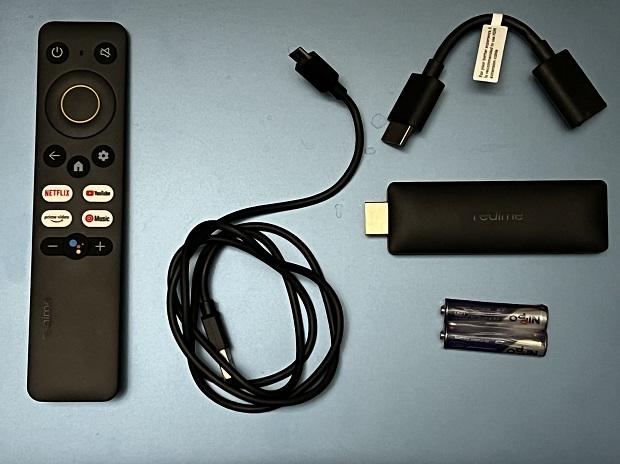
Realme 4K Smart Google TV Stick review: Capable streaming device on budget?

Chinese electronics maker Realme continues to expand its footprints beyond smartphones in India. Fresh in its portfolio is a streaming device called the Realme 4K Smart Google TV Stick. Like any other streaming device, the Realme 4K Smart Google TV Stick turns any screen with HDMI input into a smart screen with internet connectivity for online streaming of content available on supported apps such as YouTube, Prime Video, Netflix, Disney+ Hotstar, etc. There, however, is a surprise. It is the first streaming device in India based on the Google TV platform, which shares fundamentals with the Android TV platform, but with a touch of novelty in the form of redesigned user interface.

How to set up the Realme 4K Smart Google TV Stick

Setting up the Realme 4K Smart Google TV Stick is straightforward. Plug in the stick into the HDMI port of the compatible screen – TV, monitor, projector, etc; power it up using the supplied adaptor and cable; change the screen input to HDMI; and follow the on-screen instructions – connect the stick with the wireless internet network to set up Google account. Once done, you will see the first glimpse of the Google TV platform.

Read Complete Article

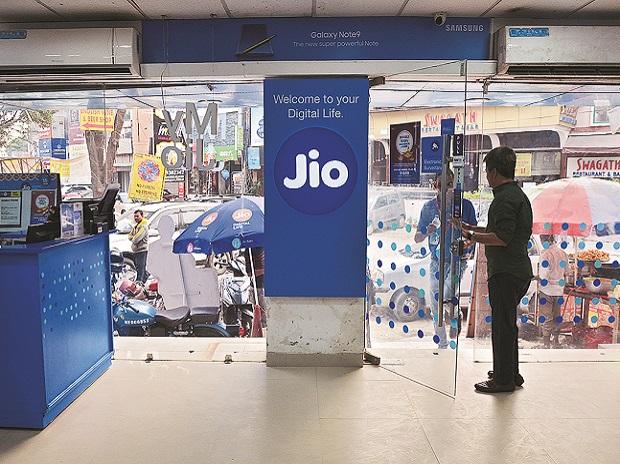
JioPhone Next offers seamless service at affordable cost, starting at ₹6499

JioPhone Next, developed by Google and Jio that created strong buzz in India as well as abroad, is finally available, offering great specifications at an affordable price point.

The made-for-India smartphone is available at an entry price of only Rs 1,999 and “the rest paid via easy EMI over 18 or 24 months”.

The affordable smartphone can also be purchased upfront without financing for only Rs 6,499.

We used the phone for around a week and here is what we think about one of the most anticipated smartphones of 2021.

In terms of design, the phone looks decent in blue colour. The smartphone features a 5.45-inch touchscreen HD display that has 720×1440 pixels screen resolution. It has a front 8MP camera on the top.

On the right edge, the smartphone comes with a volume button and a power button.

The phone features a 3.5mm headphone jack on the top, a micro-USB charging port on the bottom.

The smartphone houses a speaker at the back with a rear camera and Jio branding.

The display is big and good for those who love streaming videos/movies as well as playing games.

The smartphone runs on the new Pragati OS. It has been engineered by Jio and Google with an objective to bring ‘Pragati’ (meaning progress) for all, while offering a truly seamless experience at affordable cost.

It is powered by the Qualcomm Snapdragon QM-215 chipset coupled with 2GB RAM and 32GB of internal storage, that is expandable up to 512GB via the microSD card.

The Qualcomm processor on the JioPhone Next focuses on delivering better connectivity and location technologies along with optimisations in device performance, audio and battery.

Read Complete Article

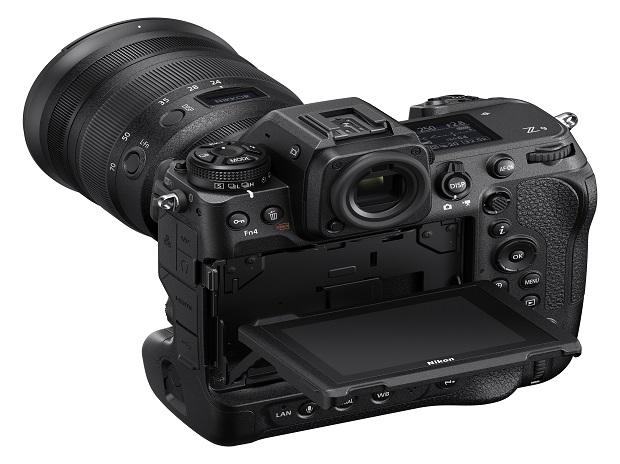
Nikon launches new full-frame mirrorless camera starting at Rs 475,995

Japanese imaging giant Nikon on Friday launched a full-frame (Nikon FX-format) Z series mirrorless camera Nikon Z 9 in the Indian market.

The new Z 9 body only will be available for sale across Nikon Authorized Store in India starting end of November 2021 at Rs 4,75,995.

According to the company, the ‘Z 9’ features the world’s largest variety of simultaneous subject detection amongst mirrorless cameras, with its tenacious autofocus (AF) offering, and the Real-Live Viewfinder without blackout period.

“Users can enjoy shooting with stunning 8K in-camera recording for up to 125 minutes for making it the most practical camera for location shoots. The camera comes with 3D-tracking for still image shooting, this first-time feature in Nikon mirrorless cameras allows users to seamlessly capture split-second moments, from the fastest sprinters, to racing cars and effectively track them,” the company said in a statement.

The Z 9 can also continuously shoot at 20fps to capture over 1,000 frames in JPEG or RAW formats, even when flicker reduction is turned on.

This is a first for Nikon that is made possible with the high processing capability and large buffer of EXPEED 7 and the fast write speed of a CFexpress Type B card.

Bringing a solution with higher resolution, the Z 9 offers in-camera video recording in high-quality 8K30p and 4K/30p/60p/120p – a few of the very firsts for Nikon and the highest video performance in Nikon history.

Read Complete Article

Yahoo pulls out of China amid increasingly ‘challenging’ environment

Yahoo Inc. on Tuesday said it plans to pull out of China, citing an increasingly challenging business and legal environment.

The company said in a statement that its services will no longer be accessible from mainland China as of Nov. 1.

“Yahoo remains committed to the rights of our users and a free and open internet. We thank our users for their support, the statement read.

Yahoo is the second large U.S. technology firm in recent weeks to reduce its operations in China. Last month, Microsoft’s professional networking platform LinkedIn said it would shutter its Chinese site, replacing it with a jobs board instead.

Yahoo had previously downsized operations in China, and in 2015 shuttered its Beijing office. Its withdrawal from China is largely symbolic as at least some of Yahoo’s services, its web portal, has been blocked in the country.

Read Complete Article

Apple’s ecosystem bet: Devices just an entry point to generate interest

Each year, a new iPhone launches, and the prices are bumped up. The company adds or upgrades features and hardware. This leads to a rise in the prices of the phone. So, something that was just Rs 40,000 a few years ago now costs almost twice that much. Moreover, most companies are selling their flagship devices with top-of-the-line features and best-in-class experience at that price point. So, why pay a premium for an iPhone.

Until a few years ago, the price of an iPhone was correlated to the ‘snob value’. The phone was and is still a premium product, and that’s why most people buy it. But over the years, Apple has been successful in developing an ecosystem. So, when you are paying double the price, Apple is not charging you a premium on just the brand but to be part of an increasingly interconnected ecosystem, one that supports seamless interaction between devices.

The phone or the pad is an entry fee into the Apple ecosystem. If you are trying to pair an Android tab with an iPhone or vice versa, there is no simple way of doing it except putting everything on the drive and then accessing it from either device. With Apple and iCloud, the connectivity is better. Plus, you can start to toggle calls, messages and content between the two devices. So, if you have bought an iPad or an iPhone, the next logical choice becomes buying the other device.

In the case of the iPad now, Apple has played it smart by introducing a new OS that is similar to iOS, but still a bit different. The tab allows you more opportunity and real estate to work on things you start with a phone.

ALSO READ: Apple iPhone 13 Pro review: Many small upgrades together make a big package

Apple is not unique in offering such services. Samsung is doing the same, and most likely, you can replicate the features with different Android devices. But what can be done with a litany of apps on an Android — Samsung is smoother — flows much better within the Apple ecosystem.

The Continuity umbrella is expanding to more services.

Besides the Handoff — Chrome offers this feature now with more clicks – AirDrop (file transfer) and Instant Hotspot (sharing of data connection), the company has enhanced its sidecar feature, which allows you to transfer files and data seamlessly from one device to another. More so with the new Monterey update for Mac PCs. The addition of a screen helps expand viewing and collaboration with Apple devices.

Read Complete Article

JioPhone Next price revealed, installment plan starts at Rs 1,999

Reliance Industries said on Friday the smartphone created by its Jio telecom business and Alphabet’s Google will be available in stores from the festive season of Diwali for an upfront cost of Rs 6,499.

‘JioPhone Next’ can be purchased for Rs 1,999 and rest of paid in installments, said the company on Twitter.

The phone’s pricing is expected to shake-up the lower end of India’s smartphone market, the world’s second biggest, said Reuters.

The phone will pose a major challenge to Chinese vendors such as Xiaomi and BBK Electronics, owner of the Realme, Oppo and Vivo brands, which currently dominate a $2 billion market for sub-$100 smartphones in India. Jio also aims to use the phone to poach 2G users from rivals Vodafone Idea Ltd and Bharti Airtel Ltd.

Read Complete Article

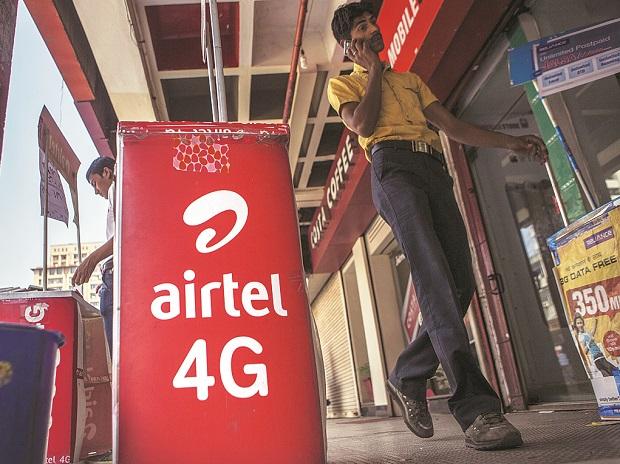
Explained: Airtel’s cashback offer on smartphones to counter JioPhone Next

Bharti Airtel on October 8 announced a cashback offer on select smartphones. Part of the telecom operator’s ‘Mera Pehla Smartphone program’, the cashback offer reduces the effective ownership cost of eligible smartphones in a long run. Here are the details of the Airtel’s cashback offer on smartphones to counter JioPhone Next.

Airtel cashback offer on smartphones

Airtel is offering a cashback of Rs 6,000 to customers who purchase a new smartphone priced up to Rs 12,000 from eligible brands. According to Airtel, there are over 150 smartphones eligible for this scheme, and more would be added in future. The list covers most brands such as Samsung, Xiaomi, Realme, Nokia, Lava, etc. catering in the India’s budget smartphone market. Below is a full list of brands currently offering smartphones with Airtel’s Rs 6,000 cashback offer:

  • Samsung
  • Xiaomi
  • OPPO
  • Realme
  • Vivo
  • Nokia
  • Lava
  • Lenovo
  • Itel
  • Infinix
  • Tecno
  • Motorola

Click here to check the full list of eligible smartphones.

To avail the Rs 6,000 cashback benefit, customer needs to buy an eligible smartphone from Airtel and use it with the Airtel SIM only for a period of 36 months. The cashback offer is currently limited to prepaid customers, and can be availed in two installments — the first installment of Rs 2,000 after 18 months and the remaining Rs 4,000 after 36 months. The cashback amount would be transferred to Airtel Payments Bank account of the user.

ALSO READ: JioPhone Next priced at Rs 6,499 to hit stores this Diwali: Details here

To receive the cashback, customer need to recharge with an Airtel prepaid pack of Rs 249 or above continuously (as per pack validity) for 36 months. Important to note, customers need to recharge within 24 hours of validity expiry of recharge plan to get the cashback. The cashback offer stands cancelled if customer changes the phone or does not recharge in the stipulated time period.

Read Complete Article