Call of Duty to Garena: Games that millennials are playing post PUBG ban

While PlayerUnknown’s Battlegrounds, popularly known as PUBG, is currently banned in India and despite several attempts by the game lovers to somehow play it on their mobiles by circumventing the ban via virtual private networks (VPNs) and servers located in other countries, PUBG remains a distant reality for millions and the community is scouting for new games.

Currently, Call of Duty: Mobile and Garena Free Fire are games that have become new favourites among the gaming community.

Garena and Call of Duty are the among top three downloaded games across iOS and Android app stores.

Another game ‘Among Us’ topped the list as PUBG Mobile went missing.

According to the reports by Sensor Tower, the game has over 83.8 million installations, making its growth almost 40 times in September this year as compared to the same month last year.

‘Among Us’ is an online multiplayer social deduction game developed and published by American game studio InnerSloth.

The game takes place in a space-themed setting, in which players each take on one of two roles, most being Crewmates, and a predetermined number being Impostors.


Read Complete Article

Pandemic speeding up automation; 85 million jobs are on the line: WEF

The Covid-19 pandemic is making companies automate their workforce faster than expected globally, while firms with operations in India are accelerating their automation and digitisation above the global average, a World Economic Forum (WEF) study showed on Wednesday.

The year-long study on effects of automation in the workplace and the outlook for robot revolution found that the ‘future of work’ has arrived early due to Covid-19 and may lead to 85 million jobs getting displaced in the next five years in medium and large businesses across just 15 industries and 26 economies.

At the same time, the robot revolution will create 97 million new jobs, but communities most at risk from disruption will need support from businesses and governments, the World Economic Forum said.

These new jobs would mostly emerge in the care economy, in fourth industrial revolution technology industries like artificial intelligence, and in content creation fields.

“Businesses with operations in India are accelerating automation and digitisation above the global average. While 58 per cent are accelerating automation of tasks, compared to 50 per cent globally, as many as 87 per cent are accelerating digitalisation of work processes, above the global average of 84 per cent,” the study showed.

Read Complete Article

Parliament joint committee summons Facebook, Twitter over data privacy

Social media giants Facebook and Twitter have been issued summons by a joint committee of Parliament on the issue of protection of data and its privacy, sources said on Thursday.

Representatives of Facebook India have been asked to appear on Friday before the Joint Committee on the Personal Data Protection Bill, 2019, chaired by BJP MP Meenakshi Lekhi, while Twitter officials are required to appear before the panel on October 28, as per the notice issued by the Lok Sabha Secretariat.

Summoning officials of Amazon and Google on the same issue is also under active consideration of the joint committee of Parliament, the sources said. When contacted Lekhi said, “Whosoever is required, whether an individual or an entity, will be asked to depose before the panel on the issue of protection of data and its privacy and their respective social media platforms will be thoroughly examined by the panel.

“It would be inappropriate and unfair to look at the calling of social media platform from the political prism. The committee has representatives from across the political spectrum and the deliberations on the bill are being held from the national interest perspective,”

Read Complete Article

Apple iPhone 12 Pro, iPhone 12 pre-orders now live in India

Apple India Store Online on Friday started accepting pre-orders for the newly-launched iPhone 12 and iPhone 12 Pro with some exciting trade-in offers.

The iPhone 12 and the iPhone 12 Pro are the first devices in the 2020 line-up to go on pre-orders in India and will be available from October 30.

Those who pre-book iPhone 12 can opt for either Rs 5,637 per month via the EMI route or buy the basic variant even for Rs 47,900 with trade-in.

The customers can effectively get up to Rs 22,000 off with Apple trade-in to grab a new iPhone 12.

The basic variant of iPhone 12 Pro can be pre-booked for Rs 10,110 per month on EMI or get it for Rs 85,900 with trade-in. The customers opting for trade-in can save up to Rs 34,000.

The two phones can now be pre-ordered, with deliveries for both starting October 30.

iPhone 12 price in India starts at Rs 79,900 for the 64GB model. Meanwhile, the price of iPhone 12 with 128GB and 256GB internal memory is set at Rs 84,900 and Rs 94,900, respectively.

Read Complete Article

Modi govt committed to increasing farmers’ income: Rajasthan BJP chief

Rajasthan BJP president Satish Poonia on Wednesday said the Narendra Modi government at the Centre is committed to increasing farmers’ income.

“Prime Minister Narendra Modi has assured the farmers that the minimum support price (MSP) will continue and so will the mandi system. The ownership rights in contract farming will remain with the farmer,”Poonia told reporters here.

Talking about the Congress opposing the agricultural laws, he said, “The Congress party did not fulfil the promise made in its own manifesto in 2019. It is creating confusion among the farmers and acting hypocritical.”

He said that the Congress has no vision for the farmers and it is opposing the agricultural law as it does not want the welfare of the farmers.

Read Complete Article

Be cautious of how you use social media: Cyber experts to Noida teens

There has been a rise in online frauds and blackmailing during the lockdown, police and cyber experts said here on Wednesday, as they cautioned teenagers to be careful with how they use social media platforms like Facebook, Instagram and WhatsApp.

The message came during a webinar organised by the Gautam Buddh Nagar Police for children above the age of 13 years as part of the ongoing “Mission Shakti” initiative in the district that focuses on checking crimes against women.

Students from 70 schools and colleges participated in the programme where they were told about various forms of online crimes, including bullying, stalking, fake accounts, sexual extortion, honey traps, by cyber security expert Rakshit Tandon, while Deputy Commissioner of Police (Women and Child Safety) Vrinda Shukla and District Cyber Cell chief Ankur Aggarwal hosted the session.

“There has been an increase in online frauds during the lockdown that was enforced due to the coronavirus outbreak. There have been instances of cloning of Facebook profiles where frauds use the fake profile to seek money from victim’s contacts,” Tandon told students, many of whom were joined by their parents and teachers.

Read Complete Article

Advertisers or people? Debate over who’s really harmed by Google ‘monopoly’

Google has long defended itself against charges of monopoly by stressing that its products are free and that no one has to use them.

And it’s avoided tough government scrutiny for years based in part on the idea that people searching the internet are not Google’s true customers.

We’re its product. Advertisers are its real customers. That complicates the question of who, if anyone, is hurt by Google’s dominance in selling ads off the world’s search queries and through its array of affiliated businesses, from its Android phone software to its YouTube video platform and digital maps.

The US Justice Department’s new antitrust lawsuit against Google argues that both advertisers and regular people are harmed by the tech giant’s position as the unchallenged gateway to the internet for billions of users worldwide.”

As a consequence, countless advertisers must pay a toll to Google’s search advertising and general search text advertising monopolies,” the government wrote in Tuesday’s landmark complaint, which asks a federal court to intervene to protect competition.

Read Complete Article

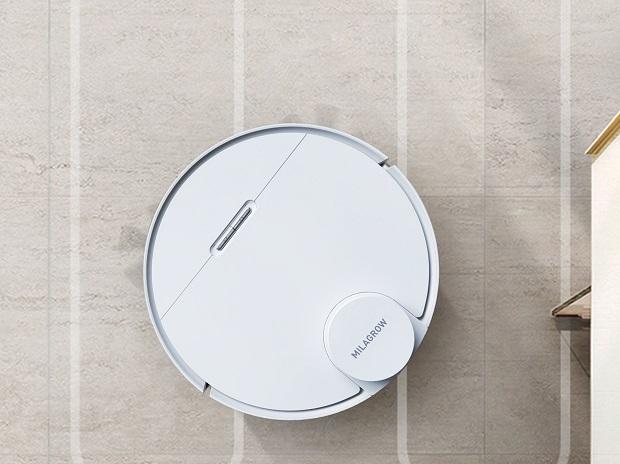
Milagrow iMap 10.0 review: A tiny robot that keeps your home spick and span

The coronavirus pandemic has changed my – just like everyone else’s – perception of cleanliness and hygiene. Since the beginning of the Covid-19 lockdown in March this year, I have been scrubbing and wiping not just my home but also gadgets, clothes, and everything else that I use or come in contact with. However, after the initial zest for cleaning waned, I realized I could do with some help in everyday home cleaning. It was around this time that I learnt about the iMap 10.0 vacuum-cum-mopping machine built by Milagraow, a home-grown robot maker.

The iMap 10.0 is a disc-shaped robot that looks futuristic and intriguing. Though a technology-rich machine, it is easy to use and manage. The robot not only vacuum cleans but also wet-mops the floors. It’s only a part of everyday domestic chores, the cleaning and mopping of floors is one task that consumes a lot of time and effort. With these two handled by the robot, I was at peace that I would finally have the time for other jobs which I had been putting off for a tomorrow that would never come.

Speaking of the iMap 10.0, the robot is a delight to use. It is not a machine for deep or extensive cleaning, which you might like to do yourself once a week. For a good everyday cleaning to keep the home floors free from dirt, dust and particles, the iMap 10.0 has you covered. It is a smart robot that you can operate through voice command, too. Moreover, it supports automation and requires minimal human intervention.

Read Complete Article

How the principles behind open source are changing our world

Two tech giants meet for their annual golf competition. They each tee off, and corporate pride is on the line as they head down the fairway to see which one has the advantage for their next shots. Ten open source developers then step up to the tee. They each take their shot, then race down to see which of the balls is best positioned for the drive down to the green – because that spot is where they will ALL be playing their next shot from.

A collaborative approach to problem-solving is fundamental to how we innovate. While we may enjoy celebrating the lone geniuses in our history, their initial sparks of inspiration have always been adapted and improved upon to meet our need to develop agriculture, smelt iron, or build supercomputers.

The digital-first world we live in today has been driven by the free exchange of ideas, collaboration, and meritocracy. And these principles have been so effective precisely because they mirror the way we have solved problems for millennia, but it wasn’t until the dawn of the internet that these principles were given a new name – open source.

Safety in numbers / A virtuous cycle

Unlike in-house teams working on lock-boxes of proprietary software, open source software can be inspected, modified, and enhanced by anyone in the developer community. New features and fixes are shared with the community for testing, peer-review, and comment. Some ideas return to the drawing board, the best ideas rise to the top and are incorporated into the source code. That modified source code is then returned to the community, and the cycle continues.

When Linux was released in 1991 its license stated that anyone could have access to the code – in its entirety – but any enhancements had to be freely shared. The idea that developers can build on the work of others, and then – crucially – release their innovations back into the community lies at the core of open source.

Read Complete Article

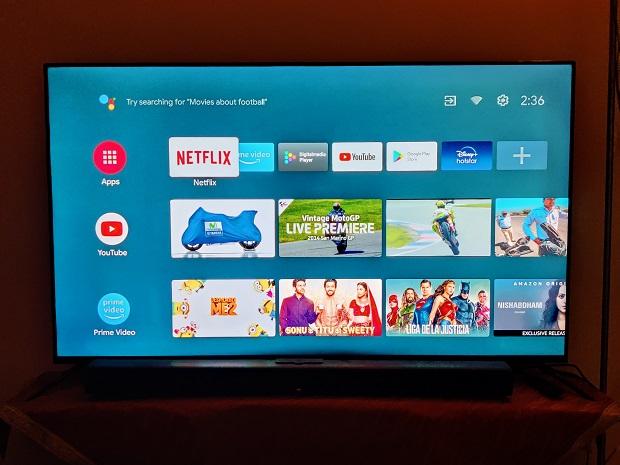
Realme Smart TV SLED 4K review: Pricier than LED smart TVs, but worth it

Chinese electronics maker Realme recently expanded its smart TV portfolio in India with the launch of the Realme Smart TV SLED 4K, a 55-inch model with a new breed of display technology (SLED) for improved viewing experience. Said to be better than conventional LED TVs, the Realme Smart TV SLED 4K promises enhanced contrast ratio, deep blacks, and a wide colour gamut.

But is SLED a real breakthrough in display technology or just another marketing gimmick? Let’s find out:

Design

The Realme Smart TV SLED 4K is a well-built television for its size – it neither has thick bezels around the screen nor does it protrude too much on the back. Its slim profile makes it convenient to mount on the wall. However, it is best for a table-top set-up as ports on the back are difficult to access in a wall-mount set-up. The TV comes with a premium-looking metal-made side legs for a table-top set-up. Unfortunately, the legs fit on extreme ends and require a wide table for setting up. A centre stand would have been a better choice for a table-top set-up.

Set-up

Based on the Google Android TV platform, the Realme Smart TV SLED 4K is easy to set up. All it requires is a Google account, a smartphone and wireless internet connectivity. You can link the TV with your Google account through Google Assistant. Once linked, the TV syncs account data with TV for set-up. Using a smartphone minimises the set-up time, if you have a Google account, as the television syncs the information from your account. You will need to approve the request by entering a code that appears on your smartphone. The set-up process takes a few more steps if you decide to go ahead without using the smartphone. You can also set the TV up without Google account but that will restrict its smart capabilities.

Read Complete Article